Get Full Government Meeting Transcripts, Videos, & Alerts Forever!
Get email alerts on the Dealers And Franchises topic
No spam. Unsubscribe anytime.
Committee approves RV-dealer protest process that mirrors motor-vehicle franchise rules
Summary
The committee reported Senate Bill 30, which gives recreational vehicle dealers a statutory protest process for new or relocated dealerships, setting exclusive geographic radiuses (100 miles for towables, 200 miles for motor homes) and grandfathering existing dealers.
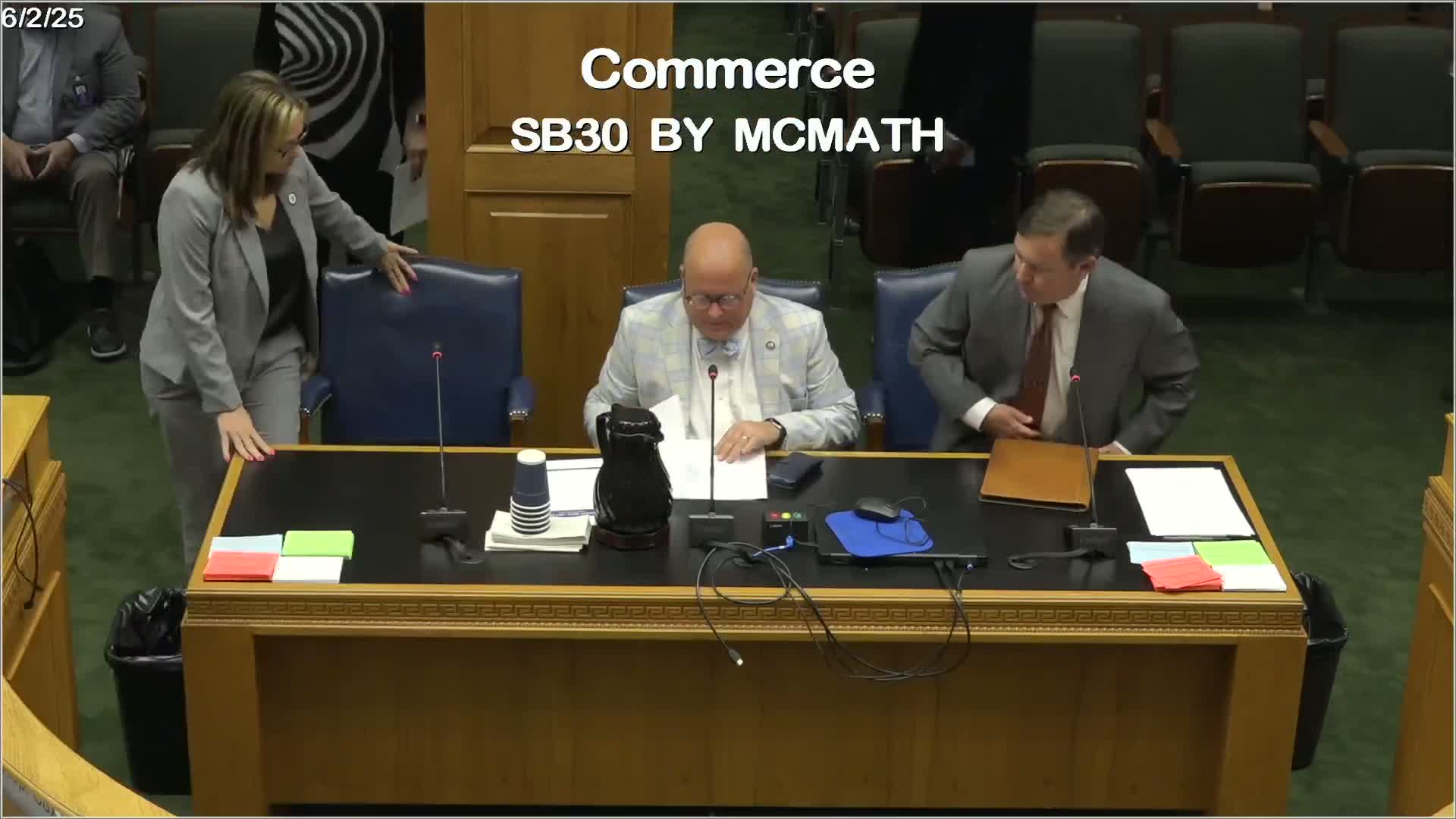
The House Committee on Commerce on June 2 voted to report Senate Bill 30, which adds a formal protest and hearing process for recreational vehicle (RV) dealerships before the Louisiana Motor Vehicle Commission (LMVC).
Representative Carver (presenting the bill for Senator McMath) told the committee SB 30 “seeks to create a process for the filing of new applications or relocation of dealer agreements with the commission and allows an existing dealer to object to granting a new license if it encroaches in a territory that’s already been granted.” The bill defines specific geographic radiuses for protests: 100 miles for travel trailers and towables and 200 miles for motor homes, testimony said.
Russ Rudolph, secretary-treasurer for the Louisiana RV Dealers Association, said the association represents roughly 20 of the state’s approximately 25 RV dealers and that members agreed on the radius figures. Amy Casey, executive director of the Louisiana Motor Vehicle Commission, told the committee the LMVC already conducts protests for motor vehicles, marine, ATV and motorcycle dealers and would apply similar procedures to RVs. Leslie House, a consultant for the Motor Vehicle Commission, added that the commission already uses a three-member public-member panel to hear manufacturer-dealer disputes.
Opponents included Erin Bentley of the Pelican Institute, who said the bill “goes against basic free-market principles” and urged lawmakers not to expand what she characterized as protectionist statutes. Bentley asked legislators to track whether protests ultimately prevent new businesses from opening; she recommended the Legislature limit expansion of statutory protest rights rather than broaden them.
Committee members asked whether the bill would remove consumer choice or favor incumbents. Supporters and several committee members responded that the measure does not bar different brands from competing side-by-side and that the protest is limited to new dealerships offering the same make; it creates a process to adjudicate disputes rather than an automatic prohibition. Representative Jordan summarized the point: the bill “only allows the dealer to object to that newly established dealership… it doesn't automatically say that that dealership cannot open.”
Representative Reiser and others described the RV business as capital-intensive and noted dealers’ concerns about warranty, repair and service access for dispersed customers. Representative Reiser moved to report the bill favorably with amendments; there were no recorded objections and SB 30 was reported as amended.
Key clarifications adopted in committee amendments state that the bill applies only to RVs as defined in RS 32:1252 and grandfather existing dealerships; amendment set 37-62 also provides applicability language and technical fixes. The record shows one written opposition card and several supportive cards on file.