Get Full Government Meeting Transcripts, Videos, & Alerts Forever!
Get email alerts on the Medical Billing Collateral Source topic
No spam. Unsubscribe anytime.
Committee advances bill to limit jury awards for medical expenses to amounts actually paid by insurers or agreed providers
Summary
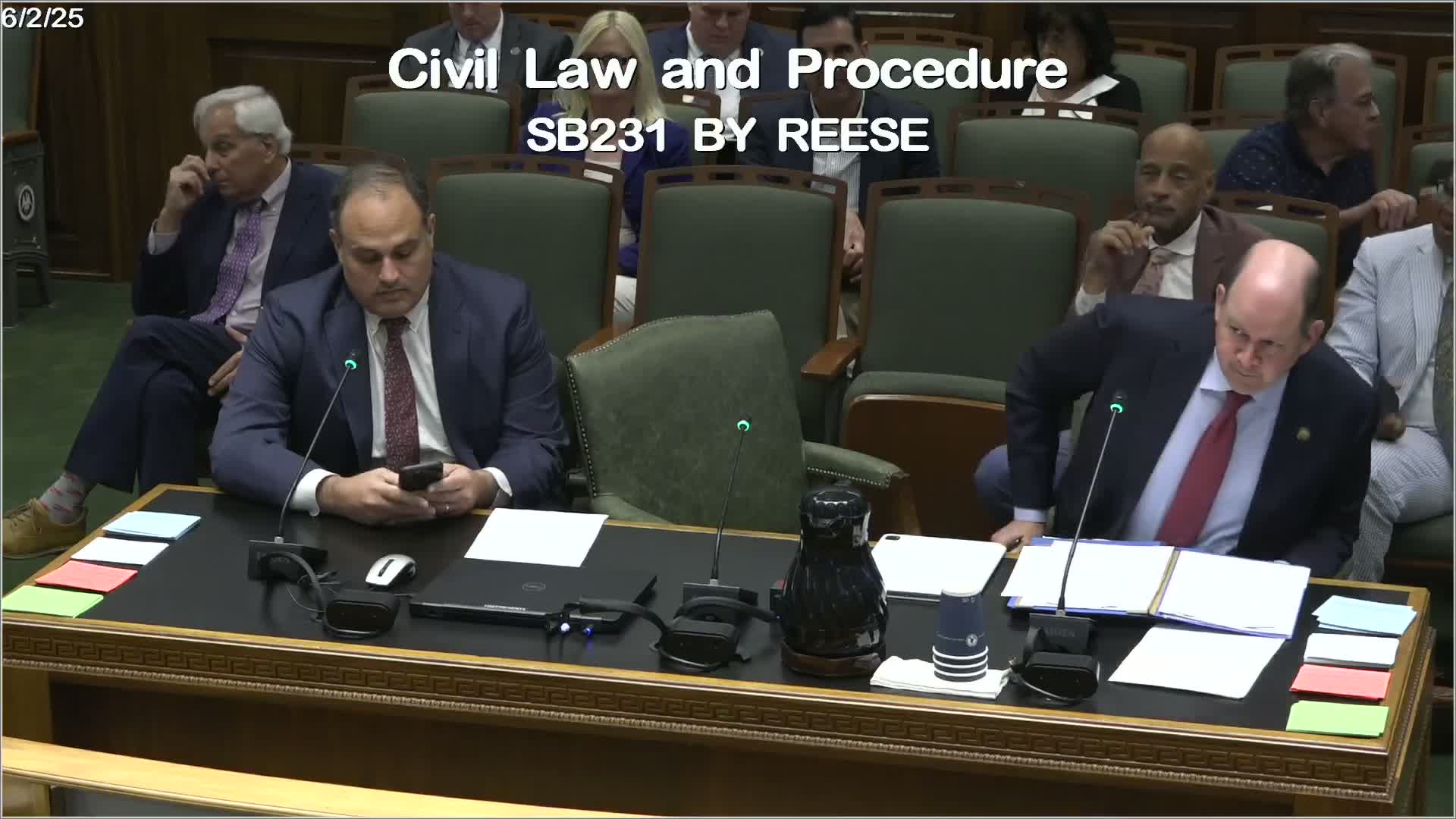
Lawmakers voted to report Senate Bill 231, which would require juries to consider amounts actually paid by insurers or pursuant to pre-negotiated provider agreements when awarding past medical expenses, addressing the collateral-source issue and aiming to reduce inflated billed amounts in civil litigation.
The committee voted to report Senate Bill 231 favorably after debate about how juries should be informed of medical bills that have already been paid by insurance or reduced through provider agreements.
Senator Reese said the bill narrows the collateral-source question to “phantom damages” — billed amounts that no insurer will actually pay — and would allow evidence of what health insurance or other third parties actually paid for medical care. The measure also incorporates language addressing pre-negotiated agreements between a plaintiff’s attorney and medical providers (often called Hoffman-style arrangements), limiting recovery to the amount actually paid under such agreements plus applicable patient cost-sharing.
Why this matters: The bill affects how past medical expenses are presented to juries and how recoverable medical damages are calculated. Sponsor Reese and industry witnesses said the change aims to align jury awards with actual economic outlays and reduce inflated awards that raise insurance premiums, notably in commercial auto markets cited by insurers.
Committee discussion touched on unresolved issues including unpaid “cash-pay” bills (where a provider has not been paid by an insurer and the patient pays cash), discoverability of provider agreements, and whether revealing payment details to juries is appropriate. Representative Carlson and others praised the bill’s collateral-source clarity but said it does not resolve problems from cash-pay billing practices; Carlson noted many plaintiffs’ medical bills are now cash-pay and called that the bigger driver of inflated medical costs.
Action: The committee adopted the bill and reported SB 231 favorably; Representative Glorioso moved to report the bill favorably and the chair announced it was reported favorably to the floor with no objection. Sponsor and stakeholders said they will continue technical work on discoverability and on how to treat unpaid bills.
Ending: Supporters said the bill would simplify presentation of past medical expenses to juries and help insurers and businesses that face rising premiums, while critics said broader work is needed to address cash-pay and provider billing practices.