Get Full Government Meeting Transcripts, Videos, & Alerts Forever!
Get email alerts on the Short Term Rentals topic
No spam. Unsubscribe anytime.
Committee deadlocks on bill letting nearby residents sue to enjoin illegal short-term rentals after heated testimony
Summary
Senate Bill 225, which would allow residents within 300 feet to seek injunctive relief against allegedly unlicensed short-term rentals, drew opposition from industry groups and hosts and failed to pass the committee after tie votes and debate over local enforcement and court jurisdiction.
Lawmakers debated and ultimately did not advance a bill that would create a private cause of action to enjoin short-term rental operations alleged to be operating without required local permits.
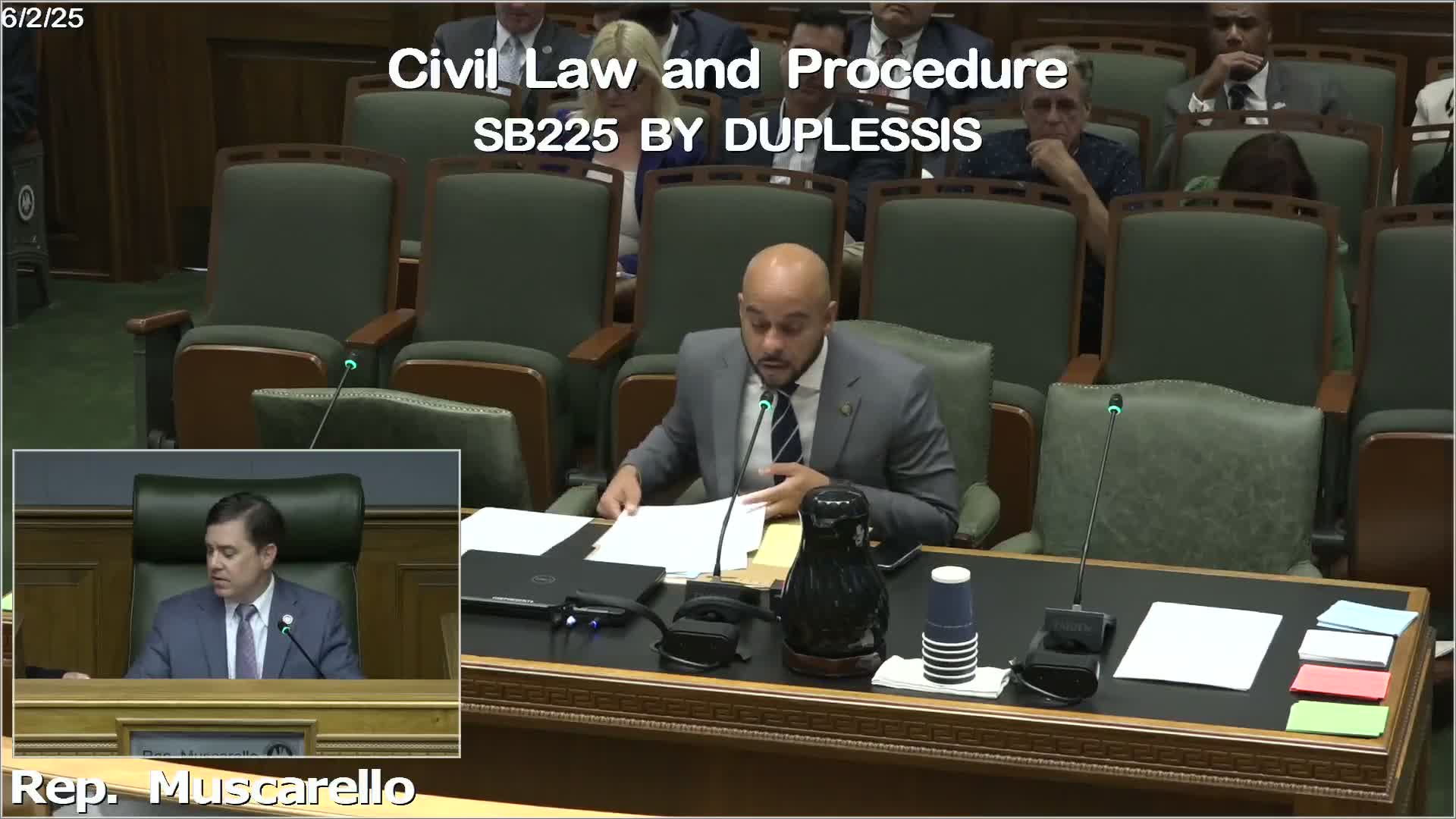
Senate Bill 225, introduced by Senator DuPlessis, would let an “interested party” living within 300 feet of a property seek injunctive or declaratory relief in district court to stop alleged illegal short-term rental activity if local enforcement did not resolve the claimed violations. The sponsor described the measure as a targeted “tool in the toolbox” to curb unlicensed short-term rentals and protect neighborhoods, and said the bill provides for awarding attorney fees and costs to the prevailing party to deter frivolous suits.
Why this matters: Supporters argued the proposal would help neighborhoods and lawful operators when local governments lack capacity to enforce rules. Opponents — including hotel and restaurant associations and Airbnb representatives and local hosts — said the bill would shift local land-use enforcement into district court, invite costly litigation and harassment of lawful hosts, and could be used strategically by well-funded interests to harass competitors.
Public testimony split along industry and resident lines. Rodney Braxton, representing Airbnb, opposed the bill and warned it could let well-funded actors file injunctive suits that would push legitimate hosts out of business. “A well funded nonprofit made up of hotels … could certainly harass someone out of business,” he said. Amy Monette, an individual host from Baton Rouge, described hosting as necessary supplemental income and urged defeat of the bill: “Please remember that it is about the people. And vote no.” Several municipal and hospitality groups submitted cards in support, and local officials and tourism organizations testified the problem of enforcement affects multiple cities.
Key legal and procedural questions raised included whether the bill would improperly convert municipal code enforcement matters into district court litigation, whether the bill would apply where no local ordinance exists, and how notice and cure provisions would function. Representative Carlson and others questioned whether the bill would prompt meritless suits that create costs for hosts even if suits are dismissed. Sponsor DuPlessis said amendments added a fee-shifting provision allowing courts to award attorney fees to the prevailing party, and said she was open to further language to limit abuse and possible sunset provisions.
Committee action: Representative Glorioso moved to report the bill favorably; Representative Carlson objected. A roll-call vote produced a tie at one point (7 yeas, 7 nays). A subsequent tally recorded 7 yeas and 8 nays and the motion did not pass, leaving the measure without committee approval.
Ending: Sponsors and opponents indicated willingness to continue working on drafting changes. Opponents urged local enforcement solutions instead of a statewide private cause of action; the sponsor said she would consider targeted amendments to narrow scope and add safeguards.