Get Full Government Meeting Transcripts, Videos, & Alerts Forever!
Get email alerts on the Budget Transparency topic
No spam. Unsubscribe anytime.
House approves measure to separate appropriations for nongovernmental beneficiaries from general spending bills
Summary
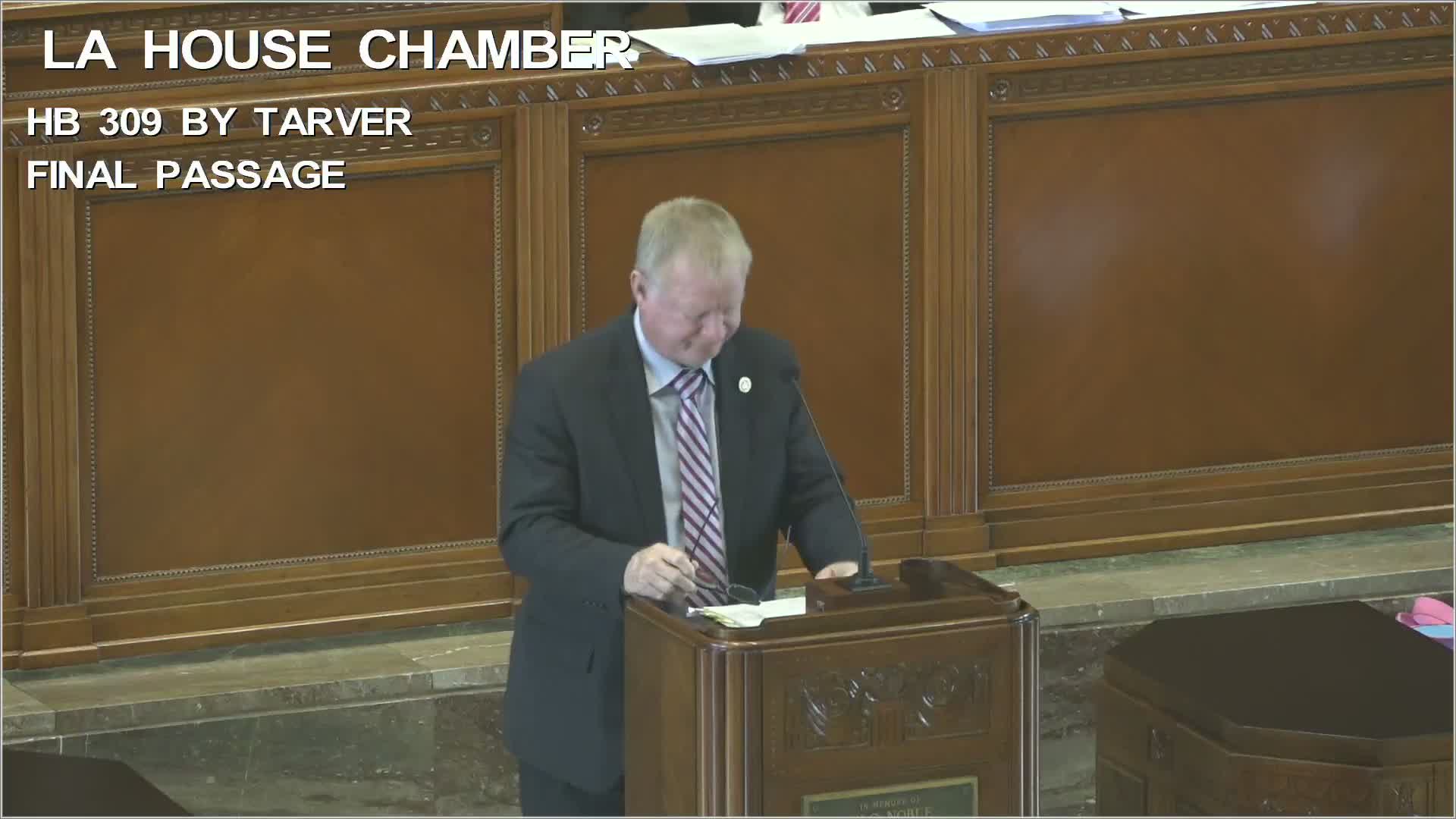
Lawmakers passed HB 309, a bill by Representative Tarver that requires state appropriations for nongovernmental entities (NGOs) to be grouped into a separate instrument to improve transparency; backers said the change will make it easier for citizens to see taxpayer support for private organizations.
Representative Tarver presented House Bill 309, described as a statutory companion to a concurrent resolution the House previously took up, that restructures how the state lists and reviews appropriations that supply taxpayer money to nongovernmental entities.
Tarver said the bill does not prohibit NGOs from receiving state funds but would require those awards to be listed together in a distinct appropriations instrument so the public could more easily find and review them. "If we're going to spend taxpayer money on private organizations, it ought to be separated out," he said. He and questioners agreed the provision would not necessarily change eligibility or the appropriations process; it would change how items appear in bills.
During floor colloquy, lawmakers asked how the separate instrument would be produced and whether entities with statutory dedications or special funding would be affected. Tarver and committee chairs said routine appropriation processes would remain; the proposal would instead create a dedicated bill for non-governmental appropriations so items are not commingled in the main supplemental or capital bills.
Representative Cox supported the measure as a transparency tool; other members sought clarity on treatment of economic development organizations that sometimes act as fiscal agents for projects and on whether the change could invite “unwarranted scrutiny” of nonprofits. Tarver said those items would still be subject to appropriations and the usual review process.
The House adopted the bill by a recorded vote (73–22). The sponsor asked for the bill to be engrossed and sent forward.