Get Full Government Meeting Transcripts, Videos, & Alerts Forever!
Get email alerts on the Public Health Criminalization topic
No spam. Unsubscribe anytime.
House passes bill creating felony for knowingly infecting others with certain incurable diseases
Summary
The Louisiana House passed HB 76, a measure authored by Representative Moore that makes knowingly transmitting selected incurable sexually transmitted infections a felony, following hours of debate over proof of intent, scope and public-health effects.
Representative Moore asked the House to pass House Bill 76, a measure aimed at criminalizing intentional, nonconsensual transmission of certain incurable sexually transmitted infections.
Moore said the measure is “not about punishing just for the sake of punishment. It’s about responsibility,” and described victims who told the panel of spouses and others who said they were infected without being told. The bill’s author said the measure targets people who “were fully aware of their diagnosis, chose not to disclose it, and then knowingly engaged in conduct that caused a significant risk of transmission.”
The bill would add language modeled on existing intentional-transmission statutes (the transcript referenced existing law addressing HIV) and include “specific intent” language requested by the district attorneys’ association, Moore said. Moore described amendments adopted on the floor as mainly technical and procedural and said several edits were to address prosecutors’ concerns.
Opponents warned the law could discourage testing and deepen stigma. Representative Hughes, who urged defeat, said the bill was “so incredibly flawed on so many levels” and argued mandatory criminal penalties risk deterring people from seeking tests and treatment. Other members questioned how prosecutors would prove the statute’s required intent and raised scenarios involving failed condoms, prior disclosure, or later disputes about whether disclosure happened.
Supporters said the bill fills gaps in accountability. Representative Morris (floor supporter) said the intent was to provide a remedy for people who have been harmed and to hold those who deliberately infect others accountable.
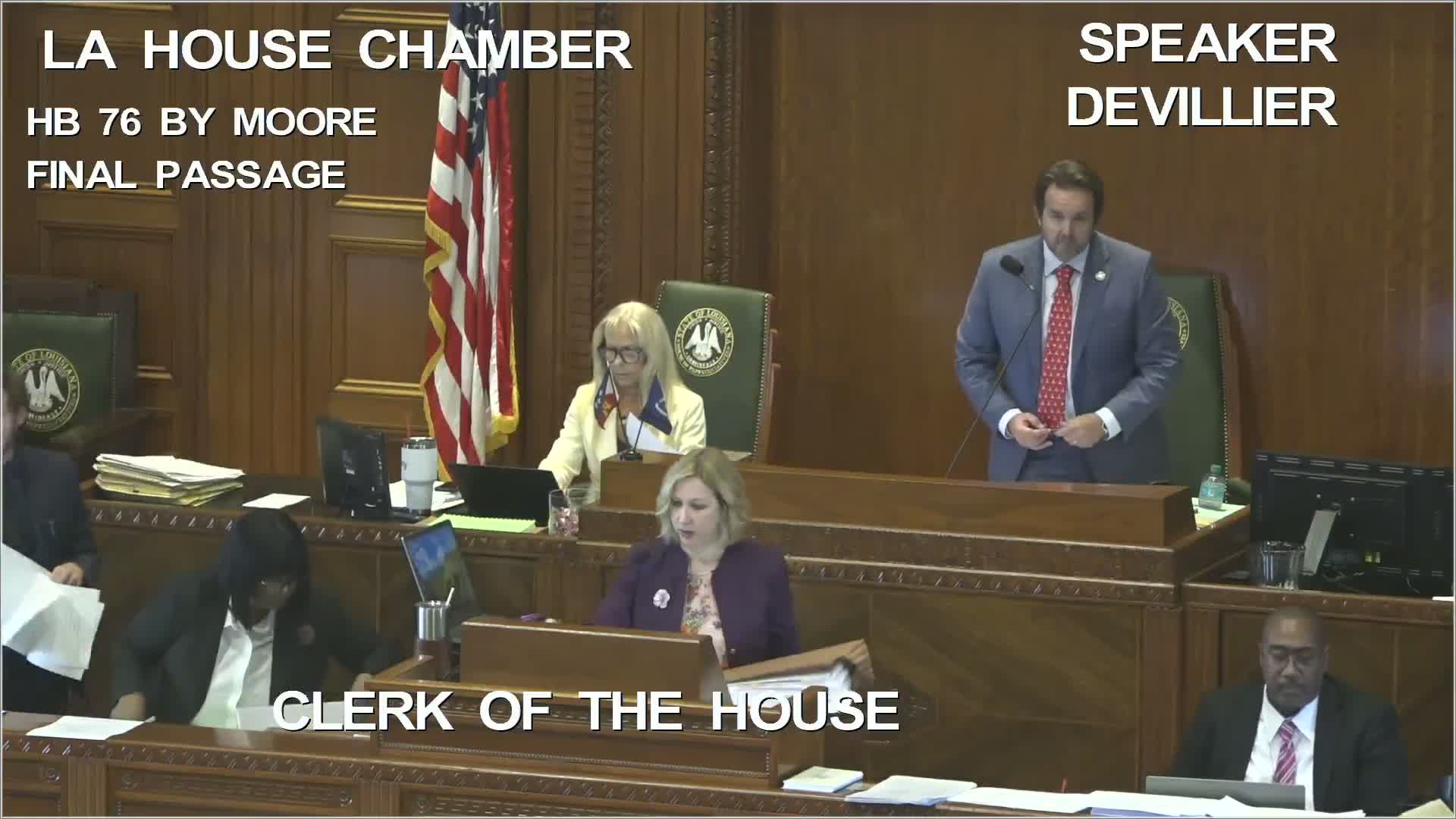
The House adopted a set of amendments on the floor before taking final passage. Representative Moore moved final passage; the clerk recorded 68 yeas and 18 nays and the House passed the bill.
The roll call and transcript record show sustained, detailed questioning on evidentiary standards for proving “specific intent,” whether the statute duplicates existing law on HIV, and how the bill’s criminal penalties might affect public-health goals. Lawmakers repeatedly separated discussion (policy and evidentiary concerns), direction (amendments adopted to incorporate prosecutorial language), and formal decision (final passage by recorded vote).