Get Full Government Meeting Transcripts, Videos, & Alerts Forever!
Get email alerts on the Public Safety Fire topic
No spam. Unsubscribe anytime.
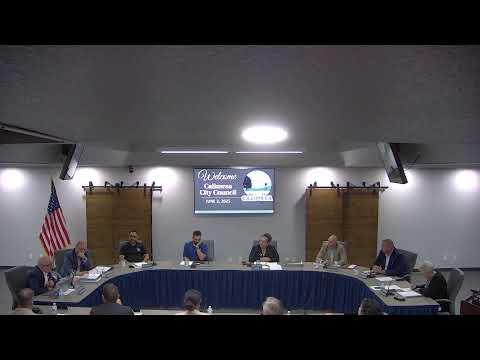
Calimesa council adopts state-mapped fire hazard severity zones; chief outlines weed‑abatement process
Summary
The City Council introduced and adopted an ordinance designating fire hazard severity zones following State Fire Marshal mapping. Fire officials described the city’s weed‑abatement program, a forthcoming 'Zone 0' home‑hardening rule, and enforcement timelines for property owners.
The City of Calimesa on Tuesday adopted an ordinance designating local fire hazard severity zones consistent with the California State Fire Marshal’s updated map and discussed local weed‑abatement and home‑hardening requirements.
Fire Chief Archie O’Connell and Deputy Fire Marshal Jerry Rodriguez presented the ordinance and explained the department’s ongoing weed‑abatement and education program. Chief O’Connell told council that the updated state map identifies more areas as moderate, high or very‑high fire hazard severity zones and that California Government Code requirements obligate the city to adopt local designations by ordinance.
“…In March 2025, the California State Fire Marshal published an updated local responsibility area fire hazard severity zone map for the City of Calimesa,” Deputy Fire Marshal Jerry Rodriguez said, summarizing the statutory timeline. The staff recommendation was to adopt the map and amend the municipal code where it conflicts with state law.
Chief O’Connell described the city’s multi‑pronged weed‑abatement program: complaint‑driven and drive‑by inspections, photographic documentation, owner contact, and reinspections at 30 and 60 days. He said most property owners comply after the first notice; the city can escalate to abatement warrants and code enforcement when owners fail to act. “Within 30 days, we do a reinspection…probably 90% of the time we get immediate compliance,” he said.
Councilmembers pressed staff about a separate forthcoming “Zone 0” requirement that would require homeowners to remove combustible materials within 5 feet of a structure. Chief O’Connell said Zone 0 implementation is expected later in the year and that the fire department is engaging statewide advocacy and education groups to help prepare residents. Councilmembers also discussed risks that insurers could take action if properties do not meet new hardening standards.
Councilmember Cundiff asked whether the city could make designations more restrictive; Chief O’Connell said the city must comply with the state timeline and that further restrictions are possible but would require additional local action. After discussion, Councilmember Garcia moved to adopt Ordinance No. 4‑11 designating fire hazard severity zones; the motion carried 5‑0.
Chief O’Connell said the department will continue public outreach and coordinate with organizations such as Cal Cities and Firewise/Fire Safe community groups to offer education and resources for home hardening and defensible‑space work.
The ordinance introduction and adoption reflect state mapping changes; staff told the council it will return with additional code text tied to Zone 0 and related compliance guidance.