
Voters funded Nashville’s Choose How You Move plan; city officials outline scope and near-term projects
Get AI-powered insights, summaries, and transcripts
Subscribe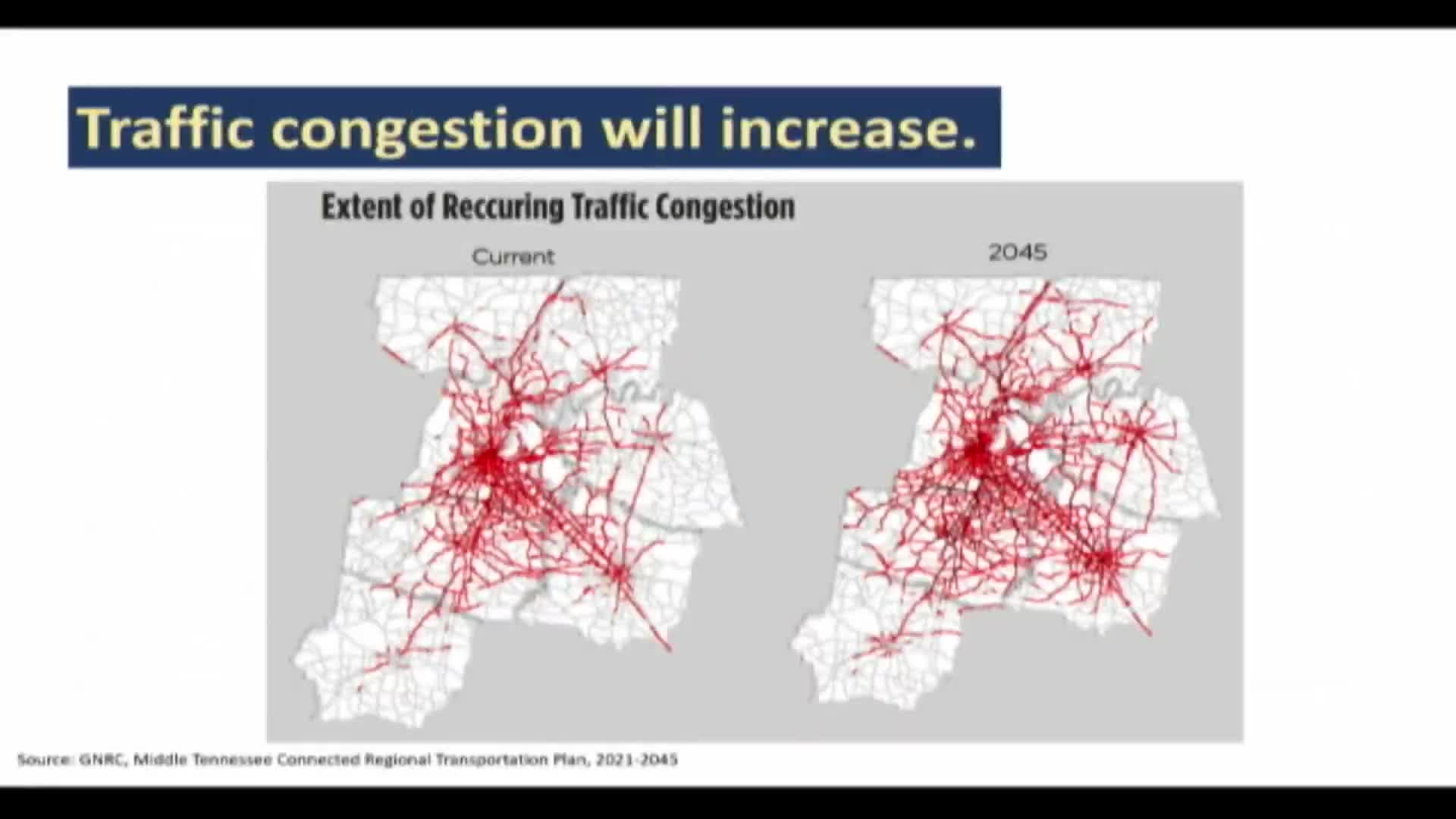
Summary
Metro officials and the newly formed advisory committee reviewed the Choose How You Move program after voters approved a half-cent sales surtax, highlighting $3.1 billion in capital projects, initial funded priorities and the referendum’s two-thirds approval across council districts.
Metro officials used a kickoff meeting to summarize the Choose How You Move program approved by Nashville voters and to outline near-term work already under way.
Michael Briggs, the city’s deputy chief program officer for the initiative, said the plan responds to anticipated growth and congestion and tied the need for action to the program’s scale: “We call it the heart attack map because it looks like, literally our main arteries, as part of our transportation system clogging.”
The program is funded by a half-cent local sales surtax approved by voters. City staff told the advisory committee the package is intended to fund about $3.1 billion in capital projects and roughly $111 million in annual operating costs outlined in the program plan. Staff said voters approved the ballot measure by roughly two-thirds and that it passed in every Metro Council district.
Program elements described by staff include 86 miles of sidewalks, upgrades to nearly 600 traffic signals, 12 new transit centers, 17 park-and-ride lots, 35 miles of bikeways and expanded frequent transit corridors. Officials said the plan also aims to deliver 24/7, year-round transit service on major corridors and to double or near-double transit service over time.
City leaders framed the program as the product of years of prior planning, citing Nashville Next, the city’s walk-and-bike and transit plans, and the in-motion transit plan. Staff said the referendum was placed on the ballot through council action and that implementation will require coordination among multiple departments and external partners including WeGo Public Transit, Metro Public Works, Metro Planning, Metro Finance, state and regional agencies.
Officials stressed implementation will follow a phased approach tied to available revenues and grant opportunities. Staff noted that a substantial share of program costs is expected to be financed locally; they also said the city plans to pursue federal grants over the life of the program but cautioned those awards are not guaranteed.
The kickoff meeting also served as a public introduction to the advisory committee members appointed by the mayor and council. City staff said the committee will provide community input on project selection and local priorities as the program moves from planning into delivery.