Get Full Government Meeting Transcripts, Videos, & Alerts Forever!
Get email alerts on the Ipe Vnv Plan topic
No spam. Unsubscribe anytime.
Independent Planning Engineer outlines V&V scope; DPAD and post‑DPAG reports to follow utility filings
Summary
The Independent Planning Engineer (IPE) presented its draft verification and validation plan for the 2025 distribution planning cycle; the IPE will review forecasting, disaggregation, project prioritization and, newly this cycle, project execution tracking data.
The Independent Planning Engineer (IPE) presented its planned verification and validation (V&V) scope for the 2025 distribution planning cycle at the May 22 DFWG workshop. Barney Speckman of Resource Innovations, speaking on behalf of the IPE (lead Sundar Venkataraman is IPE but traveling), reviewed how the IPE plans to verify utility outputs and validate approaches used to turn IPR inputs into distribution projects.
Why it matters: The IPE provides an independent review of the utilities’ forecasting, disaggregation, and project prioritization processes. Its assessments and recommendations are intended to increase transparency and identify methodological issues that affect planning outcomes.
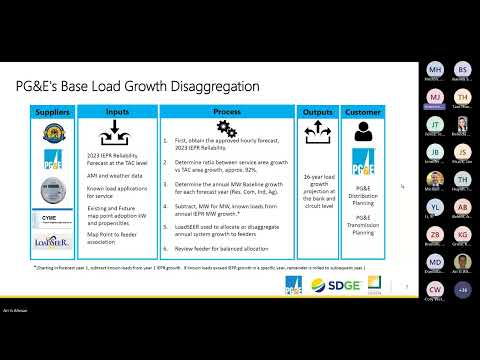
Scope and changes from prior cycles: Speckman said the IPE’s scope is based on a CPUC/energy‑division statement of work and the 2020 High DER decision. Where business processes have not changed since prior cycles, the IPE plans to skip repetitive verification steps; but the IPE flagged several items newly added to its scope this cycle. In particular the IPE said it will:
• Verify utilities’ use of known and pending loads and check whether previously identified projects remain needed under current assumptions (a refinement of what the IPE called step 13).
• Review project prioritization (step 27) and planned versus deferred project designations.
• For the first time, review project execution tracking data (step 28) that utilities will file to show customer requests, design and construction progress and completion status.
Deliverables and timeline: The IPE said a draft IPE plan would be filed and served the week of the workshop for stakeholder comment; the final plan will be issued in coordination with the utilities’ August GNA filings. The IPE’s preliminary data adequacy analysis is scheduled before DPAG meetings; the IPE intends to publish an IOU‑specific DPAD report (the principal V&V deliverable) in early November, and a combined post‑DPAG report comparing utilities and recommending process improvements is due March 15, 2026.
How V&V is defined: The IPE distinguished verification (an audit‑like check that utility outputs match the declared process and data) from validation (an assessment of whether the approach and its assumptions are appropriate). The IPE invited stakeholder comment on its draft plan and said it will incorporate feedback before finalizing materials.