Get Full Government Meeting Transcripts, Videos, & Alerts Forever!
Get email alerts on the Community Services Case Management topic
No spam. Unsubscribe anytime.
Restore Hope presents HopeHub collaborative‑care model, credits 100 Families sites with higher reunification and lower foster‑care counts
Summary
Restore Hope described HopeHub software and the 100 Families collective‑impact model to a legislative committee, citing expansion to 19 counties, improved reunification odds for participating parents and county case examples; the group sought grant and TANF funding to expand.
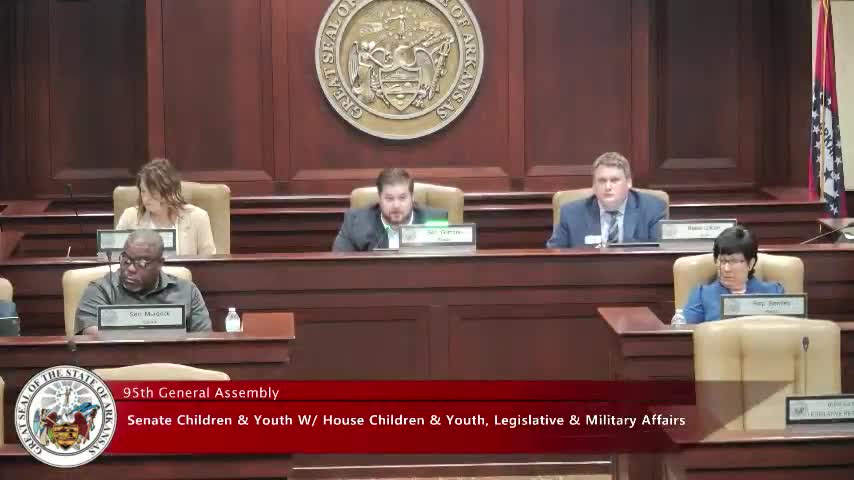
Paul Chapman, executive director of Restore Hope, told a joint legislative committee on June 1, 2025, that the nonprofit’s HopeHub software and the 100 Families collaborative‑care model are operating in 19 Arkansas counties and have been associated with higher reunification rates and declines in foster‑care placements in pilot areas.
“Any parent that chose to have a team put around them … it's over a 70 percent chance of reunification,” Chapman said, describing a rise from a baseline reunification rate he cited as 43% for parents who did not receive the collaborative team approach. He said HopeHub currently aggregates monthly common assessments for clients, supports consented data sharing among local providers and provides dashboards county leaders can use to monitor progress.
Chapman said Restore Hope’s tools supported just over 3,500 Arkansans in the past 12 months through nearly 1,400 professional providers. He described the program’s origin in Fort Smith and Sebastian County and credited local leaders with launching a collective‑impact approach there. As an example, Chapman said Sebastian County’s foster‑care population fell from about 800 children to 359 since the model’s start; he also said local adult crime and incarceration declined in recent years, and attributed those changes to coordinated local responses.
Restore Hope described practical requirements for communities to operate the model: a locally selected backbone organization, a paid coordinator and family advocate roles, and a threshold of active clients (the presenter noted a 20‑client benchmark) before a local initiative fully launches. Funding has come primarily from TANF grants and private philanthropy; Chapman said funding capacity limits wider rollout and asked legislators to consider support and partnerships.
Committee members asked about data sharing and integration. Chapman said HopeHub is “hooked up to the DHS system for eligibility determination” for benefits such as TANF in many cases and that the organization is working to sync more state data systems. He also said Restore Hope and DCFS were selected by the Lab for Economic Opportunity at Notre Dame to perform a return‑on‑investment study.
Senator Johnson and other members praised the model and asked how legislators might help expand it. Chapman asked lawmakers to consider funding coordinators and family advocates in additional counties and to permit grants or local backbone organizations to apply resources for program launch activities. He also said a roadshow demonstration of the model is planned in August and encouraged members to attend.
No formal committee action was taken; lawmakers requested written materials and a follow‑up email to staff so members could review dashboards and program details.
What happened next: Restore Hope agreed to send program documentation to committee staff and to coordinate invitations to demonstration events.