
Senate accepts conference compromise on sealing criminal history records, narrows access and adds statewide policy
Get AI-powered insights, summaries, and transcripts
Subscribe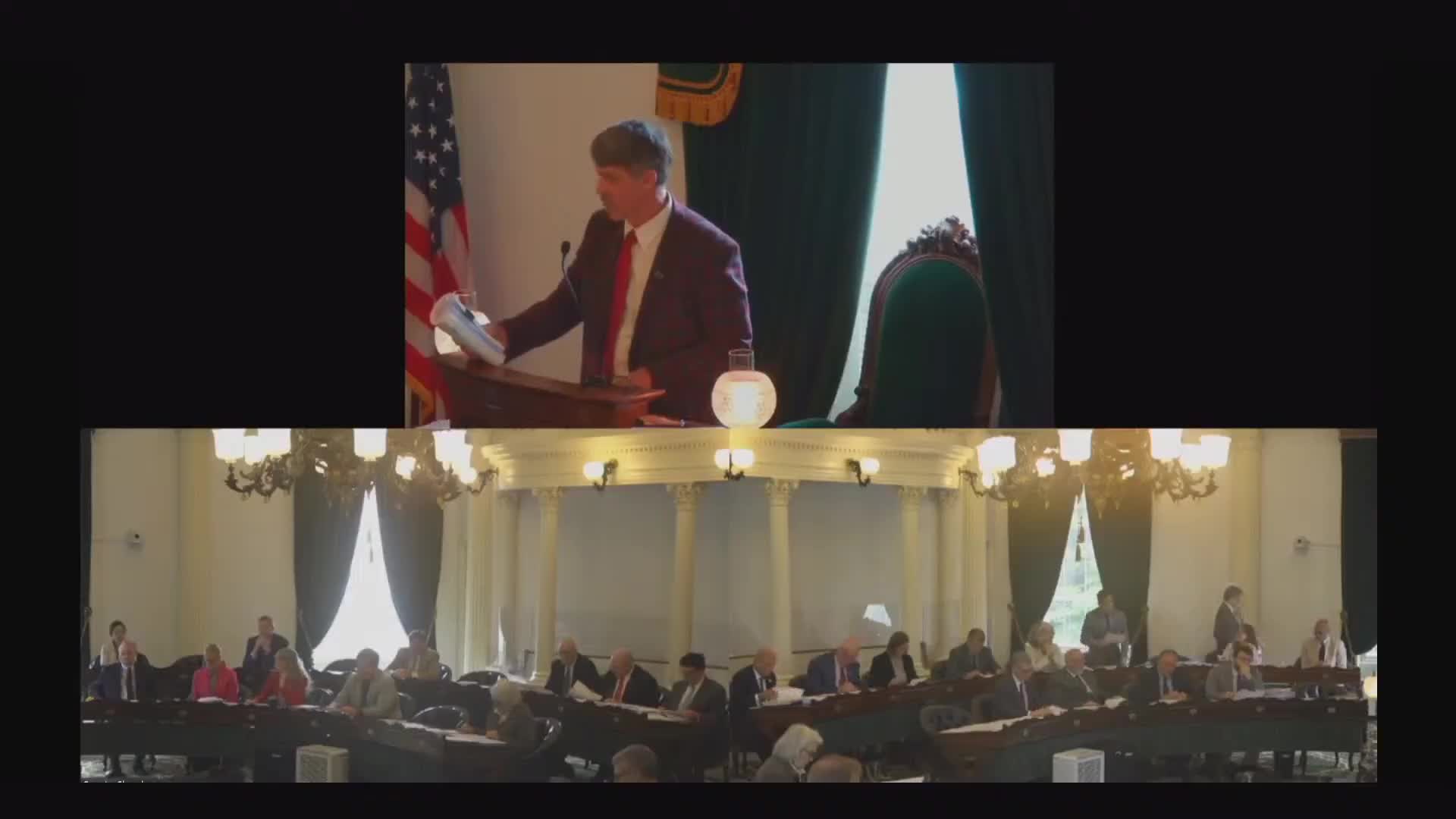
Summary
The Senate adopted the conference report on S.12, sealing and expungement reforms that preserve many Senate protections while allowing criminal-justice access to sealed records, require court orders for non–criminal-justice disclosures, and direct a statewide policy and notice requirements.
The Vermont Senate accepted and adopted the committee of conference report on S.12, the bill addressing sealing and expungement of criminal history records, after conferees described a compromise that preserves judicial protections while creating operational rules and notice requirements.
Senator from Wyndham, reporting the conference outcome, said the conference maintained much of the Senate’s position while agreeing to several House amendments intended to reduce petitioner burden and require clearer notice to individuals about the practical effects of sealing.
The report adds a requirement (per an amendment the reporter attributed to the Secretary of State) that an order of sealing be sent to Vermont entities provided by the petitioner and to entities required to receive notice under the cited statutory provisions. The conference also added language in Title 13 (sections discussed as 7606 and 7607) requiring state entities that inquire about criminal history to inform individuals that they do not need to disclose expunged records. In addition, the report requires the secretary of administration and the judiciary to notify applicable persons of their right not to disclose sealed records.
The conference committee addressed long-standing disagreement over access, usage and disclosure of sealed records. The reporter described the compromise: criminal justice agencies may access sealed records in their possession for criminal justice purposes without prior court order, but using those records to develop or litigate a criminal case, or disclosing them to non–criminal-justice entities, requires a court order. The conference also directed the creation of a statewide policy governing access and use of sealed records and a record-keeping system to log access. The report includes a penalty — a $1,000 fine mentioned in floor remarks — for improper use of sealed records.
To illustrate, the conference reporter offered a hypothetical: “So let's say there's a file cabinet full of sealed records in a police department. The police department is investigating a complex case and wants to know if there might be any information in these old sealed records that could be useful. Under the compromise we've reached, an officer can look to see if it's relevant, but if it's going to be used to develop or litigate criminal case, permission from the court will be required,” the senator said on the floor.
The reporter said the Senate’s protections for defenders and clients remain intact: defense attorneys may use sealed records in litigation where appropriate. The conference also left deferred sentences unchanged; the conference rejected a House proposal that would have eliminated expungement eligibility for deferred sentences.
The Senate voted to accept and adopt the conference report on S.12; the transcript records the ayes prevailing and the report adopted. The conference reporter urged support, saying the package balances government accountability, limited criminal-justice access for legitimate purposes, and the reintegration benefits sealing can provide to qualifying individuals.
The floor record shows the conference added multiple notification duties and required the development of a statewide access policy; affected agencies and criminal justice entities will need to implement record-keeping and notice systems specified by the enacted language.