
Senate committee approves funding to speed Medicaid long-term care eligibility after nursing-home payment backlog
Get AI-powered insights, summaries, and transcripts
Subscribe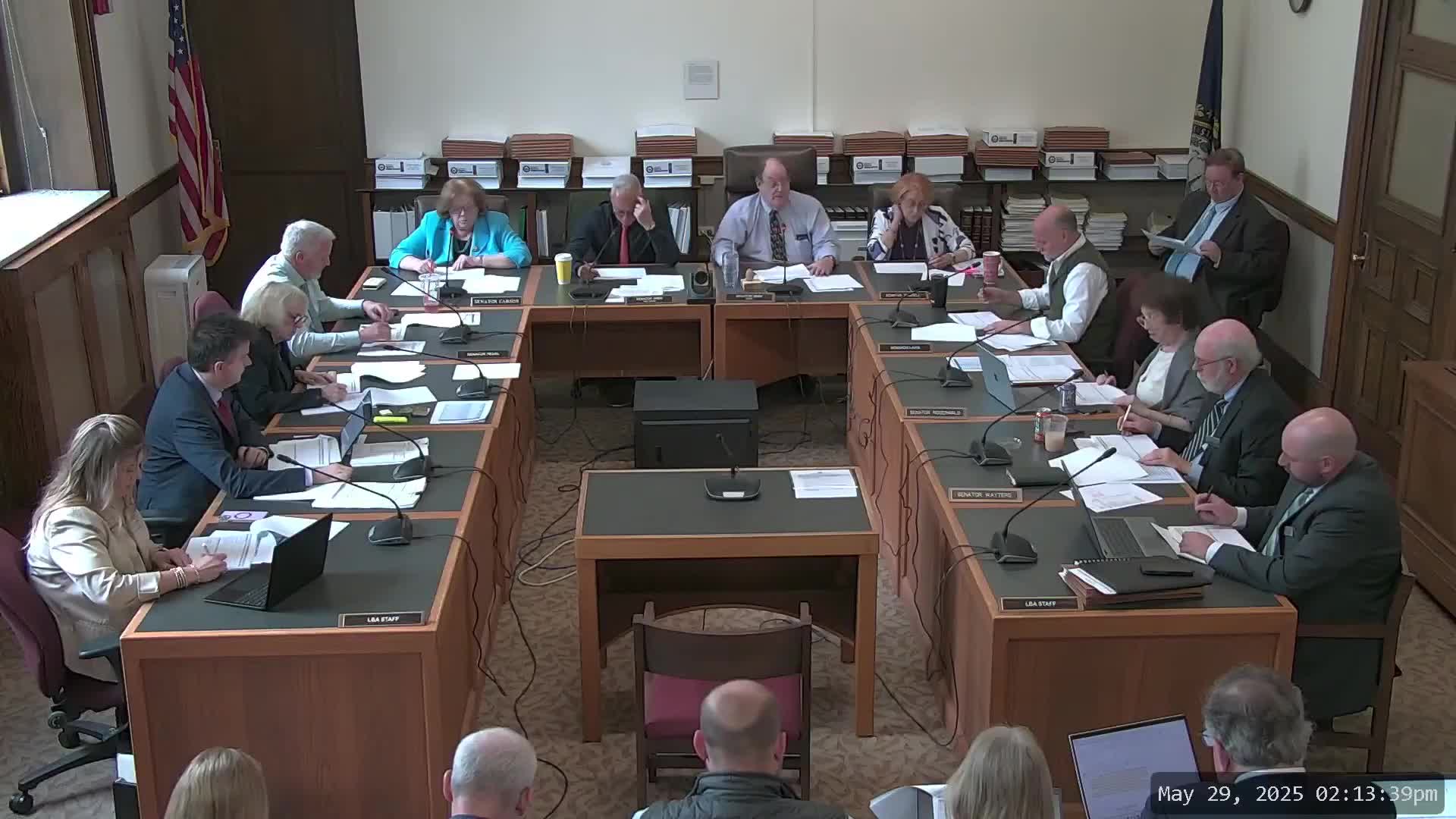
Summary
The Senate Finance Committee approved roughly $3.85 million to support a call center and contract staff intended to accelerate Medicaid long-term care eligibility reviews after lawmakers heard that nursing homes are carrying large unpaid accounts while applications wait processing.
The Senate Finance Committee approved funding to expand a call center and hire contract staff intended to speed processing of Medicaid long-term care eligibility, after senators and industry representatives said lengthy application reviews have left nursing homes carrying large unpaid bills.
Lawmakers voted to fund the initiative, roughly $3,852,525, intended to keep experienced eligibility staff focused on complex reviews while the call center handles routine inquiries and contract staff clear application backlogs. The committee chair said the measure is intended to reduce the financial strain on providers and shorten wait times for patients needing long-term care.
The move follows extended committee discussion about current delays. Henry Littmann, state Medicaid director, described the administrative challenge and how the settlement-related changes have shifted large sums into directed payments for providers. "When a person... signs their application we go back to that date for payment," Littmann said, explaining the retroactive date used for approved long-term care applications and why nursing homes need timely determinations.
Brendon Williams, president and CEO of the New Hampshire Healthcare Association, described unpaid receivables at facilities and said the association preferred provisional payments but accepted the fund-for-contract approach as a practical alternative. "We really appreciate the fact that... members of this committee have been sensitive to the issue of facilities waiting for Medicaid payment," Williams said, and urged prompt action to reduce outstanding amounts owed to homes.
Department staff and senators outlined operational detail: the call center already handles routine intake and was originally funded with ARPA; it processes thousands of calls and frees eligibility specialists to complete determinations. Department officials said there are roughly a 20% vacancy rate in the eligibility teams handling long-term care, with about 70 positions cited as vacant and unfunded. Nathan, a DHHS staff member, said training new eligibility staff can take months, and that contracting can be a faster way to add capacity.
Senators pressed for deliverables and tracking. Committee members asked the department for a drawdown or flow chart that shows how directed payments and federal matches move through the settlement mechanics so policymakers can see where money is applied and whether additional general funds are freed.
The committee chair said remaining, related measures (including provider payment directions and contractor details) will be taken up during the next committee meeting; the funding approved at this session was presented as a near-term step to reduce provider financial exposure while the department implements longer-term fixes.
The committee also directed staff to provide data on application-processing times and the expected effect of the contract and call-center expansion so senators can evaluate outcomes in subsequent votes.