Get Full Government Meeting Transcripts, Videos, & Alerts Forever!
Get email alerts on the Homestead Property Tax Deferral topic
No spam. Unsubscribe anytime.
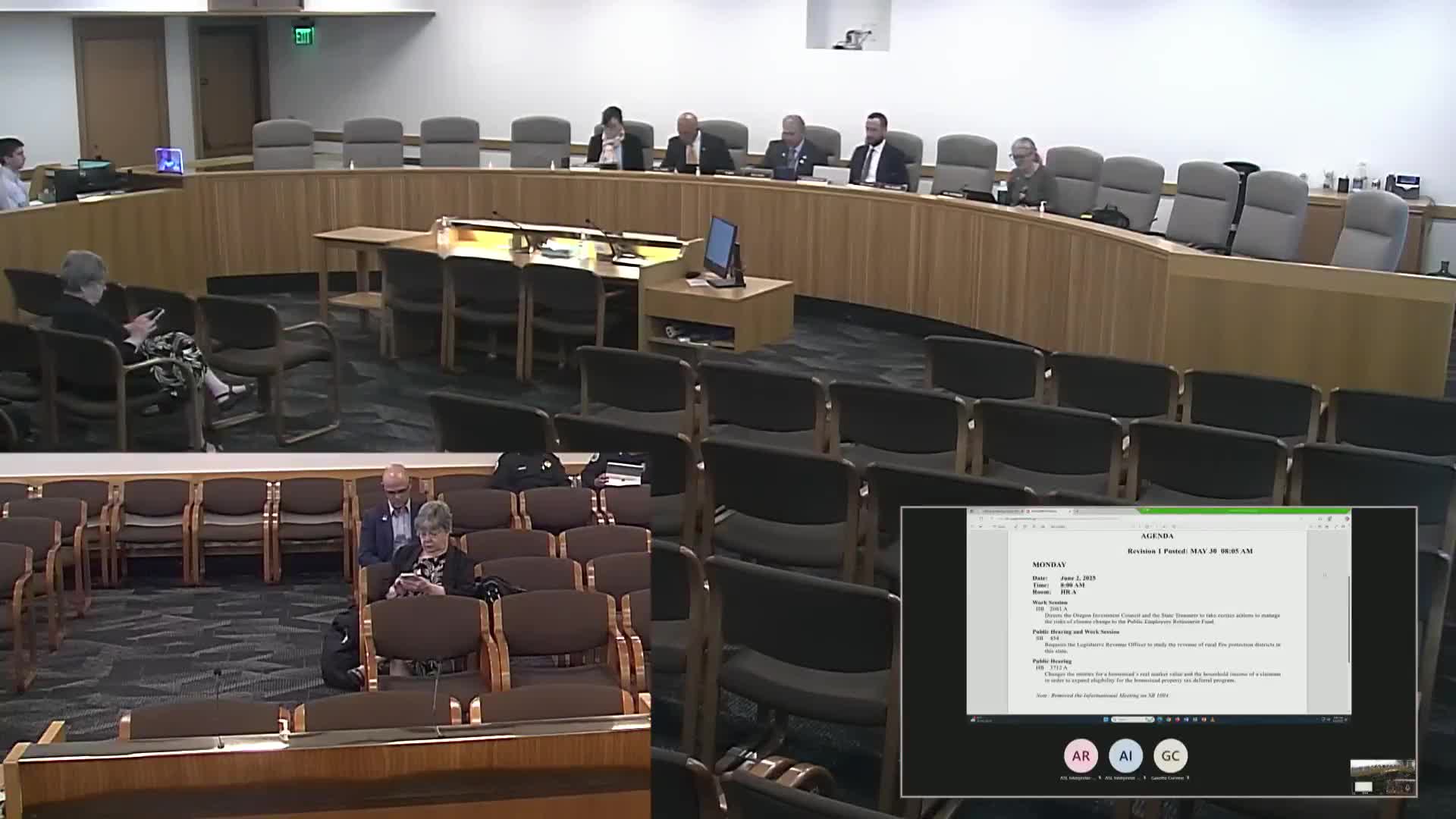
Senate committee hears bill to expand Oregon homestead property tax deferral
Summary
A public hearing on House Bill 3,712 A drew testimony supporting modest eligibility changes and a Legislative Revenue Office study to inform future adjustments to Oregon's homestead property tax deferral program.
A Senate Committee on Finance and Revenue public hearing Monday considered House Bill 3,712 A, which would raise income and some property-value limits for Oregon’s homestead property tax deferral program and require a Legislative Revenue Office study and report.
The bill would increase the household income cap from $60,000 to $70,000 and raise the real market value limit to 150 percent of the county median for homeowners with residency under 15 years; it also directs the Legislative Revenue Officer to “conduct a study of the deferral program related to homestead equity and submit a report to the legislature by September of 2026.”
Marcia Kelly, representing the Oregon Women’s Rights Coalition, told the committee the changes are “good fixes for under-subscription in the program” and said raising limits could help “lower income, fixed income seniors or people with disabilities to be able to stay in their homes.” She added that expanding use of the deferral program can save state money by avoiding other care costs such as Medicaid.
Jody Weiser of Tax Fairness Oregon described the program as “an excellent benefit available to Oregon seniors and SSI disabled homeowners but few of them use it.” Weiser estimated there are 600,000 to 700,000 senior homeowners in Oregon and said just 3,662 currently participate. She told the committee the program’s 6% interest rate is high compared with other states and suggested equity-based eligibility could be a better fiscal safeguard than the statute’s current residency or asset tests. “Equity not years in one's home is a better way of assuring the state's fiscal is protected,” Weiser said.
A Legislative Revenue Office representative described the list of topics in section 5 of the bill as a “minimum expectation” for the required report and said LRO would check in with the revenue committees and stakeholders to identify additional information needed for the study if the provision becomes law.
Committee members and witnesses noted outreach gaps: Weiser said several legislators told her they were unaware of the program when she met with them, and the bill’s proponents highlighted a $150,000 item in other legislation to help the Department of Revenue improve program communication.
The committee kept the public hearing record open earlier in the meeting, and members said they plan to schedule a work session on the bill. No formal vote on House Bill 3,712 A occurred during the June 2 meeting.
The committee also previewed other items for its next meeting, including bills addressing military deployment tax treatment and noncommercial residential fees.