Get Full Government Meeting Transcripts, Videos, & Alerts Forever!
Get email alerts on the State Budget topic
No spam. Unsubscribe anytime.
Senate approves $189 million supplemental to pay early‑education providers
Summary
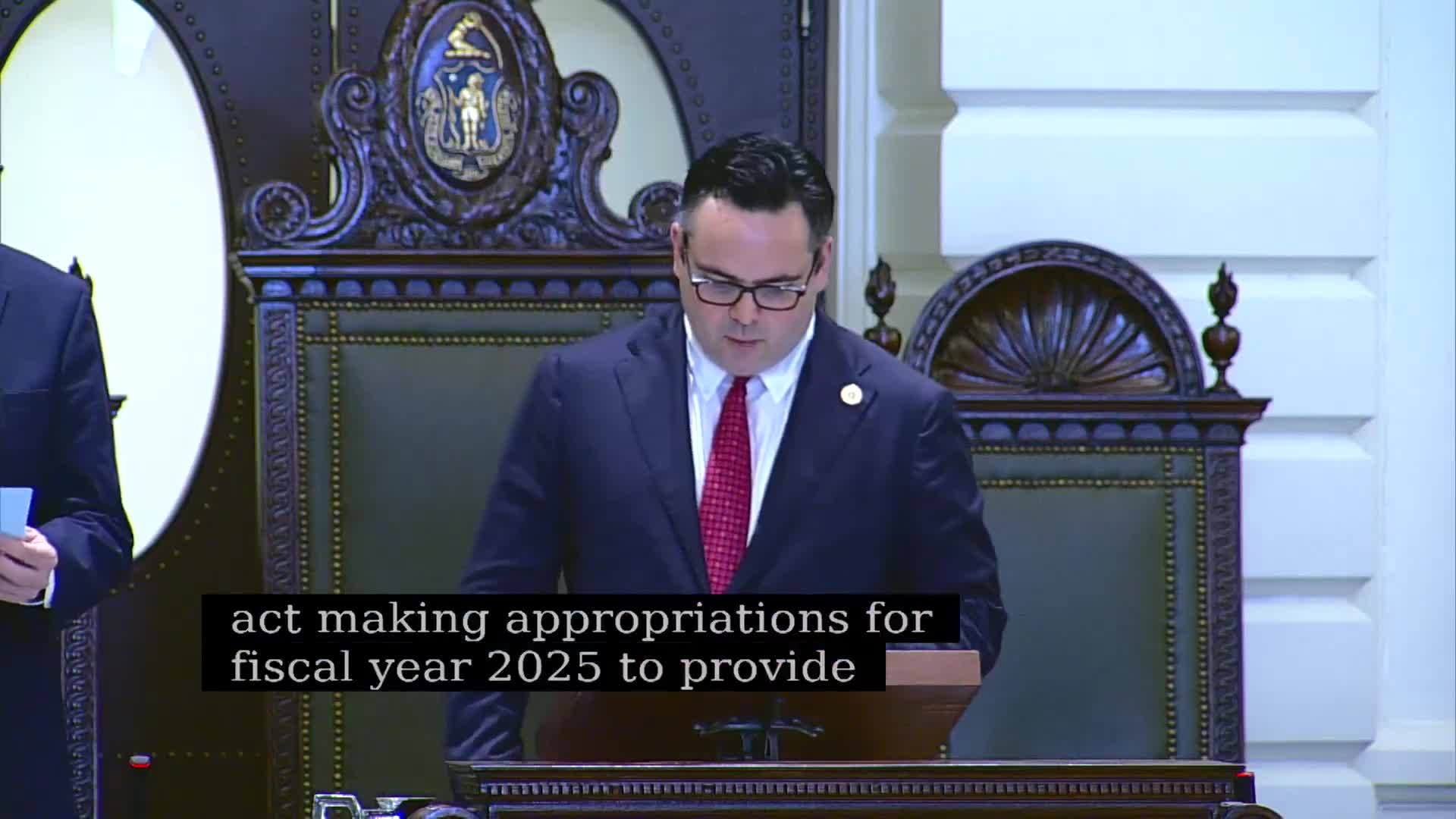
The Massachusetts Senate on May 28 passed S.2521, a supplemental appropriations bill allocating roughly $189 million to cover late‑year payments to early education and childcare providers; the measure passed with the emergency preamble and a recorded vote of 39‑0.
The Massachusetts Senate on May 28 passed S.2521, a supplemental appropriations bill that would provide roughly $189 million to cover a shortfall in payments to early education and childcare providers, the chamber said during floor debate. The bill passed to be enacted with the emergency preamble and a roll‑call vote recorded as 39 in the affirmative, none opposed.
Supporters said the measure is time sensitive because providers are slated to receive June payments and would not be paid without the supplemental. “This is time sensitive. I do hope that members join me in passing this so that early education and care childcare providers can get paid in the month of June,” the chair of the Senate Committee on Ways and Means said on the floor.
The need for the supplemental drew questions from other senators about why the shortfall occurred and how large the appropriation should be. One senator asked for an explanation of the amount, saying, “my understanding is that this particular spending document seeks to appropriate somewhere in the order of magnitude of $90,000,000,” and asked whether steps are being taken to avoid future late‑year deficits.
The committee chair answered that the supplemental before the Senate was for about $189,000,000 and that failure to act would prevent timely payments to providers. The chair also placed the supplemental in the broader revenue context for fiscal 2025, saying, “We currently stand, in FY25 about $1,100,000,000 above benchmark, with a big caveat. And that caveat is just about all of that above‑benchmark revenue is in the form of fair share or excess capital gains, which means that that is not available for traditional operational budgets.” The chair added that fair share revenue is largely restricted to public education or transportation uses and that excess capital gains above the benchmark traditionally go to the stabilization fund.
Senators recorded their votes after a motion that the vote be taken by a call of the yeas and nays. The clerk counted 39 members in the affirmative and none in the negative; the Senate adopted the emergency preamble and passed the bill to be enacted. The president signed the measure on the floor for transmission to the governor.
Background: The House had previously taken up and passed a supplemental budget; the Senate chose to report out this portion now to ensure childcare providers receive scheduled payments. Senators noted that supplemental appropriations are common for caseload‑driven accounts when estimates made in the annual budget do not match actual need.
The vote secures funding to cover the current deficiency in the Commonwealth’s system of early education and care for the remainder of fiscal 2025; no effective date beyond the normal enactment process was specified during floor remarks.