Get Full Government Meeting Transcripts, Videos, & Alerts Forever!
Get email alerts on the Corrections Health Access topic
No spam. Unsubscribe anytime.
Ohio House approves law requiring free feminine hygiene products and daily showers for incarcerated women
Summary
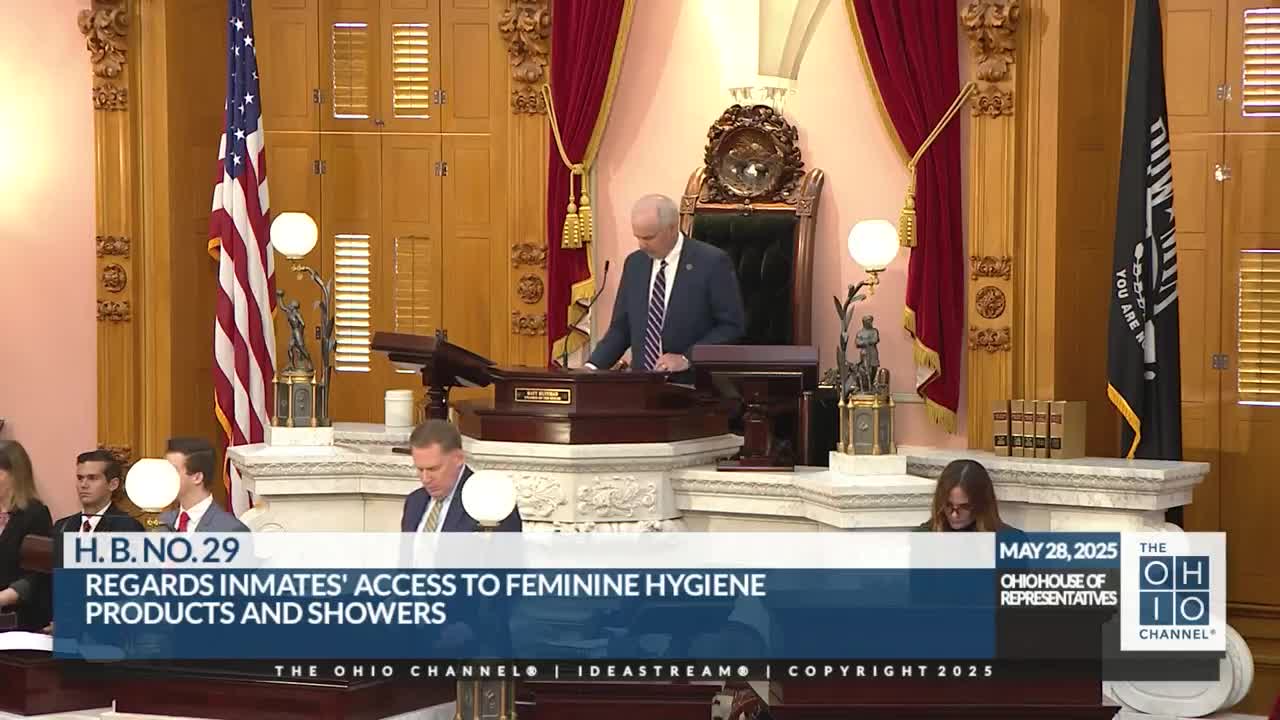
The Ohio House unanimously passed House Bill 29, which requires state and local correctional facilities to provide free feminine hygiene products, one shower per day on request, and rules for distribution and disposal; the bill includes an emergency/contingency clause for declared emergencies.
The Ohio House on May 27 passed House Bill 29, requiring municipal, county and state correctional facilities to provide female inmates with free feminine hygiene products and to provide one shower per day upon request.
Sponsors and supporters said the measure responds to accounts from formerly incarcerated women who said they sometimes lacked sanitary supplies and access to showers. "This bill is about sanitation methods, but then it's also about making sure that the women have what they need while incarcerated," Representative John said on the floor.
The bill also directs the development of rules to ensure proper distribution and disposal of products and includes a contingency (emergency) clause that protects facilities from liability when distribution is interrupted by riots, natural disasters or similar declared emergencies, a provision added in a prior session and retained in the current language, lawmakers said.
Representative Humphrey, a joint sponsor, noted the bill had passed the House in the prior general assembly and was being reintroduced to codify practice into law: "There is a big difference between a variance and a law," she said, urging passage.
The clerk recorded the roll as 91 affirmative votes, 0 negative; the chair declared the bill passed and entitled. The bill's title was amended on the floor by Representative John and agreed to without objection.
Discussion vs. decision: lawmakers framed the matter as a standards-and-dignity measure informed by testimony from formerly incarcerated women; supporters emphasized rulemaking and implementation details but no committee referral or implementation schedule was spelled out on the floor beyond the bill text. The vote was a formal approval by the House.