Get Full Government Meeting Transcripts, Videos, & Alerts Forever!
Get email alerts on the Seasonal Communities And Transfer Fee topic
No spam. Unsubscribe anytime.
Cape and island leaders press for local-option transfer fee, preservation tools to keep year-round residents
Summary
Officials from Nantucket, Martha's Vineyard and Cape Cod told the Joint Committee on Housing that seasonal communities face acute affordability and availability problems and asked for a local-option real-estate transfer fee plus state guidance and funding aligned to land-trust and preservation models.
Leaders from Nantucket, Martha's Vineyard and Cape Cod told the Joint Committee on Housing that seasonal economies, a high share of second homes and constrained land and water resources make their housing challenges distinct from other parts of the Commonwealth.
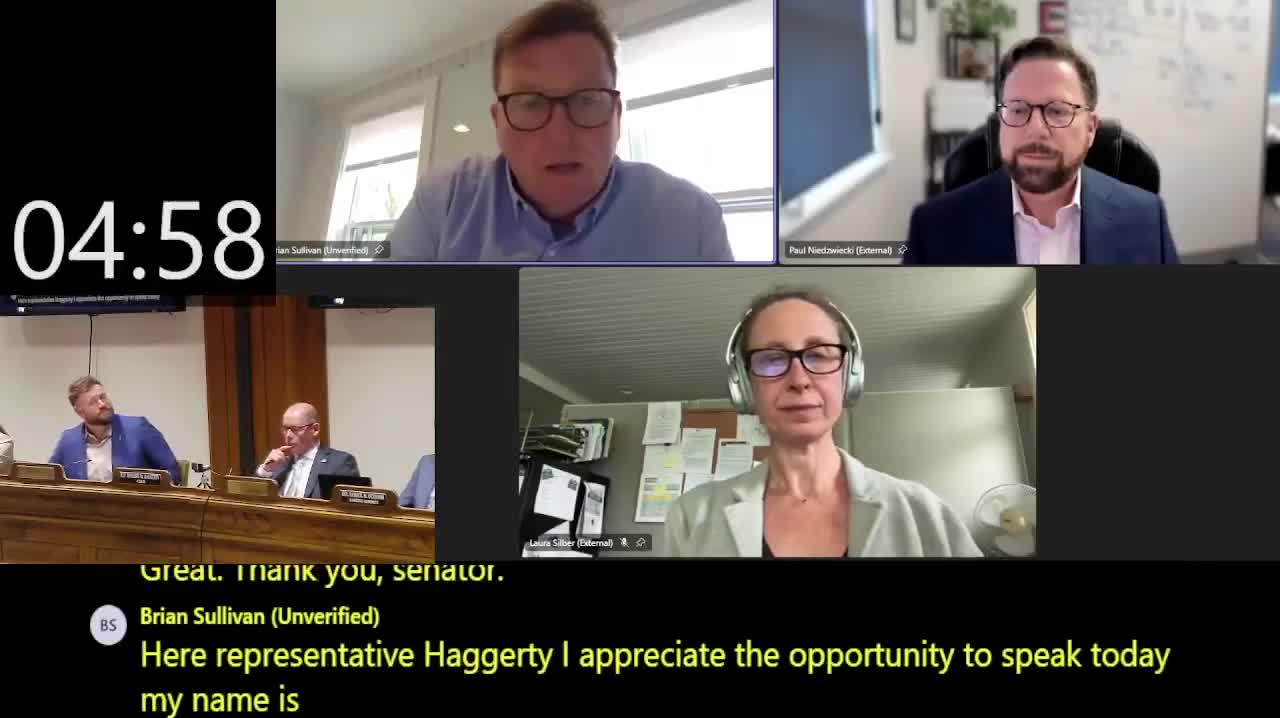
Brian Sullivan, chairman of the Nantucket Affordable Housing Trust and a local Realtor, said Nantucket voters have approved roughly $140 million for housing investments since 2019 and that the town has produced more than 200 deed-restricted units, raising subsidized housing inventory from about 2% to 6.5%. "Our median home price is 3 and a half million while our median household income of 4 people is just under 150,000," Sullivan said, and he urged the committee to approve a local-option real-estate transfer fee to create a dedicated, sustainable revenue stream for preservation, conversion and new units.
Laura Silber, island housing planner for the Martha's Vineyard Commission, and Paul Nizwicki of the Cape Cod Chamber of Commerce described parallel pressures: limited developable land, constrained water and wastewater capacity, a high share of second homes (Cape Cod about 37% overall and up to 70% in some towns), and reliance on seasonal and J-1 or H‑2B seasonal workers. Silber said all seven Dukes County municipalities adopted the seasonal communities designation and are updating housing plans and zoning to prioritize year-round units where feasible.
Witnesses asked the legislature to (1) authorize and make available a local-option transfer fee targeted to second‑home/high‑end transactions, (2) adapt state revenue and bond programs to better serve small-scale acquisitions and community land trust models, and (3) provide guidance for counting permanently restricted year-round units in the Subsidized Housing Inventory (SHI). Sullivan and others said deed-restriction and community-land-trust tools are essential to hold housing permanently for year‑round residents.