Senate restores specialty-board enforcement in medical‑board overhaul after heated floor debate
Loading...
Summary
The Texas Senate adopted the conference committee report on Senate Bill 268, returning enforcement of many professional‑scope complaints to specialty licensing boards and preserving the Texas Medical Board’s role in criminal referrals; the vote was 23–8.
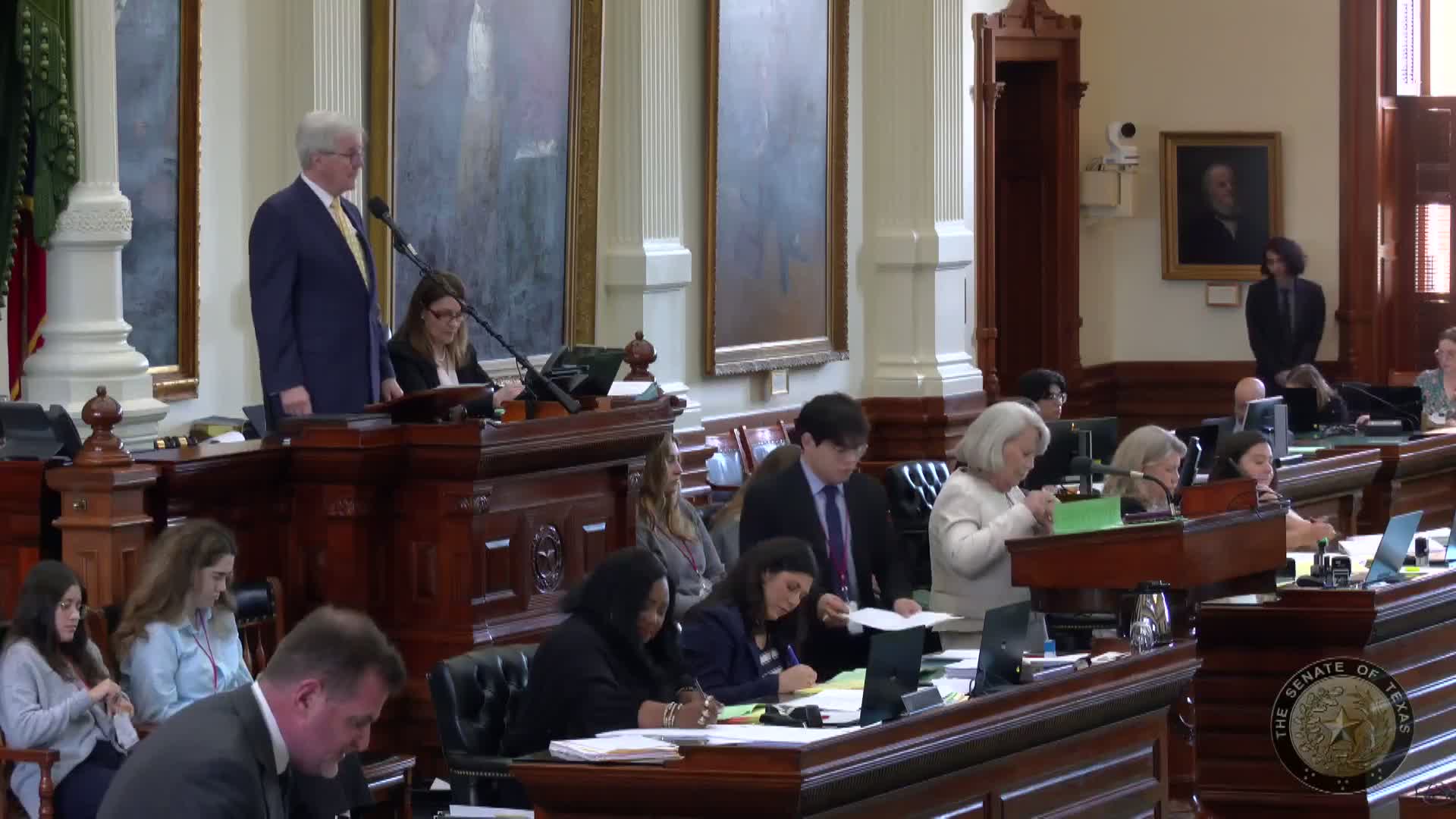
The Texas Senate on the floor adopted the conference committee report on Senate Bill 268, a measure reshaping how complaints about health‑care practitioners’ scope of practice are enforced, with Senator Charles Perry moving adoption and the measure passing 23 ayes to 8 nays.
The bill as adopted places primary enforcement of practice‑scope violations with the specialty licensing boards rather than centralizing those powers at the Texas Medical Board (TMB). Supporters said specialty boards have more direct disciplinary tools — including license suspension or revocation — while opponents warned the change could delay protections when unlicensed or clearly illegal practice is alleged.
Senator Charles Perry, sponsor of the conference report, said the bill “puts enforcement with the specialty board. So if I'm a chiropractor, my board should regulate and enforce with me.” He argued the Texas Medical Board’s current authority for out‑of‑jurisdiction cases is limited chiefly to issuing a cease‑and‑desist order. As he told colleagues, “TMB's teeth is a cease and desist only today with no authority to move forward on taking away a license from someone that's outside their jurisdiction.”
Opponents, including Senator Carol Campbell, said the change could weaken rapid response when someone practices medicine without any license. Campbell pointed to recent cases: “There are 11 individuals in the state of Texas that [were] ordered to cease and desist in 2024 and were referred to prosecution,” and asked whether removing or limiting TMB’s immediate cease‑and‑desist authority would leave Texans exposed until a district attorney acted.
Senator Perry and other supporters replied that criminal practice without a license remains a prosecutable offense and that referral to local prosecutors remains an option. Perry said the bill “does not change TMB's ability to issue cease and desist. If you're practicing without a license, that's a criminal offense,” and that the statute already provides remedies by referral to the district attorney.
Several senators questioned how boards would police scope creep — for example, when one licensed profession’s rules appear to encroach on another’s practice. Perry said scope is set in statute and rulemaking and that the committee structure and complaints process should surface problems for corrective action.
The final vote on the conference committee report was 23 ayes, 8 nays. The motion to adopt was made by Senator Charles Perry and the report passed. The transcript records substantial floor debate; no additional amendments on the floor were adopted during the roll call on this motion.
What happens next: With the conference committee report adopted, the bill moves forward for enrollment and final processing before becoming law according to statutory timelines and any implementing rulemakings by the affected licensing boards.