
Board shortens public-comment time, adopts model policy updates after heated debate
Get AI-powered insights, summaries, and transcripts
Subscribe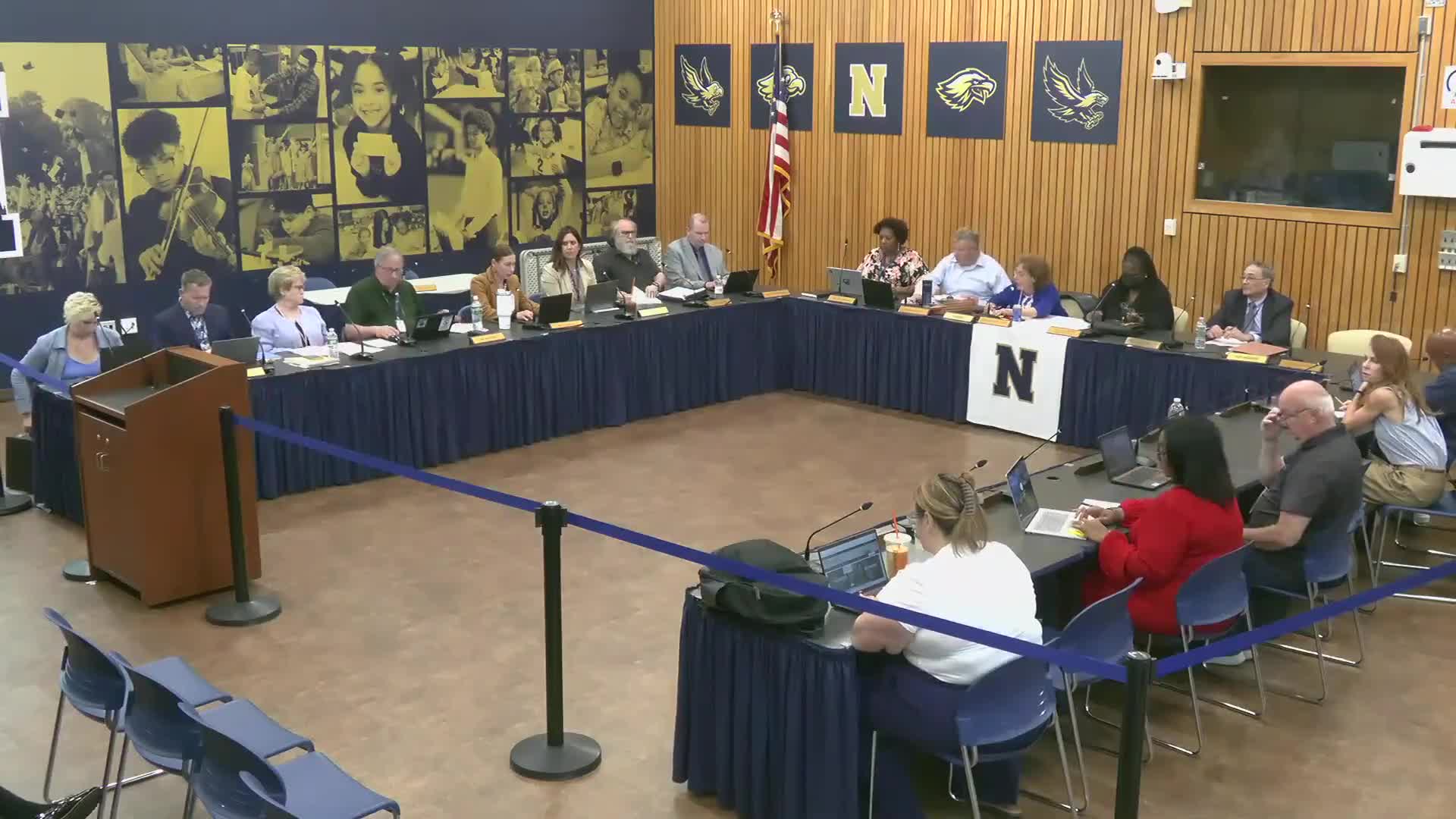
Summary
The Newburgh City School District Board of Education on May 29 approved changes to its public-comment rules and adopted model policy updates supplied by the New York State School Boards Association, drawing objections from board members and public speakers who said the changes limit community input.
The Newburgh City School District Board of Education on May 29 adopted changes to its public-comment policy that reduce individual speaking time and moved several model policy updates forward after debate among board members and public commenters.
The board approved resolution 6.1 to shorten public-comment time from five minutes to three minutes and to move non‑agenda public comment to the end of meetings. “At 3 minutes, you hear from 10 [people],” said Mister Howard, a board member, quoting the committee rationale; Howard opposed the change during debate and called moving non‑agenda comments “a slap in the face” to parents and community members. The motion passed on a roll-call vote: Miss Mackenzie Boucher, Miss Victoria Boucher, Mister DeRay, Mister Stewart, Miss Christine Bello and Miss Thomasina Bello voted yes; Mister Bergarelli, Mister Howard and Miss Politi voted no (tally: 6–3).
Why it matters: Board members and members of the public framed the change as a tradeoff between allowing more speakers and shortening individual remarks. Supporters said the shorter time would allow more people to speak; opponents said shifting non‑agenda comment to late in the evening would effectively silence many residents and disproportionately affect working parents and others who cannot stay through long meetings.
The board also approved resolution 6.2, a package of policy revisions provided by the New York State School Boards Association (NYSBA) and reviewed by the district attorney. That motion passed on a roll call with one member opposed (Miss Politi) and the rest in favor (tally: 8–1). Attorney Mister Shaw explained that some language in a proposed policy about superintendent duties had been crossed out because “the duties of the superintendent of schools are set forth in the education law,” and including them in district policy would create redundancy.
On a related item, 6.3, the board held a first reading of a proposed policy to add one or more ex‑officio student board members. The policy committee recommended that student board members be selected by high‑school student government, with the board retaining final approval. Board members asked how three campuses would be represented; the first reading left options open for revision before a final vote.
Public comment and committee context: Several speakers raised concerns about the public‑comment changes. Tracy Wallace, a resident who said she has researched district policy, criticized the board for crossing out long‑standing language and urged the board to “govern with your policies.” Other speakers described repeated difficulties getting substantive answers at prior meetings and linked the policy changes to broader concerns about transparency.
What’s next: The student‑member policy will return for revision after committee discussion. The newly adopted public‑comment and NYSBA policy updates take effect as board policy unless the board later amends them.
Ending: The board framed the change as an attempt to let more people speak by shortening time limits; opponents framed it as a burden on those who cannot stay late. The district attorney and policy committee members said statutory requirements and model policies guided the revisions.