
District finance presentation shows modest new state money, projects deficit spending and cuts risk
Get AI-powered insights, summaries, and transcripts
Subscribe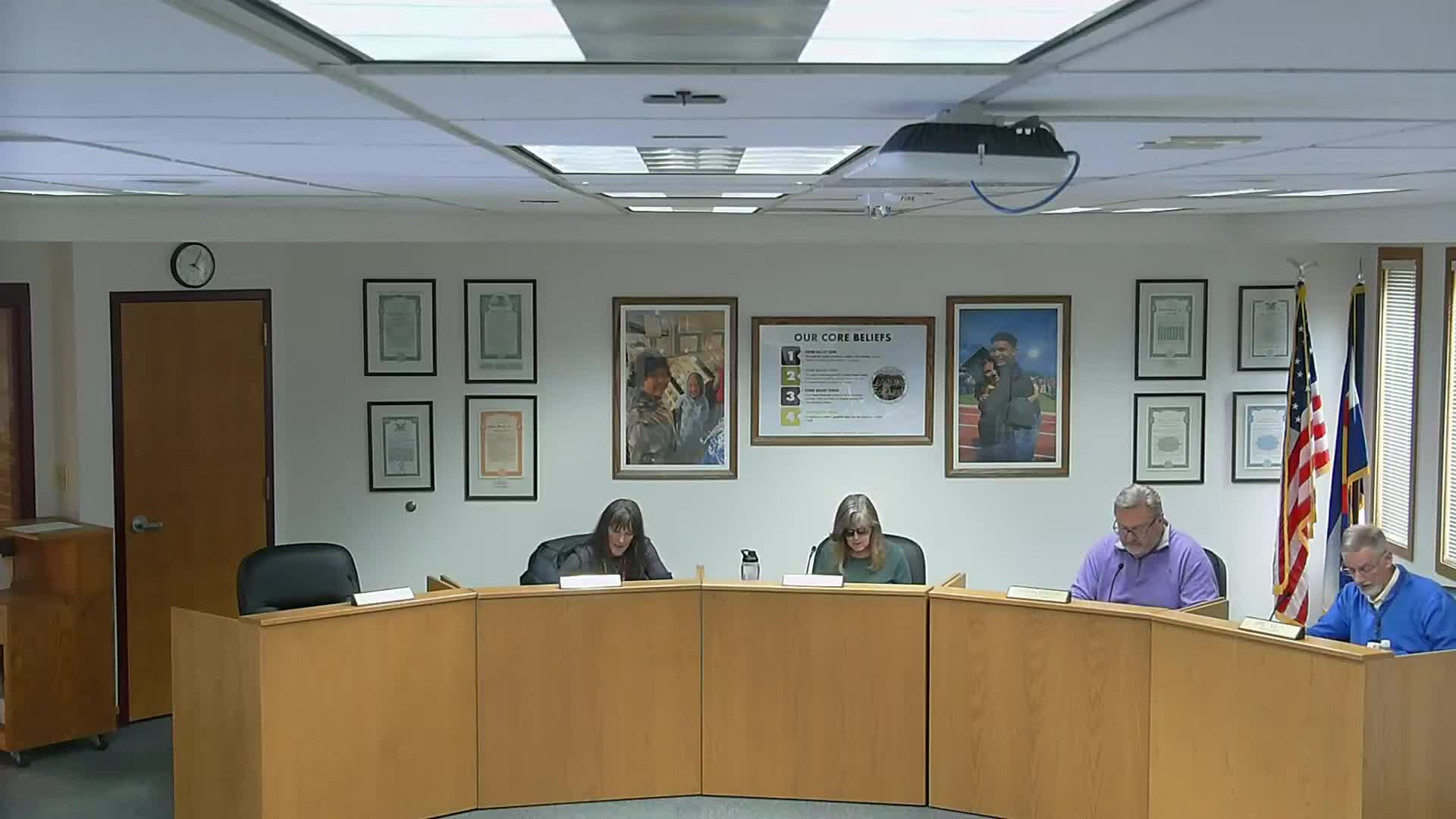
Summary
Heidi Anderson presented the proposed 2025–26 Canyon City Schools budget May 29, reporting $556,322 in new state money under the new school finance formula but projecting deficit spending that would reduce the district—s fund balance unless further state implementation or cuts occur.
Heidi Anderson presented the Canyon City Schools proposed 2025–26 budget at a special board meeting on May 29, 2025, saying the district will receive $556,322 in new money under the state—s revised school finance formula but still faces projected deficit spending that will draw down reserves.
Anderson said the new funds come from changes under the recently adopted school finance law and a companion implementation bill, but cautioned that full relief depends on future phases of the state—s rollout. "So the new formula on the 4 year averaging, 15% implementation, meant new money of $556,322," Anderson said.
The presentation matters because the district—s operating revenue mix is largely state and local property tax dollars; Anderson told the board the district—s general fund revenues are about 31% local and close to 60% state. Under the draft budget she presented, total revenue is $38,845,000 and total expenses are $39,000,006.61, leaving a planned draw from reserves that would reduce the ending general fund balance to roughly $8.0 million (about 20–21 percent of expenditures), according to the materials Anderson reviewed with the board.
Anderson reviewed how two recent state measures factor into the numbers. She cited "house bill 14 48" as the updated school finance act and said implementation guidance in "house bill 13 20" established a multiyear averaging and a phase-in of the new formula. Anderson explained the phase-in schedule she used for 2025–26: a 15% implementation of the new formula with four-year averaging, noting that later years could move to 30% implementation and three-year averaging if the Joint Budget Committee allows it. She warned that the Joint Budget Committee can suspend the transition in economic downturns. "If the balance of the state education fund falls below $200,000,000 with 3 year averaging, then the formula moves to the smoothing factor," she said.
She gave district-level impacts and key line items: the $556,322 in new program funding is partially allocated to the charter school (about $123,000), leaving roughly $433,000 of new revenue for the district. Anderson also described a prior-period audit adjustment that increased the beginning fund balance by $827,238 but emphasized this was a recognition change, not new operating revenue. She said expenditures remain heavily weighted to salaries and benefits (about 81% of expenditures) and that the district is budgeting an estimated cost per pupil of $13,053 versus an expected revenue per pupil of about $11,501.
On cost pressures she listed specific budget changes the district incorporated: converting three counselors from expiring grant funding to the general fund (about $300,000 in salaries and benefits), a negotiated health plan change that lowered the projected insurance increase, restoring two SRO positions previously partially funded by ESSER (an added roughly $135,000 in general-fund cost), and other negotiated salary schedule changes and classified wage clarifications that together added roughly $872,400 in new costs described in the packet. To offset those increases, the district identified about $575,000 of personnel reductions in central office and buildings and roughly $300,000 of discretionary reductions at buildings and departments.
Anderson walked the board through fund-by-fund results: food service and pupil activities show structural gaps that rely on fund balances and transfers; the bond redemption fund must maintain a cash balance to meet debt service; and the building and capital reserve funds plan significant drawdowns tied to ongoing projects and expected proceeds from property sales. She said she was budgeting conservatively for state and federal grants that had not yet been finalized and that ESEA preliminary allocations were not yet received for the next year.
Board members asked whether the district could fund an elementary math curriculum the coming year; Anderson said that would require reprioritizing and that the district may have to make further cuts if the state does not advance implementation as anticipated. Superintendent Adam Hartman praised Anderson—s work and noted the district is keeping the chief financial officer posting open to attract more candidates while continuing current budget work.
The presentation did not include a formal adoption vote; Anderson told the board that appropriation resolutions and any required budget adjustments will be presented in June for formal action. "There will be resolutions that'll need to be passed, but that won't be until June," she said.
The board discussed next steps and staffing implications, and members were reminded that midyear true-ups and the state's next funding runs could change the final budget picture.