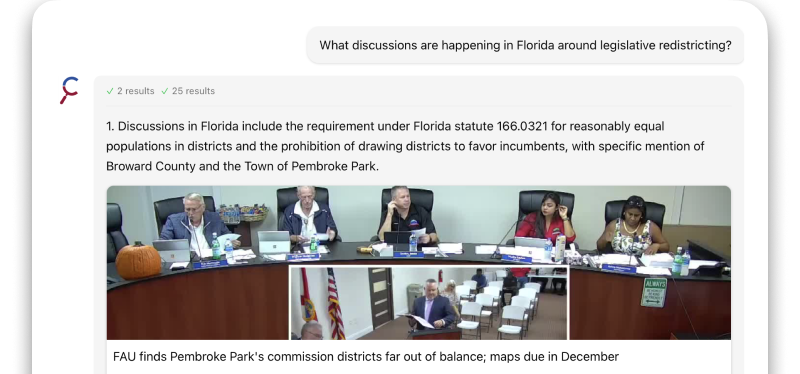
Conference committee debates new CHIP program limits, administration and auditability

Summary
Members of the Economic Development, Housing & General Affairs conference committee spent a multi-hour session debating the structure, fiscal caps and administration of a proposed Community Housing Infrastructure Program (CHIP) and how it would interact with existing tax-increment financing (TIF).
Members of the Economic Development, Housing & General Affairs conference committee spent most of a multi-hour session debating the structure, oversight and fiscal limits of a proposed Community Housing Infrastructure Program, or CHIP, and whether it should replace or run alongside Vermont’s existing tax-increment financing (TIF) framework.
The committee focused on three practical questions: how large an annual education-fund exposure CHIP should allow, how strictly to test whether incentive dollars are “but-for” the project, and how quickly the administering body should review applications. Legislators and agency staff discussed a $14 million-per-year figure for limiting education-fund exposure, a $40 million-per-year administration cap tied to project approvals, and a timeline for approvals that several members said would need more flexibility than the bill’s draft 45-day requirement.
Why this matters: CHIP would create a new way for municipalities to use development-driven tax increment and other infrastructure financing to support housing. Proponents said a program with clear eligibility and a cap would spur housing production without recurring general-fund appropriations; opponents warned that overly prescriptive tests or short review windows would make the program administratively unworkable, especially for smaller, rural towns.
Discussion highlights
• Annual cap and 20-year framing: Multiple committee members and staff discussed an administration proposal that would limit the program’s exposure to roughly $14 million in retained education-property tax revenue in a single calendar year. The $14 million figure was described as “equating to a penny on the property tax this year” in the committee discussion; participants said it would protect the education fund compared with current TIF foregone revenue (estimated in the discussion at about $6.5–$7 million annually under existing TIF districts).
• How $14M became $40M: Committee staff and the Joint Fiscal Office (JFO) explained they “worked backwards” from the $14 million figure to an administrable annual limit on lifetime retained increment for newly approved CHIP projects. That process produced a $40 million ceiling on the total lifetime increment that could be retained for projects authorized in a single year. JFO and staff framed the $40 million number as an administrative cap intended to limit statewide exposure while allowing multiple local projects to proceed.
• Units-per-year uncertainty: JFO and some witnesses offered order-of-magnitude examples of housing outcomes under various infrastructure-cost assumptions. One estimate described roughly 1,000 housing units per year as an “order of magnitude” outcome from these financing assumptions, while an example using $45,000 of infrastructure support per unit produced an illustrative 7,500-unit figure. Committee members repeatedly cautioned the group that the estimate depends heavily on infrastructure cost per unit, market conditions and changing construction costs.
• Retention rates and splits: Participants discussed a range of increment-retention percentages in the draft—60%, 70%, 85% and higher appeared in the discussion—and a proposal that municipalities receive an 85% share of retained increment in many cases. The committee did not resolve a final retention split; staff said they would bring a detailed proposal back to the group.
• But-for test and auditability: The committee debated whether the statute should require a highly prescriptive “but-for” test (demonstrating the project would not occur without CHIP financing) or leave that determination to the administering board’s judgment. Pepsi (the state reviewing body referenced in testimony) and VLCT (Vermont League of Cities and Towns) warned that an overly prescriptive but-for test could be impossible to prove and could chill municipal applications; others asked for clearer guidance to make the test auditable.
• Timing and process: The draft bill’s 45-day clock for Pepsi to act on a completed application prompted pushback. Members said routine board scheduling and on-site visits mean 45 days after completion may be too short; staff and Pepsi suggested 60 days after a site visit, with authority to extend for extenuating circumstances. Committee members said they would return with language that balances timeliness and feasibility.
• Project eligibility and mixed-use thresholds: The draft included a floor for the proportion of project floor area that must be housing (a proposed 65% floor was discussed). Members asked for flexibility for reuse projects (school conversions, adaptive reuse) and said they expected Pepsi to define “substantial housing” in rule-making so atypical projects would not be excluded by a rigid square-foot threshold.
• Application volume and administration capacity: Pepsi staff said they could meet the program’s demands but cautioned that if applications rose rapidly the agency would need additional staff and funding. Committee members said that if the legislature moves forward they will consider budget requests for additional Pepsi capacity.
Quotes from the meeting
Cameron Wood, Legislative Council: “I believe it was primarily Senator Weeks who pointed this out that it’s not a revolving fund in the typical sense… the funds are forgivable loans or grants. It’s not intended to come back to the department, but it can conceivably come back to them.”
Jeff Carr, Joint Fiscal Office (JFO) (via staff comments reported in committee): On the models for unit production, committee testimony described “order of magnitude” estimates and cautioned these were not precise projections.
Stephanie (executive director, Pepsi): “When a municipality submits their application, they have to identify their TIF district boundaries, and that TIF district boundary has to be approved by the municipality and then brought to us.”
What the committee did not decide
The committee did not adopt final language for the annual exposure cap, the lifetime increment cap, the precise increment-retention split between municipalities and the education fund, or the final phrasing of the but-for test. Members asked staff to draft alternative language that would (a) preserve protections for the education fund, (b) set administrable limits on approvals per year, and (c) give Pepsi a workable review window with the ability to extend in extenuating circumstances.
Next steps and timeline
Committee members agreed to reconvene with revised draft language. Staff and agency representatives said they would return with proposed rule-making approach and administrative numbers for negotiations. The group scheduled another meeting the following morning to consider a response to issues raised and to reconcile remaining open items.
Ending
The conference committee’s discussion underscored the tension between protecting the state education fund and creating an administrable program that municipalities—especially small and rural ones—can feasibly use. Committee members asked staff to translate the technical spreadsheet work into clearer statutory language and to coordinate with Pepsi, JFO and municipal stakeholders before the next meeting.