
Council approves Chittenden Solid Waste District FY26 budget as CSWD seeks $10-per-ton fee increase
Get AI-powered insights, summaries, and transcripts
Subscribe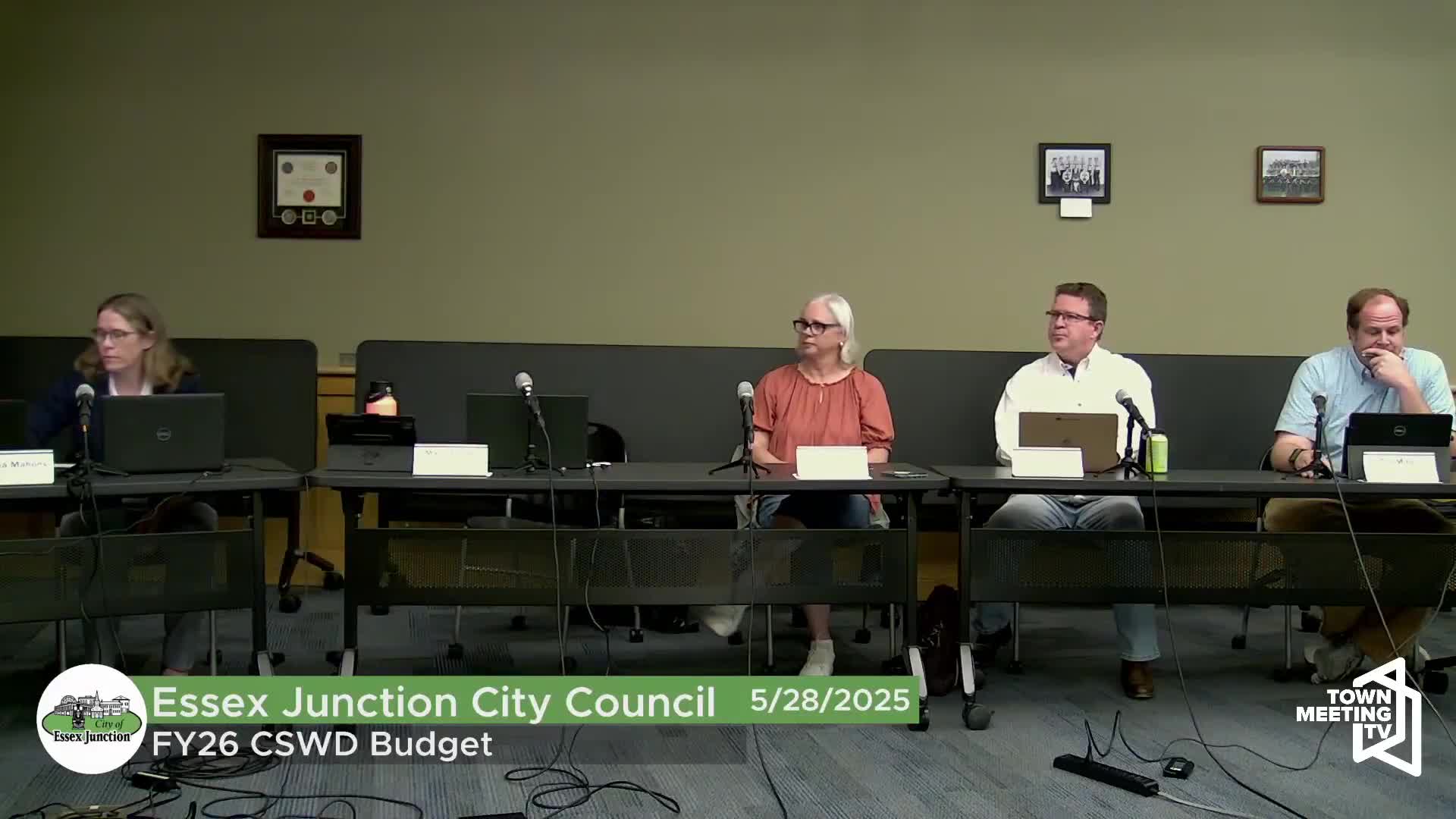
Summary
Essex Junction City Council voted to approve the Chittenden Solid Waste District(CSWD) fiscal year 2026 budget after a presentation from CSWD staff that included a proposal to raise the districtsolid waste management fee from $30 to $40 per ton to close a roughly $4 million funding gap for a materials recycling facility project.
The Essex Junction City Council on May 28 approved the Chittenden Solid Waste District(CSWD) fiscal year 2026 budget after a presentation from CSWD staff who said the district will seek to raise its solid waste management fee from $30 to $40 per ton.
CSWD Executive Director Sarah Reeves told the council the fee "is the fee that is charged directly to haulers for the trash that they bring to the landfill" and that the fee "has been in place since 1993." Reeves said the proposed rate increase would raise the district's anticipated revenue from about $16.2 million to roughly $17.5 million and that "every dollar over that 16.2 that was initially budgeted ... will then go directly to the MERF capital projects fund." She said the additional revenue is intended to close a funding gap of about $4,000,000 for the materials recycling facility capital project.
Why it matters: CSWD's solid waste management fee is charged to trash haulers and is typically passed through to customers as part of hauling bills. Reeves said an average Chittenden County household generates just over 1 ton of trash per year and that CSWD's share of the typical $50 monthly subscription bill would rise from about $3 to "just under $4 a month," or "an increase of less than a dollar per month per average household."
Reeves outlined the primary drivers of the funding gap: COVID-related delays, inflation and an unanticipated $3,000,000 cost to purchase an alternate property after the originally planned Redmond Road site proved unsuitable because of wetlands. She told the council the district had considered and dismissed other options — including a per-capita municipal assessment, municipal property-tax funding, or larger increases at drop-off centers — because of timing and fairness concerns for member municipalities. "We did not want to... place that burden on our local municipalities or on residents and businesses in Chittenden County," Reeves said.
The district recommended moving the solid waste management fee to a formula of small regular annual adjustments tied to a U.S. Bureau of Labor Statistics consumer price index (either the garbage-and-trash index or the Northeast Urban CPI) to keep pace with inflation.
Council discussion and vote: Councilors asked about personnel costs and fee impacts. Councilor Emily asked about the modest payroll/benefits increase and Reeves credited retirements and careful hiring. Councilor Marcus Serna declared a recusal before the CSWD presentation because his wife works for CSWD and left the discussion. Councilor Elaine moved to approve CSWD's FY26 budget as presented; Councilor Jim seconded. The motion passed unanimously among voting members present; no nays were recorded and Serna was recused from the vote.
What the fee pays for: Reeves said the solid waste management fee supports CSWD administration, finance, compliance, IT, outreach and education and portions of some facilities (drop-off centers, organics recycling, environmental depot), plus reserve funds and the MERF capital fund. She said environmental depot operations are supported about 8025 to 8525 by the fee.
Next steps: The fee change and annual budget process are governed by CSWD's charter and board procedures; Reeves said the district's board already has passed an ordinance change to allow regular index-based adjustments and that budgets are vetted by the district finance committee and board before municipalities vote.