Smith trustees hear regionalization roadmap, weigh consultant RFP
May 31, 2025 | Northampton City, Hampshire County, Massachusetts
This article was created by AI summarizing key points discussed. AI makes mistakes, so for full details and context, please refer to the video of the full meeting. Please report any errors so we can fix them. Report an error »
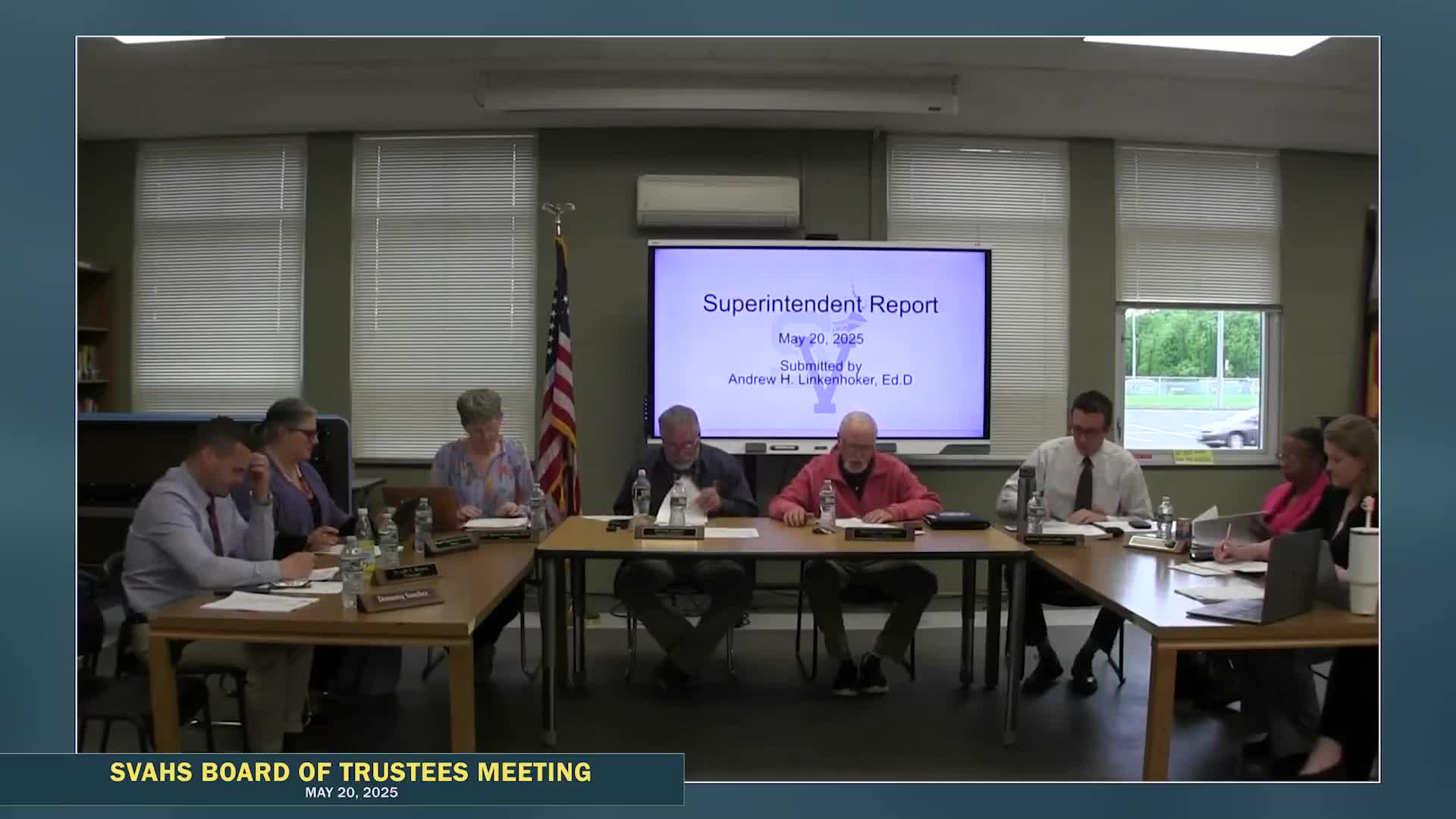
The presentation, given by Jay Barry, a consultant with Mars Consulting Group, and Roger Bujola, a former superintendent involved in the creation of Essex North Shore Agricultural Technical School (Essex Tech), outlined statutory steps for forming a regional vocational school district, described how a regional agreement functions, and offered examples of how a complex merger has worked in Massachusetts.
The discussion mattered because trustees said the school needs a clear, fundable plan for Building D and other capital needs. Barry said the process is procedural but “unique” for Smith’s situation and that forming a regional vocational‑tech district is one option to explore. “One of them might be that you want to consider forming a regional vocational tech school,” Barry told trustees during the presentation.
Bujola described how Essex Tech’s reorganization combined multiple schools after enabling legislation and a feasibility study. He said the enabling legislation also funded a feasibility study and architect work: “The legislation also funded I think it was a hundred thousand dollars in funding for a feasibility study to be done to hire an architect,” Bujola said, recounting the Essex Tech experience. He described a coalition of legislative, municipal and business champions and noted the new Essex Tech opened in 2014 as a roughly $134,000,000 project serving about 1,440 students (900 vocational; 540 agricultural seats), with state land contributed under DCAM terms.
Trustees and staff pressed presenters on governance, seats on a planning board, how member towns would be assessed, and MSBA eligibility. Barry and Bujola cautioned that the process is lengthy and statutory, that voters in member communities must approve a regional agreement, and that a transition period follows any approvals. Barry said a planning study and regional agreement are necessary steps before a district can become operational.
Board members did not adopt a regional agreement or hire a consultant during the meeting. Instead trustees directed a small group of board members and staff to draft a scope of services and prepare a request for proposals (RFP) describing the deliverables the board wants from outside consultants. The board agreed to return the RFP to the full board for review at the June meeting.
Trustees and presenters also discussed alternatives to regionalization, including (1) assessing a capital fee on nonresident students, (2) pursuing MSBA processes if governance changes make the school eligible, and (3) more structural options such as reducing shops and contracting vocational offerings. Presenters repeatedly emphasized the timeline and political work required: creating a regional agreement can take several years and requires legislative, municipal and community champions.
The board’s next formal step was procedural: trustees asked the debuilding/strategic planning subcommittee to draft the RFP scope, to include possible alternatives or desired outcomes, and to present the RFP draft at the June board meeting.
The meeting also included extended questions from trustees and staff about budget impacts, transportation reimbursement incentives for regionalization, and how tuition and nonresident capital fees have been handled at other regional schools.
The board did not vote on regionalization itself; presenters characterized regionalization as one of several paths and repeatedly urged stakeholders to begin a planning conversation with the state Department of Elementary and Secondary Education.
View the Full Meeting & All Its Details
This article offers just a summary. Unlock complete video, transcripts, and insights as a Founder Member.
30-day money-back guarantee
Sponsors
Proudly supported by sponsors who keep Massachusetts articles free in 2025

