
Fire officials urge fuel‑reduction shift; council signals support to redirect home‑hardening funds
Get AI-powered insights, summaries, and transcripts
Subscribe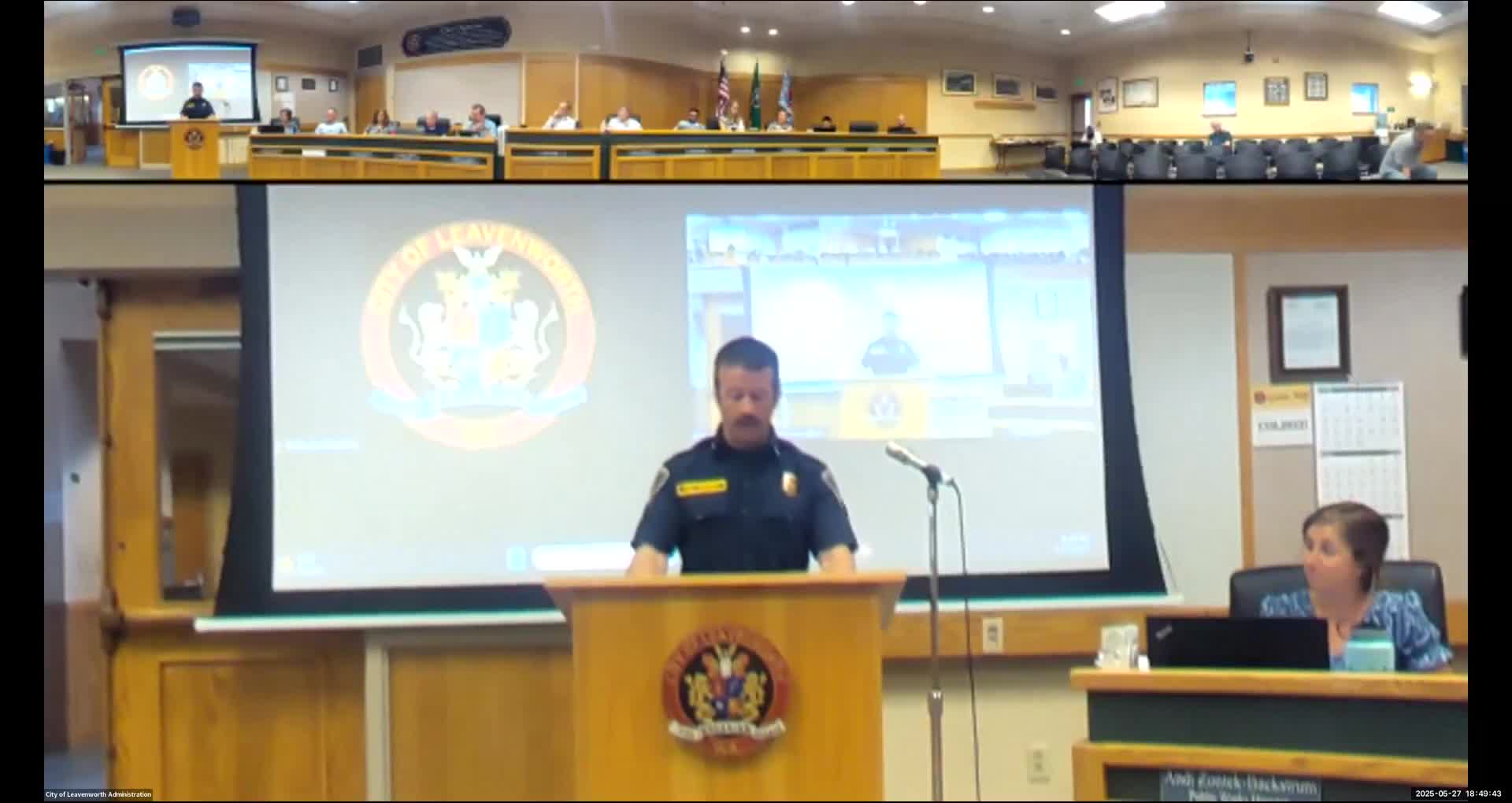
Summary
Fire officials proposed using an existing $50,000 annual city program to fund fuel reduction across public lands and private properties rather than individual home hardening grants; councilmembers generally supported piloting the approach and asked staff for an evaluation plan and an outreach strategy.
City and regional fire staff proposed repurposing the city’s annual $50,000 program budget — previously used for individual home‑hardening grants — to a five‑year fuels‑reduction program that would prioritize vegetation removal and hazard tree mitigation on public land and private properties where appropriate.
Chief O’Brien and Chelan County fire officials told council that the city’s home‑hardening grants historically funded one or two homeowner projects per year (commonly roof or siding replacement) and that a fuels‑reduction approach could spread mitigation benefits more broadly across public lands and neighborhoods. The proposed five‑year structure the presenters described would: year 1 prioritize assessments and priority mapping; years 2–4 fund fuel‑reduction work (either city crews or contractors) on public parcels and coordinated private‑property efforts; and the final two years focus on hazard tree removal and program evaluation.
Fire staff said the city’s existing community chipping and defensible‑space programs remain available, and that their capacity is currently around 40 private properties per year for chipping. They noted the logistical limits of some public sites (for example, Blackbird Island is dense and larger than $50,000 could fully mitigate) but said targeted trail and perimeter thinning could reduce risk and improve firefighter access.
Council members debated whether the city should keep some funds for individual homeowners. Several councilmembers said a coordinated fuel‑reduction approach could provide more equitable mitigation across the community, while others emphasized homeowner protections and the need for clear program rules to avoid subsidizing private real‑estate upgrades that later go on the market.
No ordinance was adopted. Council directed staff to draft a program plan and an evaluation framework (including metrics for acres treated, private parcels assisted, and hazard trees removed) and to return with a recommended budget allocation and outreach approach. Staff said they would also ask county partners whether the county could supplement or front funds in the short term and would report back.