
Montpelier council approves amended Country Club Road actionable plan after contentious debate
Get AI-powered insights, summaries, and transcripts
Subscribe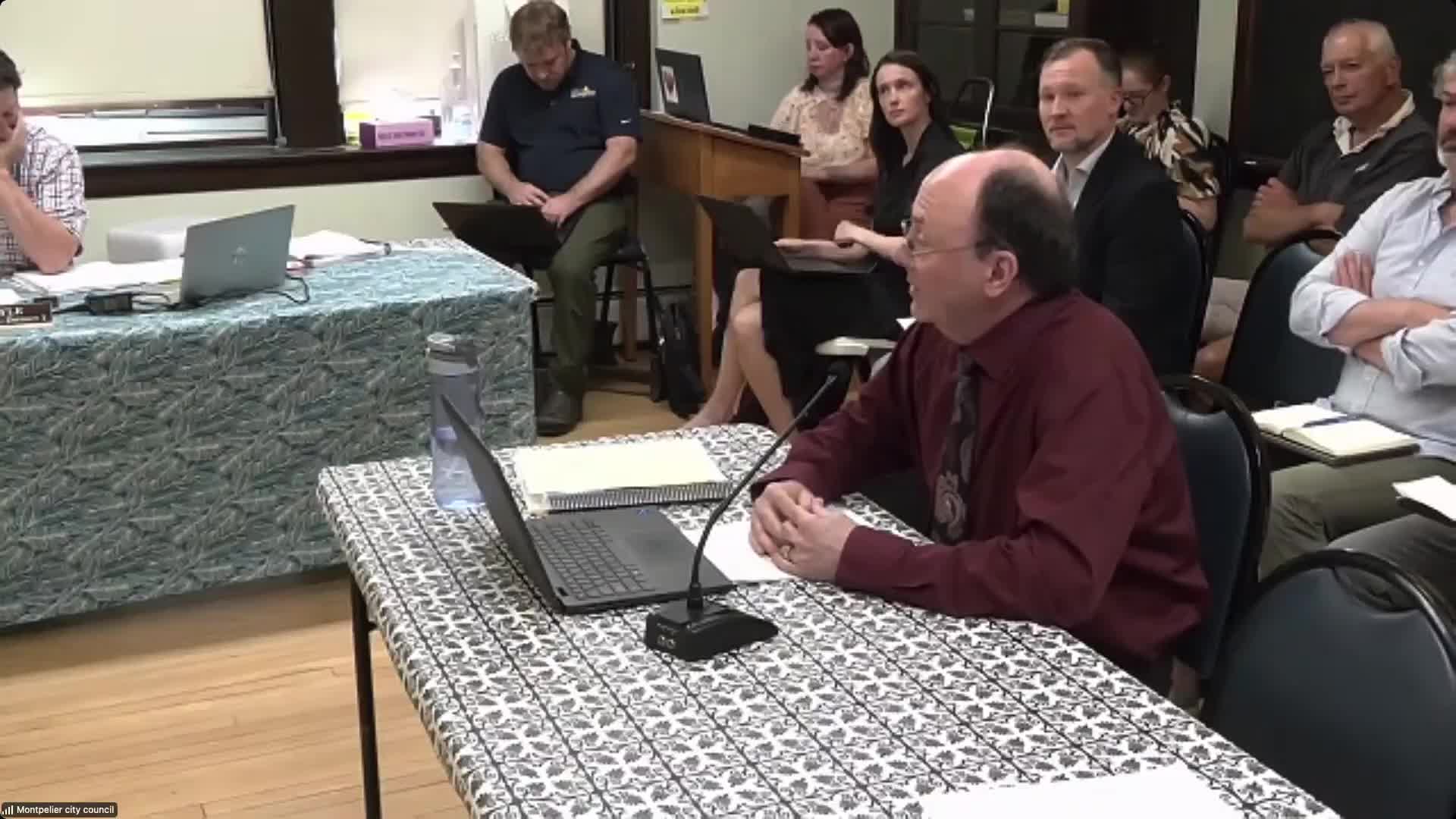
Summary
The Montpelier City Council voted to approve an amended actionable plan for the Country Club Road site after a subcommittee revision and staff memo; the decision drew public concern about contamination, traffic and housing placement and prompted calls for a separate master plan for the site.
The Montpelier City Council voted May 21 to approve an amended actionable plan for the former Country Club Road property, moving forward a preferred concept developed by a council subcommittee and accompanied by a staff memo outlining next steps.
Planning Director Mike Miller told the council the subcommittee met three times with consultants and public input and returned a revised concept intended to clarify buildable areas and avoid showing specific building designs. "We're here tonight to kinda regroup," Miller said as he introduced the subcommittee's recommendations.
The action followed several hours of public comment and council discussion. Supporters on the subcommittee said the revised map and narrative removed misleading illustrative buildings and clarified that mixed-use development was preferred but that final density would depend on developer proposals. Opponents and several members of the public urged a slower process and more study, citing soil contamination findings in earlier assessments, the absence of a public master plan for flood resilience and traffic capacity concerns at nearby intersections.
Resident speakers asked the council to preserve open-space and recreation goals from the original White & Burke planning work, to complete additional brownfield testing before permitting housing or childcare facilities, and to ensure any plan addresses winter shelter needs for unhoused residents. A public commenter warned that approvals without further environmental and traffic study could expose the city to health and engineering risk.
Council members debated whether the council was voting only on the subcommittee's preferred concept or also approving staff recommendations. Miller clarified that the motions approved the subcommittee's revised concept and that a subsequent motion approved the actionable plan as amended and included the planning director’s associated recommendations.
The council took two formal votes: first to adopt the subcommittee’s preferred concept as amended, then to approve the actionable plan including the planning director’s memo. Both measures passed by voice vote; the record shows the measures carried after the mayor asked “all those in favor.” No roll-call tally was recorded in the meeting minutes.
Council members and public speakers emphasized that adoption of an actionable plan is not a zoning change and that additional regulatory steps, permitting, and—where required—public hearings will be needed before development occurs.
Miller said the staff memo and subcommittee edits will be routed back to the planning commission for its next review, and he proposed returning to the council with revised materials at a future meeting. Several public speakers and at least one council member requested additional traffic, environmental and flood-resilience analysis before any development contracts or approvals were finalized.
The council’s approval advances the city’s planning framework for the Country Club Road property, but the discussion made clear significant community concerns remain about contamination testing, traffic capacity, flood staging, and housing siting. The planning director and subcommittee said they expect additional work and more public review as the next steps unfold.