Get Full Government Meeting Transcripts, Videos, & Alerts Forever!
Get email alerts on the Human Resources topic
No spam. Unsubscribe anytime.
Mercer Island schools say teaching staff are highly experienced; HR flags leave and part‑time costs as budget pressures
Summary
Mercer Island School District human resources staff told the school board at a special study session that the district's certificated workforce is concentrated among highly experienced, well‑educated teachers and that new state paid‑leave rules and some part‑time staffing patterns have created unpredictable budget impacts.
Mercer Island School District human resources staff told the school board at a special study session that the district''s certificated workforce is concentrated among highly experienced, well‑educated teachers and that new state paid‑leave rules and some part‑time staffing patterns have created unpredictable budget impacts.
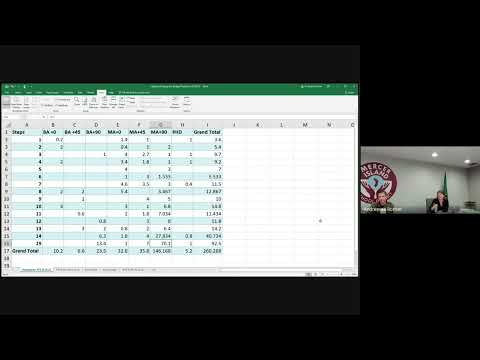
The HR presentation, led by HR staff member Aaron and certificated HR coordinator Angela Walker, used a scattergram to show projected placements for next year. "This is what's called a scattergram," Angela Walker said, explaining the chart plots experience steps against education levels; the largest cluster, she said, is at "masters plus 90 and 19," representing the district's most common placement.
Why it matters: the board heard that the District attracts and retains veteran teachers, which supports classroom continuity, but that a set of budget variables ' including paid family and medical leave, midyear leaves and overlapping benefit payments ' can raise actual personnel costs above what the budgeted FTE for an opening assumes.
HR figures presented to the board said the district has 279 certificated employees by headcount and about 260 certificated FTE, meaning certificated staff average about 93 percent of a full‑time schedule. Angela Walker said she budgets open positions conservatively at "MA 90 step 14" for planning purposes. Walker also explained that Washington'state rules administered through OSPI determine how prior years of certificated experience are credited when a teacher moves between Washington districts; that recognition applies even if the experience was gained in another Washington district.
HR staff and board members discussed several cost drivers: - Paid Family and Medical Leave (PFML): Angela Walker said the state program''s paid component makes midyear leaves more likely because employees can access paid leave during the school year. "We are seeing an uptick in choosing to do some elective leave options because the compensation is there for them," Walker said. - Double coverage and substitute costs: HR staff described situations in which an absent teacher remains in a paid status (sick leave, protected leave) while a replacement is paid to cover instruction; in one case a single position cost the district roughly "1.5" FTE in payroll and benefits during the year. - Part‑time classified schedules and benefits thresholds: Kathleen Wong, the HR coordinator for classified staff, explained classified employees generally earn benefits after about 630 hours worked per year, a state requirement. That threshold means some positions that previously did not carry benefits now can trigger benefit costs when staff take midyear leave and are backfilled.
Board members asked for more operational detail. Board Director Deborah said she values the district's veteran workforce and asked staff to track resignations to show long‑term trends. Board Director Dan asked whether churn among very junior teachers is being tracked; Aaron said the district routinely collects resignation reasons and sees most midcareer departures due to relocation or family changes, with an expected higher turnover among provisional hires during their first year.
HR staff highlighted workforce diversity and recruitment notes: the district has had more success diversifying its classified workforce and has used alternative "grow‑your‑own" pathways to move classified staff into certificated roles, the presentation said.
What happens next: HR pledged to provide the board the underlying spreadsheets and said staff will deliver a year‑over‑year resignation summary and additional FTE detail for the board's review.
Ending: The board did not take formal action at the study session; HR will return with the requested resignation trend data, granular FTE detail and the full scattergram files for board review.