
Commission approves higher ambulance transport rates to fund 24-hour staffing and pay increases
Get AI-powered insights, summaries, and transcripts
Subscribe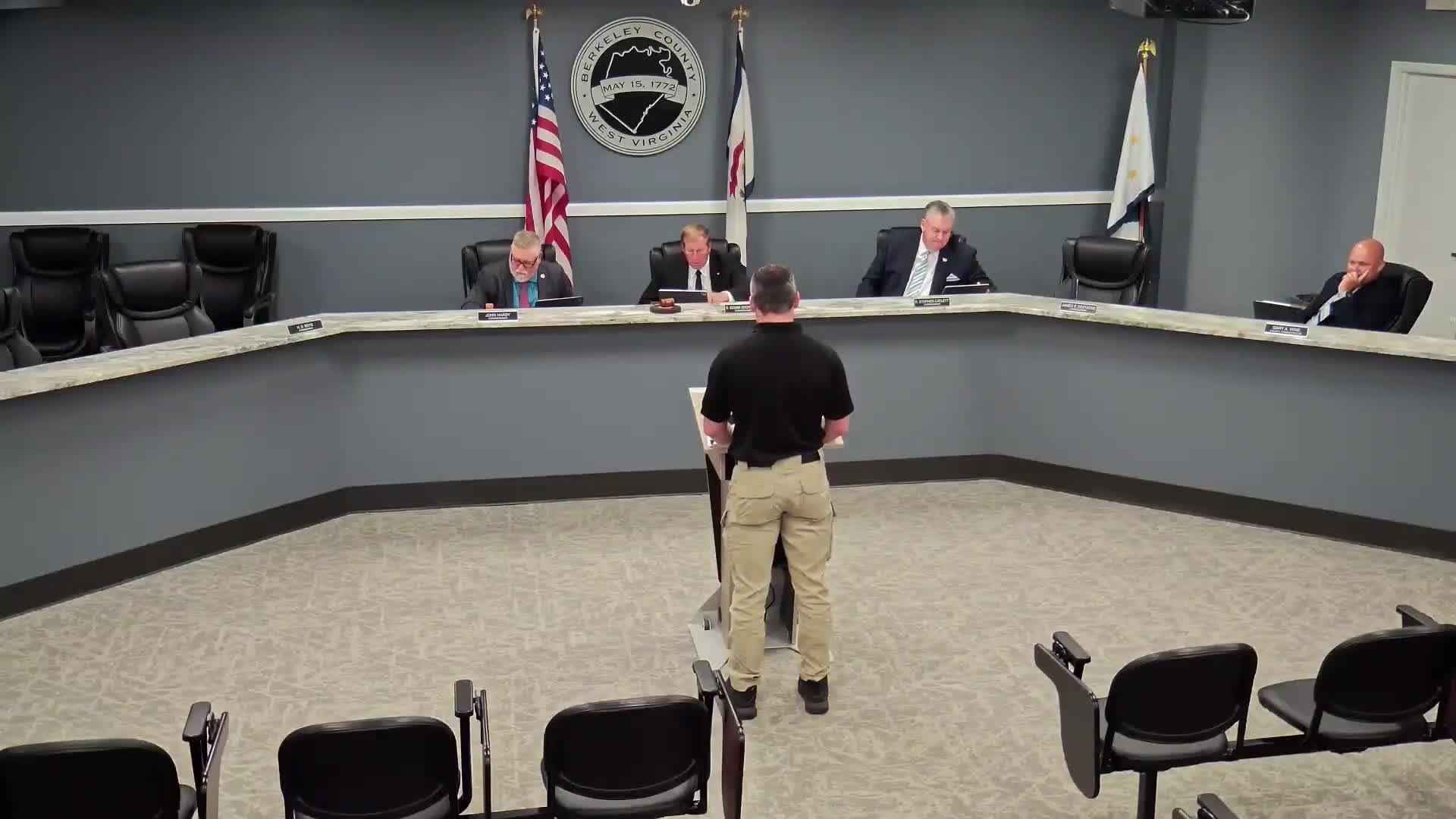
Summary
Berkeley County commissioners approved an increase to ambulance transport charges to insurers, a change officials say will help bring billing closer to actual costs, staff a busy station 24 hours and move EMT pay toward market levels while keeping household and nonresidential fees unchanged.
Berkeley County commissioners on June 3 approved a new schedule of ambulance transport rates that county and ambulance authority officials said will increase insurance reimbursements and fund operational needs, including 24-hour staffing at Station 49.
County and ambulance authority officials said the change will not raise the county's household or nonresidential ambulance fees charged on property tax bills. "We are proposing no increase to those," ambulance authority presenter Brandon Catlett said during the meeting.
County and authority leaders said the authority's current transport rates have not been changed since 2016 while costs and call volumes have risen. Catlett told commissioners the ambulance authority's current cost per transport is about $1,137 under the new budget forecast and that the authority expects the new insurer billing rates to push gross charges to roughly $1,242. Catlett said the authority forecasts roughly a $300,000 increase in payments from insurers but acknowledged insurer reimbursements depend on each patient's plan and deductible.
Catlett and commissioners described specific uses for the additional revenue: bringing Station 49 (the Mid Atlantic Parkway station) from a 12-hour daily shift to 24-hour staffing starting Jan. 1, paying for an estimated $250,000 renovation at that station and raising EMT compensation toward the 60th percentile of local market pay (with a longer-term goal toward the 75th percentile). Catlett said fully outfitted advanced life support ambulances now cost about $400,000, and that the authority recently upgraded three Basic Life Support trucks to Advanced Life Support units.
Commissioners and Catlett also discussed payer mix. Catlett said roughly half of transports are covered by Medicare, Medicaid or Medicare Advantage plans and that those payers reimburse far less than the authority's cost per call. "The largest payer mix is paying us half of what our costs are," he said, noting that balancing revenue from commercial insurers is part of the strategy.
After questions from commissioners about reserves and staffing costs, a commissioner moved to approve the proposed transport fee schedule and another commissioner seconded. The motion passed on a voice vote.
What happened next: commissioners asked staff to review the rates annually so the authority does not fall far behind again. Catlett said the authority will continue to offer homestead exemptions administered through the assessor's office; year-to-date exemptions have reduced ambulance authority revenue by about $110,000.
Why it matters: County officials said the rate change aims to stabilize ambulance finances without raising the tax-based household and nonresidential ambulance fees, to keep response capacity as call volumes grow and to help retain EMS staff in a competitive local market.
Requests for further details: Commissioners asked for follow-up data on staffing costs and the authority's unencumbered cash balance; Catlett reported a cash position for the ambulance authority of about $5 million.
Ending: The commission approved the rate schedule by voice vote. Catlett and the ambulance authority said they will return with implementation details and suggested reviewing the fee schedule annually.