Get Full Government Meeting Transcripts, Videos, & Alerts Forever!
Get email alerts on the Development Inspections And Standards topic
No spam. Unsubscribe anytime.
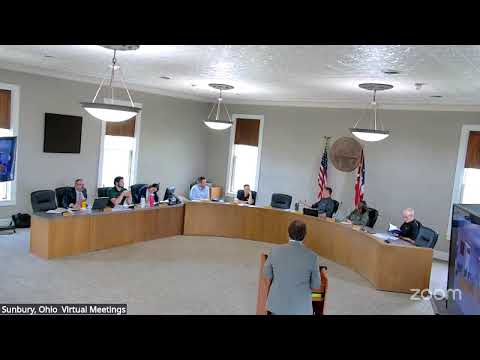
Commission approves Woodland Lake lot split; presses staff on inspections, warranties and design standards
Summary
The commission approved a minor lot split for Woodland Lake (Wilcox Communities) and discussed inspection practices, the city’s public-acceptance process and possible design/landscape standards; staff agreed to demo OpenGov and add follow-up items to staff reports.
The City of Sunbury Planning and Zoning Commission on May 29, 2025 approved a minor lot split for Woodland Lake, a Wilcox Communities development, and engaged in an extended discussion about how the city tracks construction inspections, warranty obligations and neighborhood design standards.
Applicant Dylan Horn, representing Wilcox Communities, told the commission the lot split would "create 2 new lots" primarily "for finding financial purposes or separating construction loan into new phases." Horn said the developer plans to build the northern portion first and that the split adjusts phasing to allow frontage and landscaping work to proceed on certain streets earlier in the project.
Staff described the change as a phasing modification rather than a change to building types: "the change in phasing... they are doing more of a northwest and then a southeast split," a staff member said, and confirmed that the three‑story "walk ups" are not part of this lot split. The commission then approved the minor lot split; a motion to approve was seconded by Mr. Long and passed by roll call with five yeas.
The lot-split discussion prompted a longer conversation led by a newer commissioner, who asked whether the city has a process to verify developments are constructed as approved. Staff and commissioners described several elements of Sunbury’s current oversight: on‑site construction inspection by an engineering inspector (Verdanus CT), staff walk-throughs of public improvements, and a public‑acceptance process in which the developer provides a 12‑month warranty and bond before the city formally accepts public infrastructure. As one staff member summarized, "We verify that they're right. And if they're not right, we let them know they fixed it. We walk through again to make sure [and] verify it was fixed."
Officials said the city is using OpenGov (project-management software) to track plan submittals, engineering reviews and review timestamps and that staff will demonstrate that system at a future meeting. A staff member said, "I'll put something on the agenda to pull 1 of those up," and indicated the demonstration would show document history and review assignments for projects such as Woodland Lake.
Staff also outlined a resident reporting option: a "report of concern" form on the city website that routes items by category to staff members (examples given were Alex, Jake, Dale and Amber) so issues can be tracked and assigned. Commissioners asked staff to return with a checklist or follow‑up column in staff reports showing outstanding inspection items and resolutions; staff agreed to work with colleagues Carla and Alyssa to develop that material.
The commission did not adopt new code or design standards at the meeting; commissioners discussed that elements of the Sunbury Parkway district plan already include some design and architectural guidance and that further consistency could be pursued in future zoning updates.