Lifetime Citizen Portal Access — AI Briefings, Alerts & Unlimited Follows
Field hearing: Tariffs and trade uncertainty put Colorado outdoor small businesses under strain
Loading...
Summary
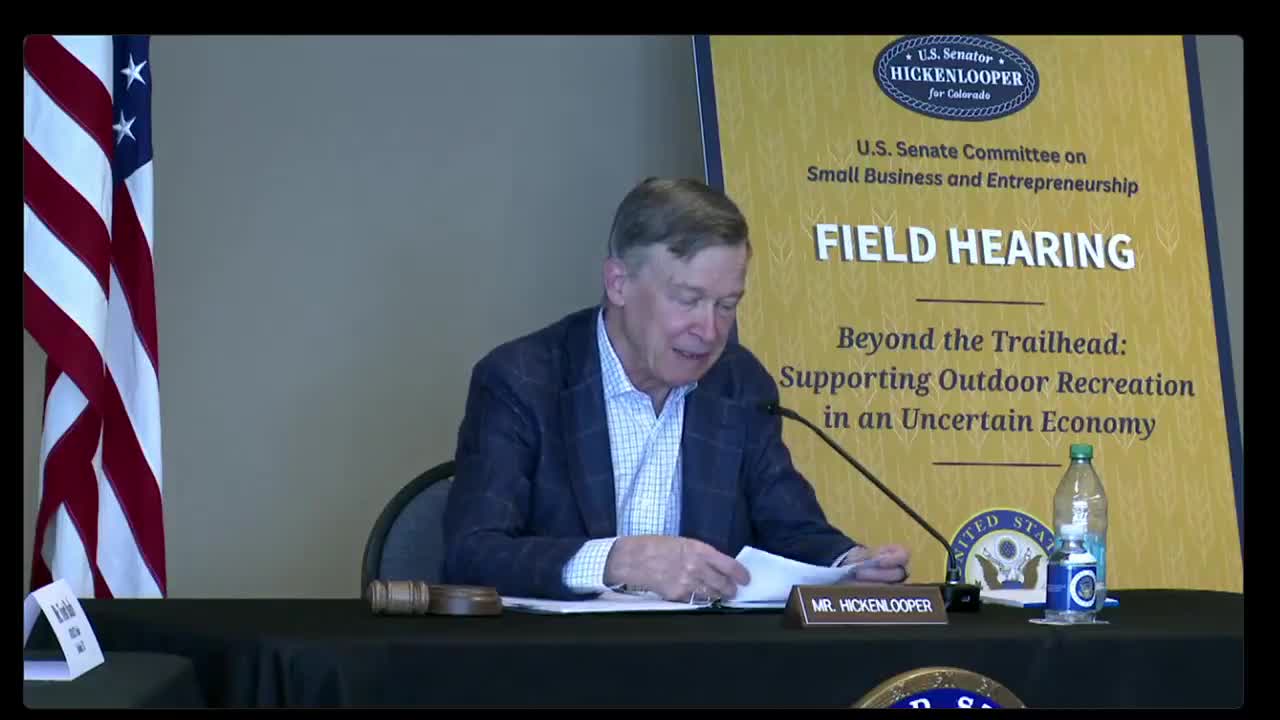
Senator John Hickenlooper convened a field hearing of the Senate Committee on Small Business and Entrepreneurship at History Colorado to hear how trade and tariff policy is affecting small businesses in the outdoor recreation industry.
Senator John Hickenlooper convened a field hearing of the Senate Committee on Small Business and Entrepreneurship at History Colorado to hear how trade and tariff policy is affecting small businesses in the outdoor recreation industry. Witnesses Travis Campbell (owner and CEO, Eagle Creek), Mike Mohika (founder, Outdoor Element) and Trent Bush (co‑CEO, Artalex Studios) described immediate financial shocks, paused hiring and the risk of lost international customers.
The hearing matters because the outdoor recreation sector has a large economic footprint and complex supply chains: witnesses cited a U.S. industry value of about $1.2 trillion and roughly 5,000,000 jobs, and Senator Hickenlooper said Colorado’s outdoor recreation contribution to state GDP is about $17,000,000,000. Witnesses told the committee that sudden tariff changes and the resulting uncertainty make planning impossible for companies that rely on multi‑year production cycles.
Travis Campbell said Eagle Creek, which designs adventure travel gear and makes most products in Indonesia, had roughly $1,800,000 in purchase orders due to arrive in the next four months when newly announced reciprocal tariffs were unveiled. "That new bill would be an additional $580,000," Campbell said, describing the increase as a level his business does not have available and calling the tariffs "ill‑conceived." He told the committee Eagle Creek has paid over $4,000,000 in additional tariffs since 2020 and that the company has frozen planned salary increases, halted two hires and cut vendor spending to preserve cash.
Mike Mohika said his business paused production and asked factories to hold goods after what he described as an "overnight" tariff spike; he said some tariff treatments briefly rose to 45 percent before later adjustments. "I'm no longer thriving. I'm working on surviving," Mohika told the committee, saying he has laid off employees, reduced hours and shipped some orders at little or no profit to preserve customer relationships. He urged clearer lines of communication between small firms and trade policymakers and asked the committee to consider targeted exclusions or thresholds for small businesses.
Trent Bush described structural limits on reshoring technical apparel manufacturing, citing shortages of raw material and specialized machinery. "It wouldn't be possible even if I wanted to," Bush told the committee when asked whether his company could move merino wool apparel production to the U.S. He estimated that bringing production stateside would raise costs by "20 or 30 percent" in many cases, not by the single‑digit percentages sometimes discussed.
Witnesses also stressed that importers — not foreign suppliers — pay U.S. tariffs, and that product development cycles typically span 12–24 months, making rapid supplier shifts impractical. Campbell added that the industry historically used programs such as the Generalized System of Preferences (GSP) and Miscellaneous Tariff Bills (MTBs) for relief; he and others urged restoring those programs, which they said expired at the end of 2020, so firms are not saddled with unanticipated duties.
Committee Chair John Hickenlooper acknowledged those concerns and said the hearing would become part of the congressional record and that the committee would keep the record open for additional submissions. He also said committee staff and members will work to "create a tariff system that's maybe a little more nuanced" and to engage with the administration and relevant agencies.
No formal votes or policy actions were taken at the hearing; witnesses were invited to submit additional materials to the record. The committee did not announce a timeline for legislative language or specific exclusions tied to the hearing.
Sources and selected testimony excerpts are in the hearing transcript and the committee record.