Get Full Government Meeting Transcripts, Videos, & Alerts Forever!
Get email alerts on the Special Education Services topic
No spam. Unsubscribe anytime.
Parents tell PGCPS board special-education services are deficient; call for external audit and timely compensatory remedies
Summary
At the May 29 board meeting, two parents and advocates urged the Prince George's County Board of Education to investigate special-education service shortfalls, request an independent audit and prioritize compensatory education for students who missed required services.
Two parents addressed the Prince George's County Board of Education during the May 29, 2025 public-comment period, saying special-education services have been delayed or denied and urging the board to take formal steps to ensure students receive federally required remedies.
Lisa Wilson, identified herself as an autism parent and advocate, told the board she represents “nearly 17,000 disabled students in PG County” and asked the board to “take a deep look into the special education program” including complaints and letters notifying parents that services (direct-support aides, speech therapy and other related services) are being withheld because of staff shortages. Wilson asked the board to arrange an external audit, saying internal reviews are insufficient and that parents are stakeholders who must be included in corrective planning. She also referenced the board’s superintendent-evaluation policy by number (82-65) and urged board members to consider service access when they evaluate leadership.
Alicia Renee, who identified herself as a parent and long-term advocate, told the board her child had gone “two full school years without a behavioral intervention plan” despite having one previously, and that the child “went a full school year without speech language services, even though they were on his IEP.” Renee called delays in compensatory education “not a remedy” and said compensatory education is a federally required remedy under the Individuals with Disabilities Education Act (IDEA). She demanded tracking, timelines and transparency, asked who is responsible for ensuring compensatory services are delivered and said “our children cannot wait any longer.”
Why it matters: Under IDEA, when a school fails to provide a free appropriate public education (FAPE), a school system typically must consider compensatory education to make up for missed services. Parents at the meeting said district internal reviews have not alleviated their concerns and requested an independent audit and explicit accountability measures.
Authorities cited by speakers and during the discussion included IDEA, Section 504 of the Rehabilitation Act of 1973 and Title II of the Americans with Disabilities Act (as referenced by speakers). Wilson also referenced a court decision she called the “Andrew Supreme Court decision of 02/2017” and asked the board to follow stakeholder-inclusion principles she tied to that ruling; the transcript records the reference as stated by the speaker.
Clarifying details from the public comments: - Lisa Wilson said there are “nearly 17,000 disabled students in PG County.” - Wilson asked the board to contrast the district superintendent’s “nearly $400,000 salary” with service denials for students; the $400,000 figure was stated by the speaker in public comment. - Wilson said one parent filed 11 complaints as cited in a district presentation; she emphasized each complaint represents a child. The transcript records that phrasing but does not provide personnel records or investigation outcomes. - Alicia Renee described her child’s missed services: two school years without a BIP and one year without speech-language therapy despite those services being on the student’s IEP; she described compensatory education as a federally required remedy under IDEA.
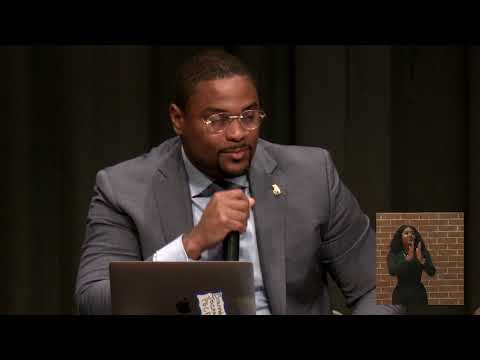
Board response and next steps: Chair Brandon Jackson and board members acknowledged the comments. Several board members asked staff and the superintendent about timelines, data tracking and accountability. No board vote or formal directive to commission an external audit was recorded in the meeting transcript; board members requested and received answers about how the superintendent evaluation and other processes might intersect with these concerns and asked staff to provide more information in follow-up work.
The speakers’ statements are recorded in the public transcript. The board did not announce any immediate investigatory action during the meeting; parents asked for explicit deadlines and named responsibility for delivering compensatory services.
Ending: The public-comment segment concluded before the presentation portion of the meeting; parents said service delays are widespread and pressed the board to prioritize an independent review and concrete timelines for delivering remedial services.