Get Full Government Meeting Transcripts, Videos, & Alerts Forever!
Get email alerts on the Rooftop Solar topic
No spam. Unsubscribe anytime.
Council allows alternatives to on‑roof PV, including contributions to housing-focused renewable fund
Summary
The Building Code Council approved language that expands exceptions to rooftop photovoltaic (PV) requirements and permits in‑lieu contributions to a state housing agency fund that will finance solar installations on affordable housing projects.
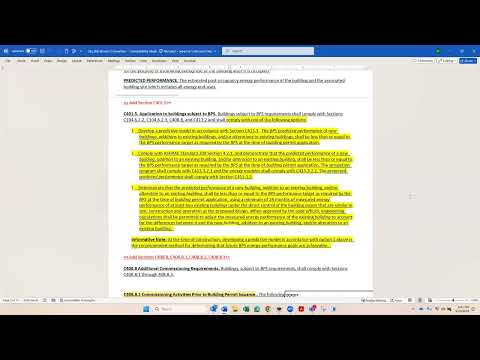
The Building Code Council on March 21 approved changes to rooftop solar requirements that add clarity on exemptions and create alternative compliance pathways for projects that cannot reasonably accommodate on‑site PV.
Under the revised language, projects that lack sufficient unshaded, buildable roof area must pursue a prescribed set of alternatives rather than receiving an unconditional exemption. Alternatives include installing PV where feasible, investing in off‑site community solar or owned off‑site systems, or contributing a per‑watt amount to a state-administered affordable‑housing renewable fund managed by the Washington State Housing Finance Commission. The approved text also allows for code‑official approved local utility-administered renewable funds where they demonstrably benefit the local service territory’s customers.
Proponents argued the state housing fund option directs in‑lieu payments to projects and communities that most need assistance and provides certainty for transactions. “It ensures additionality and channels funds to affordable housing,” said Marcus Verta (solar industry), who urged prioritizing affordable housing recipients. Some industry commenters urged allowing visibility on pitched roofs (up to an 8:12 slope) for PV in addition to low‑slope flat roofs; the final motion kept a conservative slope allowance but directed staff to consider additional implementation detail later.
The council approved the modified solar alternative language by roll call. Dwayne Johnlin, the proposer, said the change aims to protect affordable housing costs while still requiring solar readiness and equivalent contributions when on‑site PV is not feasible.
The motion passed with a 11–1 roll call tally and 2 abstentions. SBCC staff were asked to coordinate with the Washington State Housing Finance Commission and utilities to confirm administration processes for the renewable investment option and to clarify how contributions will be treated for crediting and additionality.