Get Full Government Meeting Transcripts, Videos, & Alerts Forever!
Get email alerts on the Land Use Zoning Judicial topic
No spam. Unsubscribe anytime.
Tennessee Supreme Court hears challenge over Grundy County quarry restrictions
Summary
The Tennessee Supreme Court heard oral arguments in Tinsley Properties LLC v. Grundy County on whether county resolutions that restrict quarrying locations are valid or must be treated as zoning and therefore adopted only through statutory zoning procedures.
The Tennessee Supreme Court heard oral arguments in Tinsley Properties LLC v. Grundy County on whether county resolutions that restrict quarrying locations are valid or must be treated as zoning and therefore adopted only through statutory zoning procedures.
The dispute matters because the court’s interpretation of the County Powers Act, Tennessee Code Annotated §5-1-118, and the court’s “substantial effects” (tantamount-to-zoning) test could affect how counties without comprehensive zoning regulate potentially nuisance businesses such as quarries. Counsel told the court that roughly 47 Tennessee counties lacked a zoning ordinance as of 2014, a figure cited in the record.
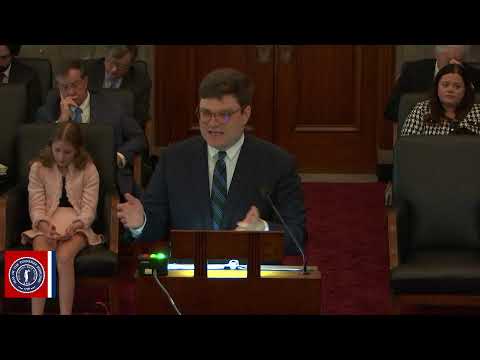
Michael Catone, counsel for Tinsley Properties LLC and Tinsley Sand and Gravel LLC, argued the resolutions are void on two independent grounds. He told the court that “local governments only have the powers that are delegated to them specifically by the general assembly” and that Grundy County relied on the County Powers Act, Tenn. Code Ann. §5-1-118(c), for authority it does not possess. Catone said county resolutions that function like zoning must follow the statutory zoning procedures that protect landowners’ rights, and that Grundy County conceded it did not follow those procedures.
Catone also argued the statutory exception in §5-1-118(c) — which excludes from county police-power authority activities “subject to regulation pursuant to” enumerated state schemes such as the state Clean Air and Clean Water Acts — precludes the County Powers Act from being used here because quarrying is regulated by the Tennessee Department of Environment and Conservation permitting process. He told the court those permits “detail how the quarry is to be constructed, and how the quarry is to be operated.” Catone asked the court to remand with instructions to grant summary judgment for Tinsley and to declare the resolutions void and invalid.
Bill Reeder, counsel for Grundy County, countered that the County Powers Act grants counties authority to “prescribe limits within which activities and nuisances may be located,” and that the resolutions at issue do no more than prescribe such limits in unincorporated Grundy County. Reeder emphasized the statutes and legislative history underlying the County Powers Act and argued that the C2 limitation in §5-1-118 should be read in context and narrowly, not to swallow the grant of authority. He told the court the resolutions are akin to setbacks and do not create fixed zoning districts, and he asked the court to remand for summary judgment in Grundy County’s favor.
Gabriel Crim, arguing for the State of Tennessee, urged a text-and-context reading. Crim told the court declaratory relief must be party- and provision-specific and warned against an interpretation that would leave quarrying entirely unregulated. He described a level-of-generality problem: state environmental permits regulate some aspects of quarrying but not necessarily the location-related land-use concerns counties address. The state urged the court to craft relief tailored to the dispute between Tinsley and Grundy County rather than a broader facial invalidation.
Justices pressed counsel on several recurring themes: how to apply Dillon’s rule (construing grants of local authority narrowly), whether the statutory exception in §5-1-118(c) turns on the “core” of an activity or any component regulated by a state scheme, and how the court’s substantial-effects or “tantamount to zoning” test (discussed in prior decisions including SNP Co. and Cherokee Country Club jurisprudence) applies when a county lacks a comprehensive zoning plan. The bench asked whether a distance-based restriction (the resolutions reference a 5,000-foot distance from schools, residences and other uses) is effectively a zone and whether the dynamic nature of setbacks distinguishes them from fixed zoning lines.
The record includes several factual clarifications cited at argument: Tinsley began quarry-related activity before applying for state water permits; the county mayor issued a cease-and-desist letter and litigation followed; in the litigation Tinsley admitted, for the purposes of the record, elements that a court might consider to support a nuisance claim; and counsel noted the County Powers Act authorizes enactment by a specified county-legislative vote procedure (discussed as a two/three vote in the record).
No decision was announced from the bench during the session. Counsel for both sides and the state requested remand with instructions favorable to their clients; the court took the arguments under advisement.
Looking ahead, the court’s ruling will clarify whether the County Powers Act can be used by counties to adopt location-based limits on quarries when aspects of quarrying are subject to state environmental permitting, and whether such limits must be implemented through the statutory zoning process. That outcome will affect counties that regulate land use without comprehensive zoning, quarry operators and property owners asserting statutory procedural protections.