Get Full Government Meeting Transcripts, Videos, & Alerts Forever!
Get email alerts on the Arbitration Subject Matter Jurisdiction topic
No spam. Unsubscribe anytime.
Tennessee high court hears dispute over whether state law or parties—ontract decides where arbitration awards can be confirmed
Summary
At oral argument, lawyers and the attorney general debated whether Tennessee—s Arbitration Act or party agreements (and related JAMS rules) determine which courts can confirm arbitration awards, and whether the Federal Arbitration Act preempts state limits.
Nashville
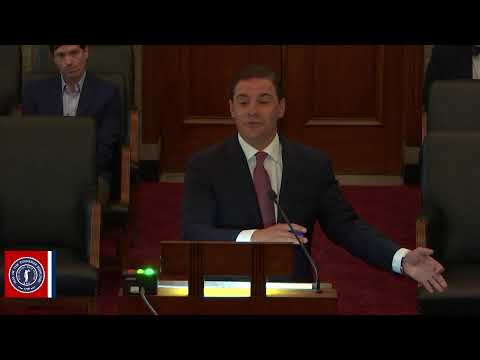
Attorneys, an amicus from the Tennessee attorney general—s office and justices questioned at length on whether Tennessee courts had subject-matter jurisdiction to confirm an arbitration award when the parties— contract specified arbitration outside Tennessee.
The issue came into focus when Ryan Williams, attorney for appellant Berkeley Research Group, told the court, "We stand here today on the cusp of what could be extremely dangerous precedent if this court were to interpret section 3 27 b of the ..." and argued that read narrowly the statute could render a private arbitration award a nullity by permitting repeated collateral attacks across states.
Why it matters: the dispute could affect where arbitration awards are enforced when parties pick neutral or out-of-state forums, a frequent practice in multistate commercial disputes. The panel tested competing interpretations of provisions of Tennessee—s Uniform Arbitration Act (the prior version and the revised RUAA), the interplay with the Federal Arbitration Act (FAA), and the effect of party-selected rules (JAMS) that the parties included in their contract.
What the lawyers argued
Williams, representing Berkeley Research Group (BRG), argued that the statutory provision governing confirmation (identified in briefing as section 3-23 under the current code, and the analogous section in the older TUAA) supplies subject-matter jurisdiction and that allowing only a forum-focused reading of the jurisdictional provision (current section 3-27(b)) would let defendants use personal-jurisdiction objections to thwart enforcement. "What this interpretation would result in is a process that is inefficient, expensive, would require multistate jurisdiction," Williams said, and he urged the court to read the confirmation provision as a jurisdictional source when the parties— contract permits confirmation in multiple states or is otherwise silent.
Philip B. Seaton, counsel for respondent Southern Advanced Materials LLC, urged the opposite view, emphasizing the contract—s Delaware choice-of-law and the statutory process available in Delaware. Seaton said the facts "were just a simple contract executed between two parties" and noted Delaware law and Delaware Code procedures (Title 10) for docketing arbitration awards; he told the court that Delaware filings are pending and argued Tennessee lacks jurisdiction.
Harrison Kilgore, appearing as amicus for the Tennessee Attorney General, told the court that subject-matter jurisdiction "goes to a court's fundamental authority to adjudicate a matter, and it must be conferred on a court by constitutional or legislative act." Kilgore urged the court to apply the older Tennessee Arbitration Act that governed when the contract was made and maintained that the statute's jurisdictional provision controls; he advised the court that the confirmation provision (3-23 or its predecessor) creates a right to seek confirmation but does not itself confer jurisdiction.
Points the court pressed
Justices pressed counsel on several recurring themes: which version of the Tennessee Arbitration Act applies (the parties and amicus generally agreed the earlier act governs the events at issue), how to reconcile confirmation provisions with the jurisdictional provision, whether JAMS rules or the FAA displace state statutory language, and the practical consequences if courts permit confirmation in a forum other than the one specified in the arbitration clause. The panel repeatedly raised the specter of repeated litigation across forums and asked whether the statutory language should be read to give exclusive jurisdiction to the state named in an arbitration clause.
Fact and procedural context from argument
- The arbitration hearing proceeded remotely (via Zoom); the arbitrator noted he was in Pennsylvania. (Ryan Williams)
- Counsel for Southern said the parties are Delaware entities and that Delaware provides a process (Del. Code tit. 10, ) to certify arbitration awards; Seaton said the opposing side did not complete Delaware certification within the one-year window and has other Delaware filings pending. (Philip B. Seaton)
- The JAMS rules the parties adopted state that confirmation of an award is subject to the FAA or applicable law; Williams argued that the FAA and JAMS rules support enforcement in an appropriate forum. (Ryan Williams)
- Kilgore argued there is no conflict between Tennessee law and the FAA in the record before the court and suggested that a party could seek confirmation in the forum where the award was rendered and then domesticate a foreign judgment under the Uniform Enforcement of Foreign Judgments Act if needed. (Harrison Kilgore)
No decision during argument
The hearing was argument-only; the court did not announce a ruling during the session. Counsel reserved time for rebuttal and the panel indicated the case would be submitted after questioning.
Tapered next steps
The case will be submitted for decision after the court considers the parties— briefs and the oral arguments. The justices focused on statutory interpretation (which version of Tennessee—s arbitration statute applies and whether confirmation provisions confer jurisdiction) and on practical consequences for multistate arbitration enforcement, which the court—s written opinion is likely to address.