
Seal Beach moving toward housing-element adoption but must finish rezoning to avoid builder's‑remedy projects
Get AI-powered insights, summaries, and transcripts
Subscribe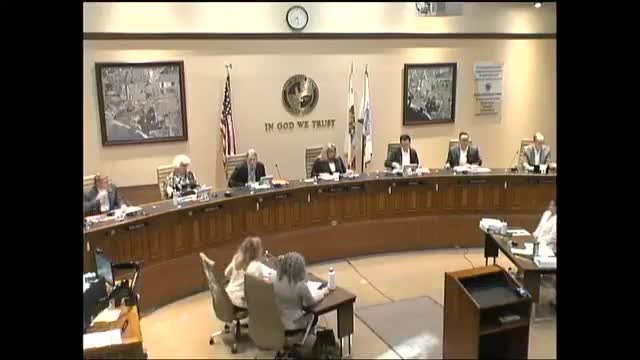
Summary
At a study session, city staff and outside counsel outlined that Seal Beach has adopted a draft housing element but must complete required rezonings and secure Housing and Community Development sign‑off to reduce risk of state enforcement and developer “builder’s remedy” projects.
Seal Beach city leaders heard a presentation on state housing law risks and timelines on Oct. 11, 2025, during a study session where consultants and staff said the city has adopted a draft housing element but must complete rezoning and obtain formal state sign‑off to limit exposure to enforcement and so‑called builder’s remedy projects.
The housing element is adopted locally, but not yet certified by the California Department of Housing and Community Development (HCD). "A housing element cannot be declared substantially compliant with state housing law until you not only adopt the housing element, but also complete the required rezonings to ensure that you have capacity for your full RHNA allocation," said Diana Verrett, a housing attorney with Richards Watson Gershon, in a presentation to the City Council and staff.
The lack of HCD certification carries several potential consequences: reduced eligibility for some state funding pools, heightened risk of enforcement actions by HCD or the Attorney General, third‑party litigation, and exposure to developer projects that use the Housing Accountability Act’s "builder’s remedy" pathway to pursue higher density or nonconforming projects while local capacity remains uncertified.
Why it matters: the city’s housing element includes Program 1B, the adoption of a mixed commercial‑residential high‑density zone. Verrett explained that current state law changes make completing both adoption and rezoning — and receiving HCD approval — necessary for a jurisdiction to be treated as substantially compliant. Until both steps are complete, developers may be able to submit preliminary applications that trigger statutory protections enabling them to pursue projects that depart from local general‑plan and zoning rules.
Verrett described the builder’s remedy mechanism as a pathway that allows housing development projects that provide a specified percentage of lower‑income units to avoid certain local land‑use restrictions if submitted when the jurisdiction lacks a certified housing element. She said the statutory definition and thresholds were recently revised and that compliance requires recording deed restrictions on affordable units and other conditions the city would likely need to monitor.
Council and staff questions during the session focused on enforcement and compliance details. Verrett said HCD has increased enforcement activity and that if HCD finds a housing element is not substantially compliant the city faces a rebuttable presumption of invalidity, which raises the legal burden on local action to defend its plans. "HCD has the authority to review city actions and failures to act to determine whether various actions or failures to act comply with state law," Verrett said.
City staff said the environmental impact report required under CEQA for the housing element is out for public comment and that the city anticipates bringing the housing element and related rezoning forward this fall for adoption. Community Development Director Smittle introduced the presentation and noted the council will engage in additional public outreach as the year proceeds.
Council members asked practical questions about what monitoring or enforcement looks like for deed‑restricted affordable units, and where responsibility lies. Verrett said the city typically records deed restrictions and that enforcement and reporting practices vary by jurisdiction. She noted that "there is no other agency that's going to enforce that except for the city" unless alternate monitoring arrangements are put in place.
What the city is doing next: staff and the consultant team are completing the CEQA review and preparing to return to council with actions tied to the housing element work plan, including the specific rezoning required by Program 1B. Until HCD grants a certification, Verrett warned, the city remains at greater risk of state enforcement and of developer proposals that rely on statutory pathways to seek approvals inconsistent with current local zoning.
Ending: Council members and staff emphasized they are moving toward adoption and rezoning and noted the city has already adopted a housing element, but that HCD sign‑off and completion of rezoning are the remaining steps to reduce legal and fiscal exposure. Verrett closed by urging continued attention to state legislative changes as the city proceeds through environmental review and rezoning.