Get Full Government Meeting Transcripts, Videos, & Alerts Forever!
Get email alerts on the Traffic Calming topic
No spam. Unsubscribe anytime.
NDOT proposes speed cushions, radar sign and bulb-outs for Willow Lane; project heads to resident ballot
Summary
Nashville Department of Transportation presented a traffic-calming design for Willow Lane on April 29 that would place three speed cushions, one radar feedback sign and a bulb‑out at Turley Drive; the project will go to a mailed ballot to abutting property owners and requires two‑thirds approval from respondents to proceed.
Nashville Department of Transportation (NDOT) staff on April 29 outlined a traffic‑calming plan for Willow Lane that would place three speed cushions, one radar feedback sign and a bulb‑out at the Turley Drive intersection, and said the design will go to a mailed ballot of abutting property owners before construction can begin.
NDOT project planner David Greaves said the program prioritizes engineering measures to reduce speeds and improve safety and cited Vision Zero as the project’s guiding goal. “We generally favor physical solutions to encourage lower speeds over significant lengths, and one of the primary goals of the program is speed reduction,” Greaves said. He told attendees that, if two‑thirds of respondents to the mailed ballot vote in favor, NDOT will order materials and place the project in the construction queue.
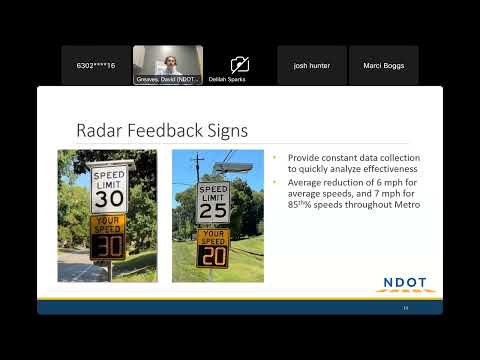
The design presented reduces an earlier concept with four speed cushions to three, places a single radar feedback sign to alert drivers to their speed, and adds curb bulb‑outs at the Turley and Willow intersection to shorten pedestrian crossing distances. Greaves described the speed cushions as elongated devices intended to encourage travel at or near the 25 mph limit rather than force vehicles to crawl. He said NDOT’s local before‑and‑after data from previous projects showed average speeds dropping from about 31 mph to about 22 mph and a high‑percentile speed measure falling from about 37 mph to 25 mph after vertical measures were installed.
Plan details shown to the neighborhood include: cushions covering the full roadway width with roughly 2‑foot gaps between cushion elements; single‑signing for groups of closely spaced cushions; one radar feedback sign placed on the eastern half of the street to address a downhill speed run; and pavement‑marking removal where the road currently shows “30” markings, to eliminate conflict with the posted 25 mph limit. The bulb‑out detail calls for 11‑foot lanes, 20‑foot corner radii and flexible delineators to prevent motorists from driving over the curb extensions; the curb extensions also include a small connection path between sidewalks so pedestrian crossings are not blocked.
Residents offered a mix of support and concern. Marcy, a Willow Lane resident, said she was glad NDOT planned to remove the 30 mph pavement markings that conflict with the posted limit and noted the Turley intersection is heavily used by schoolchildren and a crossing guard: “I am grateful that you're going to remove the, 30 mile an hour, paving markings because they are confusing,” she said. Betty Peeden, another attendee, said she opposed speed cushions: “I do not want speed bumps,” she said. Several residents asked about driveway impacts and spacing; Greaves said cushions had been coordinated to be at least 15 feet from driveways and that site constraints (grades, driveways and intersections) prevented some placements, which is why the design was reduced to three cushions in certain stretches.
Greaves explained the next steps and the balloting process: NDOT will mail unique postcard codes to residential property owners whose property abuts Willow Lane, open a six‑week window for online or phone voting, and count only respondents’ ballots; project approval requires two‑thirds of respondents (not two‑thirds of all properties) to vote yes. If approved, he said materials will be ordered and construction scheduled; NDOT estimates the build phase will be about eight to 10 months from the start of construction work. Greaves also said the agency will post plans online, share the mailing list on request to help neighborhood outreach, and that residents can file HUB requests through 311 for related issues such as earlier pavement marking corrections.
The meeting did not include a formal vote. The project remains contingent on the mail ballot; NDOT will proceed to mailers and the six‑week voting period unless the design is revised prior to mailings.
Residents were invited to follow up with Greaves for the mailing list and to check NDOT’s traffic calming website for the posted plans and schedule.