Get Full Government Meeting Transcripts, Videos, & Alerts Forever!
Get email alerts on the School Budget topic
No spam. Unsubscribe anytime.
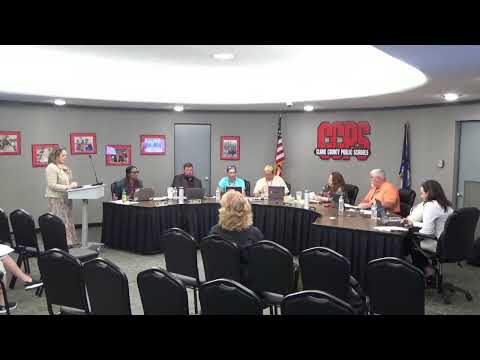
Clark County school board approves $77.7 million tentative budget and staff pay increases
Summary
The Clark County School Board approved a tentative $77.7 million budget and a package of pay increases, adopting the tentative budget 4–1 and approving a raise plan that gives certified staff a 2% table increase and raises classified hourly pay by $0.85.
The Clark County School Board on Monday approved a tentative budget totaling about $77.7 million and approved pay increases for school staff, passing the tentative budget 4–1 and a salary motion 4–1.
The tentative budget document presented to the board is a starting point required for state submission and assumes the district will take the compensating tax rate that would keep revenue flat compared with the current year. Alicia (staff member) explained the compensating-rate concept to the board: “The compensating rate … will cause us to earn the exact same amount of money we've collected this year. So it makes us even. We don't increase our revenue at all.”
Board members discussed revenue and pay options while staff outlined contingency plans and one-time balances. The board approved the tentative operating budget and then approved salary changes that the administration said the budget can accommodate under the chosen revenue assumptions.
Board action and context The board voted 4–1 to approve the tentative 2025–26 budget after a presentation on revenue assumptions, staffing costs and contingency. The board later voted 4–1 to adopt changes to the salary tables that the administration modeled: a 2% across-the-board increase on the certified (teachers) salary table and a $0.85-per-hour increase for classified (hourly) staff. The payroll calendar for 2025–26 and the school-activity budgets were also approved in separate votes.
What the budget assumes and key figures - Total (all funds) presented as the starting point: about $77,700,000. - Beginning balance presented as a little over $9,000,000 (working amount carried into the new year). - The presentation assumed the district would take the compensating rate so the district’s revenue would be essentially the same as the current year unless the board later changes the rate. - Salaries and benefits were shown as roughly 85% of the operating budget. - The administration said it holds a $2,350,000 set-aside for one-time or emergency needs (e.g., roof maintenance, furniture); about $2,200,000 of carryover from school-level and grant balances also was noted. - After peeling off one-time set-asides and carryovers, staff calculated a working excess of about $270,000 under the compensating-rate scenario. - The district reported an operational deficiency of about $4,300,000 when contingency and beginning balances are excluded; required contingency is 2% (staff noted an accounting-practice target near 10%). - A 4% revenue increase (a statutory revenue option separate from setting a tax rate) would add an estimated $866,000 to next year’s budget, according to the presentation.
Pay-step requirements and raise options The administration told the board that most employees are guaranteed an annual “step” movement on the salary table (typically about 1% on the district’s tables), and that table movements at certain milestone years (for example, year 10 and year 20 on the step schedule) produce larger increases for longer-tenured employees. The board discussed several scenarios for supplemental increases beyond the guaranteed steps.
The board’s adopted salary action combined a 2% increase to the certified salary table with an $0.85 hourly raise for classified staff. The administration showed that a flat 2% across-the-board increase for all employees would cost roughly $752,000, and that the combined certified/classified package the board adopted results in an overall budgetary cost in the district’s models of about $991,000. The board was told that bonuses are an option but carry different tax treatment and retirement implications and are administratively more complex.
Other funds and programs discussed Board members heard updates on the school nutrition program, which the presenter said is funded by the U.S. Department of Agriculture and runs as a stand-alone fund; the nutrition program’s budget includes a built-in 4% increase to hourly wages that the presenter said will occur regardless of the board’s later rate decision. The district’s recently expanded child-care/aftercare program was described as intentionally supported as an employee benefit and a recruitment/retention tool; staff said the program’s net budget impact is expected to fall from roughly $300,000 this year to about $100,000 next year.
Capital funding and a local “nickel” levy The presentation noted capital and building funds tied to voter-approved local levies (referred to in the presentation as “nickels”) and warned that one growth-related nickel will sunset in the future, reducing bonding capacity for construction. Staff said they are working with the district’s state legislative delegation and the district’s fiscal advisers (Compass and advisers named in the presentation) to seek remedies that could restore an equalized match and materially increase long-term bonding capacity.
Next steps and deadlines Staff said the board must submit a tentative budget to the state by the required deadline and that the district will finalize actual numbers by July 25; once the county assessor’s property values are certified the district expects to receive tax-rate reports (staff estimated that will arrive in August) and the board then will have 45 days to set a tax rate. The administration also said the working budget will be revisited with more complete data in September.
Separating discussion from formal action The meeting included extensive discussion about options (compensating rate, revenue increase, bonus versus table increases), and the board’s votes implemented the tentative budget and a specified salary-table adjustment. The presentation and board questions made clear that some choices — including the formal tax rate and any decision to pursue a local revenue increase beyond the compensating rate — will occur later after state certification of property values and additional financial modeling.