Longmeadow middle school project advances; MSBA review and $151.6 million preliminary budget set for town vote
Loading...
Summary
Project manager and school building committee updated the Longmeadow School Committee on schedule, site selection and a draft $151,594,774 total project budget; MSBA and DESE approvals and a September town vote were flagged as next milestones.
Longmeadow School Committee members received an update May 27 on the middle school building project, including a draft total project budget of $151,594,774 and upcoming state reviews and local votes that could clear the project to move into construction documents.
The update matters because the project will seek funding approval from the Massachusetts School Building Authority (MSBA) and Longmeadow voters: the presenters said the MSBA would consider the schematic-design submission at upcoming board meetings in June and that the town is scheduled for a special town meeting on Sept. 9 and a special election on Sept. 30 to authorize the project and its budget.
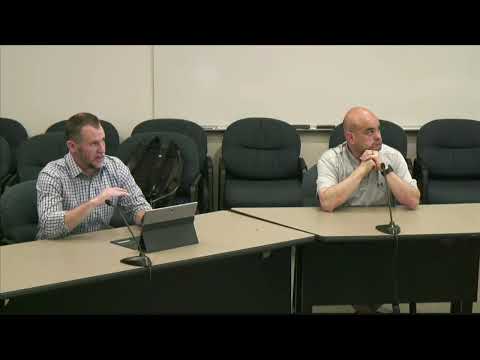
Adam D’Alessio, owners’ project manager with Colliers, told the committee the team has completed preliminary programming, existing-condition reviews and schematic design work and identified the Williams site as the preferred consolidated middle-school location for 665 students. “It’s been just about actually 2 years now since we were entered into the MSBA program,” D’Alessio said, describing the work that led to the schematic submission and the total-project-budget spreadsheet that will accompany the MSBA filing.
D’Alessio said the schematic-design submission was turned in May 1 and that the MSBA review and approval process includes confirming a total project budget that would be presented to town voters. The presentation estimated construction would begin in fall 2026 with student move-in in summer 2028; demolition of the existing Williams School would follow after occupancy.
Armin Ray, chair of the school building committee, emphasized independent cost checking and the accuracy of the current estimate. “Our budget was a hundred and 52,000,000,” Ray said, and he noted the committee had hired independent estimators whose results closely matched the project’s preliminary numbers, adding the team felt “really good” about the estimate while noting the figures remain preliminary until MSBA board action.
Presenters said the project’s MSBA reimbursement rate, including incentive points, is 56.37 percent, and provided an MSBA maximum facilities grant figure as part of the MSBA calculation. They also highlighted an internal milestone: the district submitted a special-education delivery methodology to the Massachusetts Department of Elementary and Secondary Education (DESE) and was responding to limited DESE feedback before final approval.
No formal committee vote or binding commitment was taken at the meeting. The presenters described next steps: MSBA schematic-design review and budget confirmation in June, then September town meeting and a Sept. 30 ballot vote if the MSBA board sets the total project budget. If town voters authorize the project, the district expects to advance to construction documents and select a construction manager.
Discussion points included logistics during construction; when asked whether students would be in school while demolition occurred, D’Alessio said students would occupy the new building and the district would install construction fencing and temporary drives to maintain safe operations. The presenters also discussed furniture, site amenities and contingency components included in the total project budget.
What’s next: MSBA review(s) in June (presenters referenced June meetings), town special meeting on Sept. 9 and a special election on Sept. 30 to authorize borrowing and the total project budget. The committee was advised that the budget numbers presented at the May 27 meeting are preliminary and subject to final MSBA approval.
Speakers quoted in this article spoke during the May 27 meeting; direct quotes are taken from the meeting transcript.