Get Full Government Meeting Transcripts, Videos, & Alerts Forever!
Get email alerts on the Public Safety Equipment topic
No spam. Unsubscribe anytime.
Glendora Police report AB 481 military-equipment inventory and use; council receives report
Summary
The Glendora Police Department presented its annual Assembly Bill 481 report, listing military-designated equipment, training use, audits (no violations) and annual training costs of about $20,000; the council voted 5–0 to receive and file the report.
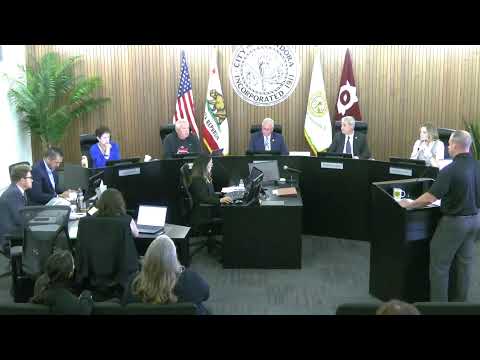
Captain Cristavio presented the Glendora Police Department’s annual military-equipment report under Assembly Bill 481 during the May 27 meeting, providing an inventory, training use figures and cost summary.
Cristavio summarized the AB 481 requirements and said the department deployed specified equipment in 19 high‑risk search-warrant operations in 2024 and used equipment routinely in training. He reported that the department’s annual internal audit found no policy violations and that no public complaints related to the equipment were received during the reporting year.
On cost, the captain said the department spent approximately $20,000 in ammunition and training costs tied to the listed equipment. He described categories of equipment covered by AB 481, including unmanned aerial systems (drones), two robots, rifles listed under the statute, noise‑flash diversionary devices, chemical agents/impact munitions classified as less‑lethal devices, a mobile command post and an armored rescue vehicle. Cristavio emphasized that, with the exception of rifles, the listed items are intended as less‑lethal tools designed to reduce injury risk to officers, suspects and the public.
Councilmembers asked clarifying questions about shelf life and disposal of certain munitions. Captain Cristavio said chemical munitions typically have a shelf life of about five years and that unused or expiring munitions are used in training and disposed of according to practice; he said weapons seized as evidence are retained for criminal cases and then typically destroyed rather than repurposed for city use. The captain also said the department had no planned acquisitions to report for 2025.
Councilmember Michael moved to receive and file the report; Councilmember Thompson seconded. The motion passed 5–0.