Get Full Government Meeting Transcripts, Videos, & Alerts Forever!
Get email alerts on the Economic Development topic
No spam. Unsubscribe anytime.
Developer Seeks $8 Million in DIF Funding for Boston Road redevelopment in Springfield City
Summary
Onyx Partners told the Springfield City economic development subcommittee it seeks roughly $8 million in tax‑increment DIF funds to pay demolition, remediation and site work for the first phase of a multi‑phase redevelopment on Boston Road; city staff said the repayment is tied to captured tax growth and does not obligate the city’s general fund.
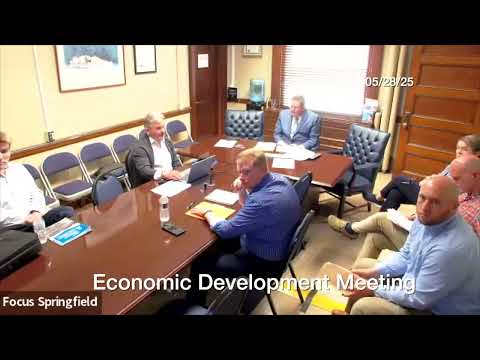
SPRINGFIELD, Mass. — Onyx Partners is asking Springfield City to use a tax‑increment financing mechanism known in the hearing as a DIF to provide roughly $8 million in up‑front funding for demolition, remediation and site work at the developer’s Boston Road redevelopment, city and developer representatives said at an economic development subcommittee meeting on Oct. 12, 2025.
Paul Conley, asset manager for Onyx Partners, told the subcommittee the project now includes eight buildings under construction or in early phases, with five structures already rising and one 16,000‑square‑foot storefront held for local tenants. “We anticipate having the next phase completed… before the end of the summer,” Conley said, and added that most tenants hope to open before Thanksgiving.
The DIF, as described at the meeting, would capture a portion of the property tax increase — the increment in assessed value created by the private investment — and direct that increment into a restricted account to pay bonds issued to finance the public improvements. City counsel (unnamed) said the proposed bonds would not be backed by the city’s full faith and credit and that the city’s repayment obligation would be limited to the funds available in the DIF revenue account rather than the city’s general fund.
Why it matters: The developer asked the subcommittee to designate a Development Investment Financing (referred to in the presentation as “DIF”) district and an Invested Revenue District so that 50 percent of the tax increment on the project parcels could be used to repay roughly $8 million in project financing. Onyx representatives said the funds would pay for demolition and abatement, site preparation and paving for the initial phase — work they said was more expensive than originally estimated because of remediation costs.
Details and fiscal estimates: City‑side figures presented at the meeting showed a vacant parcel base tax revenue in the range of about $528,000–$600,000 in the most recent assessments; presenters said the fully completed first phase was modeled to generate roughly $2.7 million in annual property tax revenue, leaving an estimated $2.1 million in new growth (the increment) after subtracting the base. Under the proposed structure, 50 percent of that increment would be allocated to the city and 50 percent to the DIF for bond repayment, yielding roughly $1 million per year toward DIF obligations in early years, the presenters said. The DIF payout that Onyx seeks was described as about $8 million that the developer would expect to recoup within seven to eight years under current projections.
Onyx’s breakdown of the requested DIF funds was given as $3.2 million for demolition and abatement, $2.1 million for site preparation and earthwork, and $2.6 million for paving. The presentation also included an as‑completed valuation estimate of about $77 million for the first phase; presenters noted that this figure depends on the project being built exactly as described and could change if plans change.
Local tenants and housing: Conley said some space in one building is being reserved intentionally to attract local Springfield businesses. A member of the subcommittee who identified herself as representing the district, Zaida Govan, said residents near the site had previously opposed housing plans but expressed willingness to hold listening sessions if residential components move forward. Conley said the developer is conceptually reviewing the addition of roughly 50 to 100 apartment units on later phases of the site but that housing plans remain conceptual.
Process and next steps: City counsel and Onyx staff said the subcommittee will forward the DIF designation, Invested Revenue District and the required statement of findings to the full Springfield City Council; presenters said the matter also will appear before the finance committee. City counsel stressed that council approval is required to designate the district and begin capturing the increment.
Public comment and other notes: Developers said tenant identities are under nondisclosure agreements. Several elected members and subcommittee attendees expressed support for the investment and noted the project’s potential to increase tax revenue and add housing options in later phases.
The subcommittee adjourned after the presentation; no formal vote on the DIF designation was recorded at the meeting.