Baltimore reports lowest vacant property count in two decades as officials push to speed rehabs
Loading...
Summary
DHCD reported 12,593 vacant properties and described progress on the Reframe Baltimore / BVRC initiative; council leaders pressed for clearer counts of rehabs since the program launch and the administration pointed to state funds and a developing capital stack and staffing increases.
Baltimore City officials told the Council on May 30 that the number of vacant properties stands at 12,593, the lowest total in 20 years and a roughly 20% decline since the mayor’s administration took office.
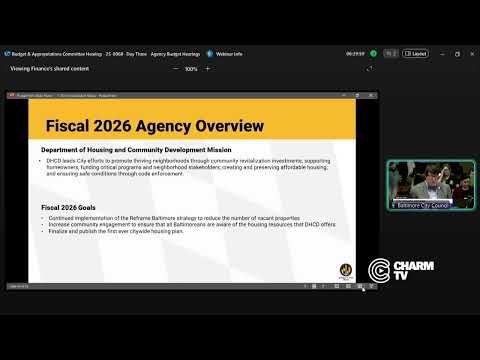
Housing Commissioner Alice Kennedy and DHCD staff tied the reduction to the citywide Reframe Baltimore initiative and said the department is aligning staffing and capital tools — including state funds, BVRC support and planned noncontiguous TIF dollars — to accelerate demolitions and rehabs. Kennedy described the effort as a 15‑year, $3 billion commitment and said the department is “building the capacity alongside building the capital stack.”
Council President Cohen and other members pushed for precise outcomes. DHCD’s Kimberly Rubins said 908 vacant buildings had been abated via use‑and‑occupancy permits in the past fiscal year (as of May 30, 2025). Later in the hearing Rubins gave a higher figure — “approximately 1,700” rehabs since December 2023 — and the chief administrative officer clarified that the mayor’s December 2023 announcement described intent to build a capital stack and that the 5,000‑unit rehabilitation target was developed subsequently through partner work. The CAO said DHCD would pull and share the underlying data going back to December 2023 to show progress from the date the council requested.
Funding and staffing: DHCD said the FY26 budget includes local match increases for HUD lead hazard reduction and an estimated $9.3 million in special funds for the Affordable Housing Trust Fund (the agency noted that figures will be refined after BBMR closes budget estimates). Officials said 16 positions were created mid‑year in FY25 to support vacant‑reduction work and that the FY26 recommended budget includes roughly $1.2 million for additional staff to scale acquisitions and dispositions; the administration described disposition staffing increases (real estate agents) as a primary use of those funds.
Discussion vs. direction vs. decision: Council members expressed impatience with execution speed (discussion); CAO Faith Leach and DHCD committed to pull and share time‑series data to clarify numbers and to coordinate staffing and TIF deployment (direction); no formal policy vote was taken (decision: no formal council vote).
Ending: Council leaders said they will continue to press for faster dispositions and clearer public dashboards as capital and staffing resources come online.