Get Full Government Meeting Transcripts, Videos, & Alerts Forever!
Get email alerts on the Permits E Permitting topic
No spam. Unsubscribe anytime.
Baltimore housing department outlines fixes and timeline after troubled Accela permitting rollout
Summary
Housing Commissioner Alice Kennedy told the City Council the new Accela e‑permitting system created customer backlogs and a 200% increase in walk‑ins; the chief administrative officer and a new tiger team committed to a pre‑July hearing meeting and a stabilization plan.
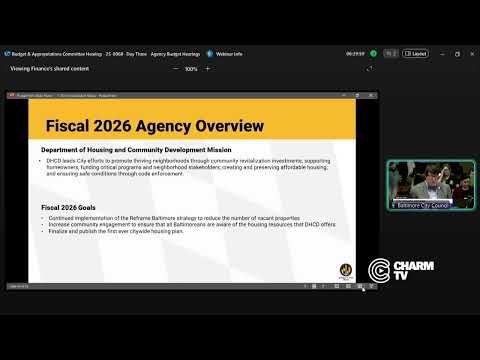
Baltimore City Housing Commissioner Alice Kennedy told the City Council on May 30 that the Department of Housing and Community Development’s rollout of its new e‑permitting software has amplified preexisting personnel and workflow problems and produced widespread customer frustration.
Kennedy said the department replaced an older permitting system four months ago with the vendor product Accela and that the launch revealed problems that “must be addressed across the people, process, and technology” and that “we are not there yet.”
The department presented a short list of operational fixes it has already begun: consolidating permit categories from 15 down to 5 (with a planned sixth category to expedite small over‑the‑counter jobs), adding temporary and permanent intake and customer‑service staff, improving data collection and a draft permitting dashboard, and a CAO‑led “tiger team” audit of intake and backlog processes. Faith Leach, the city’s chief administrative officer, told council members she will convene a cross‑agency meeting — including DHCD, the fire department, Public Works and the Office of Performance and Innovation — and “present to you a path forward for how we will stabilize the Accela system and address these issues, in a sustainable manner.”
Council President Cohen pressed for concrete timing and asked for a meeting in advance of a July hearing. Kennedy said the department is targeting a fast‑track permit fix by the end of June and that the tiger team had already begun convening and building a project plan. Leach agreed to schedule the cross‑agency meeting before the July 15 hearing; Councilman Torrance and staff later agreed to a goal of identifying a meeting date by July 1.
Discussion vs. direction vs. decision: DHCD acknowledged operational failures and described interim fixes (discussion). The CAO committed to convene a multi‑agency “Accela tiger team” meeting and to present a stabilization plan before the July hearing (direction). No formal council vote or ordinance was taken at the hearing (decision: no formal vote).
What remains unresolved: department and council members asked for progress metrics, an Accela dashboard, and a timeline for corrective actions; the CAO and DHCD committed to provide those items at the pre‑July meeting and in advance of the July hearing.
Ending: Council members repeatedly emphasized urgency, saying permits are a gating item for rehabs and development; DHCD said it would continue to provide training sessions and short how‑to videos and requested constructive feedback from the development community and council offices.