Get Full Government Meeting Transcripts, Videos, & Alerts Forever!
Get email alerts on the Municipal Budget topic
No spam. Unsubscribe anytime.
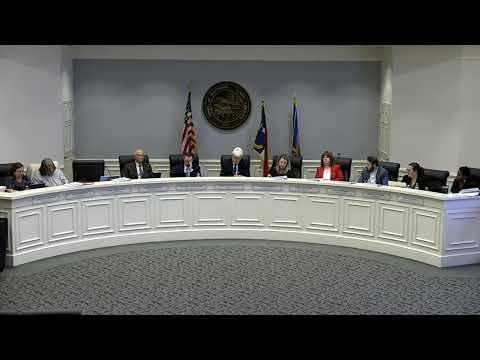
Matthews board hears FY2025–26 budget with 1.3¢ tax increase to start repaying $11M parks bond
Summary
The Matthews Board of Commissioners on May 27 reviewed a manager'recommended FY2025'26 budget that includes a proposed 1.3¢ property tax increase to begin repaying an $11 million general obligation bond for parks, a stormwater fee rise, and a compensation pool equaling up to 6% for employees.
The Matthews Board of Commissioners on May 27 heard the town manager'recommended FY2025'26 budget that would add 1.3 cents to the property tax rate to begin repaying an $11 million general obligation bond for parks and related improvements.
Town Manager Becky Hawk presented the recommended budget, saying the 1.3¢ would raise the tax rate to 27.95¢ per $100 of assessed value and is specifically allocated to debt service on the bond issued in April to fund park design and construction. "When you add the 1.3¢ to it, that will bring it to 27.95¢ per hundred," Hawk said, explaining the tax impact for the average Matthews home (assessed at $429,275) would be about $55.81 a year, or $4.65 a month.
Hawk also told the board the budget includes a stormwater fee increase approved earlier by the board (tiered by impervious area) and a combined 6% employee compensation pool made up of a 3% cost-of-living adjustment and a 3% merit pool. "Maintaining market competitiveness is very important to us," she said.
Commissioners spent more than two hours debating tradeoffs in the budget. Commissioner Ken McCool emphasized the value of a larger "rainy day" or unassigned fund balance as a disaster-response tool, citing an example of a neighboring jurisdiction that used reserves to repair a storm-damaged bridge quickly. "Having that is able to deploy those funds immediately...is incredibly important," McCool said.
Other debate focused on special-events costs and the tourism fund. Commissioner Richard Tufano proposed a plan to funnel tourism/special-events funding through an outside nonprofit that would run festivals as an independent organization and use tourism funds to pay event costs. Tufano argued that if the nonprofit paid for event services directly (police, fire, power, rentals), the town could receive net revenue back into the general fund. Several commissioners and staff pushed back, noting the town already spends tourism dollars and in-kind public safety costs in ways that largely offset any expected net gain.
Finance and staff detail: the manager'recommended budget shows the town expects a modest decrease of about $1,460,000 in projected fund balance for the current fiscal year, and staff explained the town's adopted policy calls for maintaining at least 34% of available fund balance (and a goal of 34% unassigned). Finance staff projected available fund balance of about $14.5 million, of which $12.3 million is unassigned; that leaves the unassigned balance roughly $1.1 million below the unassigned 34% goal but about $1 million above the state minimum category the Local Government Commission uses for towns of Matthews's size.
Several commissioners pushed for detailed, item-level cuts if colleagues opposed the tax increase. "If you want to lower taxes or get out of a deficit...you have to cut things or find additional revenues," said Commissioner Mark Defano. Others said the town's revenue drivers (notably strong local sales tax year-to-date and higher-than-budgeted investment earnings) made the recommended package feasible now and cautioned against relying on one-time interest earnings as permanent resources.
Staff and board agreed to continue budget work at an upcoming June 2 work session and to circulate proposed substantive changes by email beforehand. No final vote to adopt the FY2025'26 budget was taken on May 27; the public hearing concluded and the board reconvened its regular meeting.
Ending: Board members asked staff to prepare scenarios showing cuts or alternatives (including a hypothetical example of Tufano's festival outsourcing model for a single event) to be reviewed at the next work session so the commission could evaluate whether any portion of the proposed tax increase could be reduced.