Get Full Government Meeting Transcripts, Videos, & Alerts Forever!
Get email alerts on the Nonprofit Funding topic
No spam. Unsubscribe anytime.
Laredo updates third-party nonprofit funding rules, adds volunteer-hour match and $25,000 cap
Summary
City of Laredo staff presented a revised third‑party funding policy that sets a $25,000-per-nonprofit annual cap, a three‑year consecutive limit, a 70‑point scoring threshold, a volunteer‑hours match and a local fee‑waiver program tied to volunteers.
City of Laredo community development staff detailed a new third‑party funding policy and the application and scoring process for fiscal year 2025–2026, including a $25,000 cap per nonprofit, a three‑year maximum before a one‑year pause, and a volunteer‑hours match that nonprofits may use to offset city service fees.
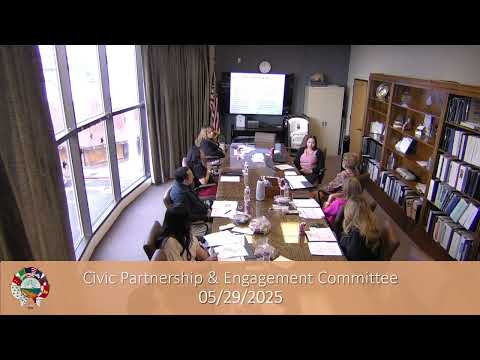
The revised policy was presented to the Third‑Party Funding Committee by community development staff. The application period opened in February with the initial notice published on 2025-02-16 and a second publication on 2025-02-23; mandatory training was held on 2025-02-27 and applications were due on 2025-03-20. Committee members were shown the electronic submission system and the scoring workflow the committee will use to evaluate applicants.
The city will award general‑fund third‑party contracts on a reimbursement basis with quarterly invoice submissions; invoices and supporting receipts are submitted each quarter and reimbursements are processed after review. To be eligible, an organization must be a 501(c)(3) nonprofit and meet at least one of three program priorities: support education, promote economic development or promote health and welfare. Applications are scored across multiple sections; applicants must average at least 70 points to qualify for funding consideration.
Key budget and program rules announced by staff include: - Maximum award: $25,000 per nonprofit per fiscal year; awards are not to exceed three consecutive years: an organization that receives funding for three straight years must sit out for one year before applying again. The staff presentation said the new rule was approved in January 2025 and will begin with the 2025–2026 fiscal year. - Allowable expenses: program‑related equipment, salary and benefits (capped at 25% of award for employees who work on the qualified program), insurance directly tied to program delivery, utilities for program facilities, transportation essential to activities, and program supplies (examples given: food, trophies, medication, vouchers). - Match requirement: volunteer hours are required as a local match at a rate of 10 hours per $1,000 awarded (for example, a $25,000 award requires 250 volunteer hours). Volunteer hours must be documented on the City of Laredo volunteer hours log and verified by city staff; both the volunteer and city staff must sign the log. - Fee waiver/credit program: nonprofits may earn credits toward approved city service fees (for example, street closure fees) by providing volunteer hours; staff stated the city values each volunteer hour at $25 for waiver purposes. Fee waivers are limited to eligible city service fees and may not be applied to certain costs such as security deposits and janitorial cleaning deposits.
Staff reiterated standard procurement and contract controls: grant awards are contingent on successful execution of a contract; missing required documentation (for example, proof of insurance) can result in point deductions during scoring and, if unresolved at award time, may prevent contract execution. Staff also said change orders and contract amendments must be submitted in writing and approved by city council where required.
Committee members pressed staff on applicant notification and administrative details. Members asked whether applicants could correct missing attachments after the March 20 deadline; staff said the electronic submission system closes at the deadline and material turned in after the deadline generally could not be accepted for scoring, although applicants may bring missing documentation and staff will note it but cannot reopen closed electronic submissions. Committee members suggested the city provide courtesy letters to applicants whose submissions were incomplete so organizations know what to correct for subsequent cycles.
Committee members also asked whether hotel‑motel tax rules require annual disbursement. Staff said, referencing state guidance, that the State of Texas does not necessarily require annual dispersal of hotel‑motel tax receipts and that legal staff would confirm how those rules apply locally. Staff noted that requests for hotel‑motel funding exceeded the available hotel/motel budget and that recommendations will need to fit the hotel/motel budget allocation.
Why this matters: the changes affect how dozens of local nonprofits will apply for and document requests for city support, add an enforceable volunteer‑hours expectation tied to awards, and change the distribution cadence for recurring grantees. The volunteer‑hour match and fee‑waiver mechanism also create a new compliance and tracking responsibility for both nonprofits and city staff.
Implementation and next steps: staff asked committee members to complete scoring in the city’s electronic evaluation system by early June so staff can prepare recommended award amounts for budget planning. Staff also agreed to follow up with legal counsel on questions the committee raised about fee waivers, acceptable volunteer activities, and hotel‑motel tax flexibility.
Sources: presentation and discussion at the City of Laredo Third‑Party Funding Committee meeting. No formal contract awards or council actions were approved during the meeting; staff described the new policy and the committee agreed to the evaluation schedule for recommendations to budget.