Get Full Government Meeting Transcripts, Videos, & Alerts Forever!
Get email alerts on the Land Use Gravel Extraction topic
No spam. Unsubscribe anytime.
Cache County appeal hearing centers on Cronquist gravel extraction permit, road safety and whether site exceeds 5-acre limit
Summary
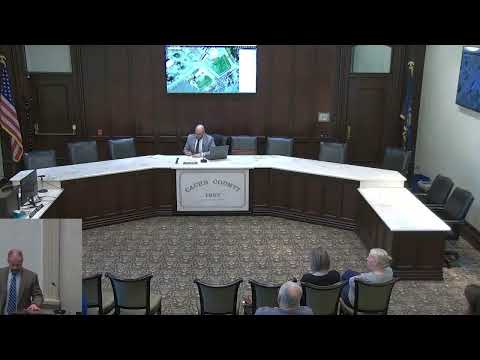
Rob Patterson, the appointed land use hearing officer for Cache County, began a consolidated appeal hearing May 30 over two challenges to a conditional use permit authorizing temporary gravel extraction on property owned by Sean Cronquist, known in filings as Crazy Longhorn Ranch.
Rob Patterson, the appointed land use hearing officer for Cache County, began a consolidated appeal hearing May 30 over two challenges to a conditional use permit authorizing temporary, minor extraction on property owned by Sean Cronquist, known in filings as Crazy Longhorn Ranch.
The appellants — Donna Hummel and a neighbor represented by attorney Sam Goble — told the hearing they oppose approving the permit because of public‑safety and nuisance risks from heavy truck traffic, and because they say the site already exceeds the five‑acre limit for a “minor extraction” under county code. Hummel and Goble urged more factual study of road widths, sight lines in summer foliage, and the effectiveness of prior dust‑suppression efforts.
Why it matters: The disputed permit would allow frequent, wide loads to travel a narrow county road used by pedestrians, cyclists and recreational drivers in warmer months. Appellants argued the county’s traffic assessments were done in winter months and therefore understate summer use and visibility issues, and they said existing stockpiles and disturbed ground may already exceed the five‑acre cap that differentiates minor extraction from a larger mining operation.
The hearing opened with Hummel, who said the county‑commissioned and applicant‑commissioned traffic studies relied on observations taken in January and therefore did not reflect spring‑through‑late‑summer conditions. "The traffic assessments conducted in January of 2025 did not adequately account for the heavier flow of traffic that occurs from earlier spring and continues until late summer," Hummel said, adding that photographs taken in leaf‑off conditions understate the extent of foliage that creates blind corners in summer. She told the hearing she had not observed a recorded right‑of‑way allowing the ranch to cross county property to reach the parcel in question and identified the county parcel tax ID as 080460014.
Attorney Sam Goble, representing appellant Dansie, expanded on noise and dust complaints, saying prior attempts at dust suppression on a similar road segment (including a 2020 magnesium chloride application) had not stopped dust and had washed into homes after rain. Goble said the county’s conditions requiring mitigation were not supported by evidence that the measures would work: "They made the decision without any evidence that it would actually address the nuisance. It was a, 'we'll give it our best shot,'" he said.
Goble also contended the planning commission did not measure turning radii and corner widths where large trucks would operate. He urged that without specific measurements of road width at corners, visibility in the summer, the types of trucks authorized and decibel or vibration testing, the commission’s findings were arbitrary and capricious.
County staff told the hearing the conditional use standard allows approval when reasonable conditions can mitigate anticipated detrimental effects and emphasized that mitigation need not eliminate all impacts. The county pointed to two traffic analyses in the record — one by the applicant’s engineer (with April and October 2024 observations) and a county‑commissioned Horrocks study — and said both studies addressed access and potential localized improvements at the driveway approach, with Horrocks recommending paving the driveway approach within the county right‑of‑way to protect the paved road.
An attorney for an amicus filing supporting the applicant, Layman Stoddard, said both traffic studies evaluated the driveway approach and road widths and that the county commissioners and staff had substantial evidence to impose conditions and approve the permit. He told the hearing the studies showed the road width in the relevant stretch as roughly 20–21 feet and said the applicant had submitted videos and a letter of intent promising to repair any damage the operation causes.
Appellants raised several legal and factual questions: whether the disturbed area (including spoil piles and stockpiles) already exceeds the five‑acre limit for a minor extraction; whether the county properly authenticated the Horrocks study; whether the commission adequately evaluated alternatives (including a suggestion that material be placed on an adjacent private parcel); and whether a commissioner’s on‑record comment suggested an improper, non‑evidentiary basis for his vote. Attorney Goble and appellant Hummel argued those procedural and evidentiary gaps require remand for further fact‑finding.
No final ruling was made. Hearing officer Patterson said he would reread the record, review the hearing recordings and issue a written decision consistent with the county timeline. "I am going to take this under advisement... I'll be issuing a written decision," Patterson said.
What the record shows and what it does not: The hearing record includes two traffic studies and multiple public comments and submissions about prior road use, prior dust‑suppression attempts, alleged historic noncompliance by the property owner and proposed mitigation measures; it does not include a signed, on‑the‑record agreement by an adjacent private landowner to accept excavated material, and the appellants say the record lacks summer visibility measurements and consistent, authenticated engineering documentation for some items.
Next steps: Patterson will issue a written decision after reviewing the record. The hearing record and the decision will determine whether conditions imposed by the planning commission stand, whether further study or a remand is required, or whether the permit should be altered or denied. The record contains detailed conditions and prior enforcement history that the written decision will need to address.
Votes at a glance: No vote or final disposition was recorded at this hearing; the appeal was taken under advisement pending a written decision.