Get Full Government Meeting Transcripts, Videos, & Alerts Forever!
Get email alerts on the Homeless Services Budget topic
No spam. Unsubscribe anytime.
Baltimore City officials warn federal cuts and rising rents threaten homeless services
Summary
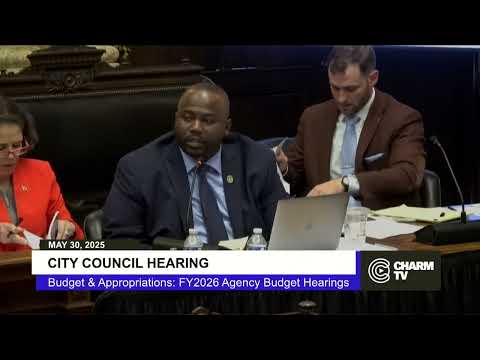
At a Baltimore City Council hearing, the director of the Mayor’s Office of Homeless Services detailed service volumes, budget changes and risks if ARPA and federal subsidies expire, and council members pressed for plans to prevent a projected rise in homelessness.
Ernestina Simmons, director of the Mayor’s Office of Homeless Services, told the Baltimore City Council that the office’s “mission is to make homelessness rare and brief for the Baltimore City” and warned that expiring federal and ARPA funds threaten services many residents rely on.
Simmons said the office served “over 21,000 households” in 2024 across emergency shelter, street outreach and permanent supportive housing and that “in fiscal year 2026, our goal is to serve 4,000 households.” She told council members the agency has restructured, added program compliance and accounting staff, and aligned outreach and emergency shelter funding in its operating budget.
The central issue raised at the hearing was funding risk. Simmons said much of the city’s rental-assistance capacity depended on federal and ARPA dollars. “We heavily relied on ARPA dollars for eviction prevention dollars,” she said, and warned that the expiration of those dollars “is going to have a tremendous impact.” Laura (the city budget director) told Councilman Gray that personnel costs still funded by ARPA will be evaluated as part of the fiscal 2027 budget process.
Council members raised specific concerns about eviction prevention and the loss of emergency housing supports. Simmons described Emergency Housing Vouchers and other pandemic-era subsidies as time-limited: the city “housed 291 people” through emergency housing vouchers and those federal commitments will not last indefinitely, she said. She said the city is working with the Housing Authority of Baltimore City and state partners to try to prevent leased households from returning to homelessness.
The presentation included service metrics council members used to press for urgency. Simmons said year-to-date diversion-program clients totaled 709, against a 2024 target of 500. She reported a decline in the share of diversion clients who were first-time homeless from a 2024 actual of 60% to a year-to-date figure of 39%. Simmons also said street-outreach teams have enrolled “almost 4,000 clients” year to date, and that the office received 19,874 calls for shelter beds in 2024. On a single point-in-time snapshot in 2025, she said there were 2,039 people counted in the shelter system.
Simmons described higher engagement through targeted encampment work: “that percentage for clients being navigated through the encampment work is 42 percent” and “63% of the clients are accepting shelter” when engaged through encampment protocols, compared with lower rates from unscheduled street outreach. She said the challenge after initial shelter acceptance is keeping clients in shelter long enough to connect them to services.
Council members and Simmons discussed rent pressures and eviction data. Simmons said fair market rents rose about 27% from 2022 to 2024 and that Baltimore City accounted for roughly 7,600 of the roughly 19,000 evictions in a recent year, with nonpayment of rent a leading cause. She said many households the office serves have very low annual incomes and that rising rents and utility responsibilities push households into the shelter system.
On operations and accountability, Simmons said shelter providers are operating low-barrier shelters but now must sign participation agreements and attempt diversion work within three days of a client entering shelter. She described steps to improve payment timeliness to Continuum of Care (CoC) providers by coordinating awards with the Department of Finance and Board of Estimates so rental-assistance payments are not delayed.
Simmons also addressed safety and training concerns raised by council members and advocates. She said the city has asked providers to increase in-person training and now requires monthly meetings with shelter operators to review outcomes and facility issues. For one family shelter with on-site security, she noted the contract included significant case management and mental health services.
Simmons and council members described the scale of the threat if federal supports shrink: “how can we replace $55,000,000 in rental assistance dollars?” she asked, framing the problem as requiring advocacy to federal and state partners plus coordinated local action. Council members said they would seek the stakeholder talking points Simmons’ office prepared for advocacy and pursue follow-up oversight and data requests.
The presentation concluded with Simmons noting partnerships across city agencies and nonprofit providers, and with council members thanking MOHS staff for outreach and data work. The hearing ended with the council moving to the next department’s presentation.