Get Full Government Meeting Transcripts, Videos, & Alerts Forever!
Get email alerts on the Arts And Culture topic
No spam. Unsubscribe anytime.
Baltimore retools arts oversight as BOPA stabilizes and new mayor’s arts office takes lead on festivals
Summary
City officials told a Baltimore City Council committee that the Baltimore Office for Promotion and the Arts (BOPA) has begun financial and organizational stabilization under interim CEO Robin Murphy, while a newly created Mayor’s Office of Art, Culture and Entertainment will assume responsibility for major events, nightlife and film promotion.
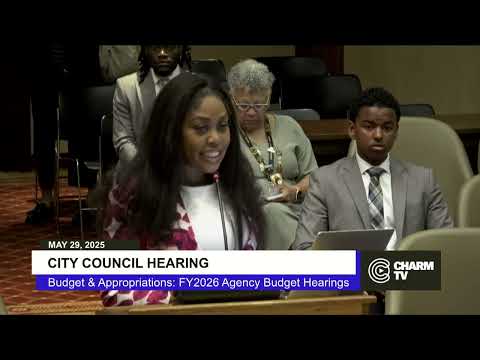
At a Baltimore City Council committee meeting, city and arts officials described a new arrangement that narrows the Baltimore Office for Promotion and the Arts’ duties to artist support and grants while directing large events, nightlife and film promotion to the newly created Mayor’s Office of Art, Culture and Entertainment.
The shift follows an October decision by the Board of Estimates to terminate the city’s contract with BOPA amid concerns about the organization’s finances; since then Robin Murphy, interim CEO of BOPA, said the organization has worked with the city to stabilize operations and refocus staff. "Artscape 2025 was a milestone that demonstrated the powerful possibilities of true collaboration," Murphy said, calling Artscape a “Crown Jewel Cultural Event.”
Why it matters: Council members said the reorganization affects artist livelihoods, festival planning and long-term cultural investments such as artist housing and public arts funding. Officials said the new structure aims to keep artists central to policy and prevent cultural displacement while improving event logistics and organizational accountability.
City and BOPA leaders described concrete steps taken since last fall. Murphy said BOPA received $50,000 from the city and an additional $20,000 from the National Endowment for the Arts in 2025; administered the Creative Baltimore Fund distributing $260,000 to 26 organizations and 10 individual artists; issued FreeFall Baltimore grants to 59 artists and organizations; and secured multi-year partnerships with the T. Rowe Price Foundation and Mercy Medical Center. She also reported facility- and program-level indicators: School 33 artist studios at full rental capacity, Bromo Seltzer Tower at 89% studio occupancy, and Cloisters bookings through June 2027. Murphy said the Top of the World farmers market is operating under a temporary memorandum of understanding with the state extending BOPA’s management through November and that its attendance increased (reported as roughly a 30–35% rise) compared with last year.
Lindsey Jackson, director of the Mayor’s Office of Art, Culture and Entertainment, described the new office as a centralized promoter and convener for Baltimore’s creative sectors — "to unify Baltimore’s creative sectors of arts, culture, entertainment, nightlife, and film under one coordinated strategy," she said — and said the office will advance festivals, nightlife programming and film promotion while BOPA refocuses on grants, artist programs and the city’s arts-council functions.
Council members pressed on two issues repeatedly: preserving artist voices and long-term sustainability. Council President Cohen told the panel, "keep the artist centered and keep their voices centered," warning that creative communities can be priced out as cities develop. Councilman Gray praised Artscape’s accessibility and asked whether the new arrangement would let BOPA concentrate on grants and artist support while the mayor’s office handles festivals and logistics; city staff confirmed that festivals, the film office and other promotion functions will shift into the new mayoral office and that a new contract for BOPA will be brought to the Board of Estimates.
Speakers and council members also described steps intended to help artists beyond festival stages: pre-festival professional development (headshots, financial and immigration resources) for local performers; partnerships placing local exhibitions in institutions such as the Walters and the Peale Museum during Artscape; and efforts to seat cultural institutions on BOPA’s reconstituted board.
There were no formal votes or motions recorded during this presentation. Officials said a new contract with BOPA was finalized and "signed yesterday" and will be presented to the Board of Estimates; the temporary MOU extending BOPA management of Top of the World runs through November, per the presentation.
Looking ahead, Murphy said BOPA will continue core programs — Creative Baltimore Fund, Sondheim awards, Artist Travel, Open Studio Tours, FreeFall Baltimore and Artscape 2026 — and will manage the newly sworn public arts commission under an ordinance establishing a 1% for art program. City officials asked council members to remain engaged in planning and strategic conversations about artist housing, neighborhood inclusion and long-term funding.
The committee hearing combined status updates, program metrics and policy direction but did not produce new legislation during the session. Council members asked for continued briefings and engagement as the mayor’s office and BOPA finish operational transitions and implement the new contract.