Get Full Government Meeting Transcripts, Videos, & Alerts Forever!
Get email alerts on the Childcare Access And Workforce topic
No spam. Unsubscribe anytime.
Cleveland: $4.4M ARPA package expanded childcare scholarships, bonuses and boosted provider capacity, officials say
Summary
City and Starting Point officials told a Cleveland City Council committee that ARPA-funded scholarships and retention/sign-on bonuses helped 370 children access childcare, paid bonuses to about 1,000 employees and increased classroom capacity, while officials seek longer-term funding and a new business-partnership pilot.
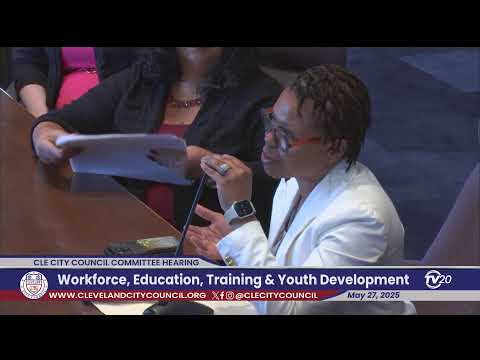
Cleveland City Council members heard May 27 that a $4.4 million American Rescue Plan Act (ARPA) investment in childcare scholarships and retention bonuses helped keep early‑childhood educators in classrooms and opened slots for families, city and Starting Point representatives told the council’s Workforce Education, Training and Youth Development Committee.
The update, led by Starting Point representatives Nancy Mendez and Kara Porter and joined by providers and families, said 370 Cleveland children received ARPA‑supported scholarships, about 1,000 childcare employees received sign‑on or retention bonuses, and the effort increased system capacity enough to serve roughly 2,500 additional children.
The committee was told the program mattered because lack of affordable, reliable childcare prevented parents from returning to work and reduced local tax revenue: Starting Point cited a Northeast Ohio analysis estimating a $114,000,000 loss in tax revenue tied to childcare‑related workforce gaps.
Presenters described three scholarship models used to reach families: short‑term scholarships that bridge families to publicly funded vouchers, short temporary scholarships as a bridge to new employment, and longer scholarships for families affected by the “benefits cliff” who earn too much to qualify for vouchers but still lack a livable wage. “The Cleveland ARPA scholarship was a godsend,” the presentation quoted a Ward 8 recipient, and provider Carla Brown said, “The scholarship saved her job, and helped her.”
Starting Point reported distribution details from the program period: roughly $800,000 in sign‑on and retention bonuses went to about 1,000 employees (some workers received more than one bonus), yielding about 1,600 bonus payments; scholars said those dollars touched more than 6,000 children in Cleveland and created room for about 2,500 more. Of the 370 scholarship recipients, Starting Point said 69% were children under age 5; about 50 children were connected to publicly funded childcare after navigators helped them complete applications.
Providers at the hearing said the money produced both economic and morale benefits. “This recognition was more than just financial. It was a powerful reminder that the work we do matters,” said Shelly Carter of Kitty Castle Child Care Center on the Lake. Family provider Carla Brown described individual cases in which the scholarships prevented job loss and helped families cover housing and basic needs while accessing quality care.
Officials and committee members stressed that the ARPA dollars were time‑limited. Presenters said about 55 children remain on scholarship slots that will expire this year and that more than 50 families remain on a waiting list for assistance. Nancy Mendez described a newly signed contract for a business‑partnership pilot—what presenters called a “tri‑share lite” model—intended to pair employer contributions with state funds and philanthropy so businesses can offer childcare as an employee benefit without taking on the program’s administrative burden. “We need our corporate private community to raise their voice and put some skin in the game,” Mendez said.
Committee members pressed for state‑level advocacy and pointed to recent Ohio budget conversations. The presenters referenced ongoing state funding changes, including a statewide childcare voucher allocation cited in the briefing as $213,000,000; Starting Point staff said that amount began with the governor and that the state is still finalizing budget details in the legislature.
City staff said the administration is building on the ARPA effort through the mayor’s prenatal‑to‑3 agenda and through interdepartmental conversations to explore how the city as an employer can support childcare as a benefit. Samantha Holmes, identified in the presentation as a program manager on the city’s youth and family success team, was cited as the city staff member coordinating with Starting Point on program administration.
Committee members and presenters described remaining obstacles: many childcare workers earn low wages that make centers unable to compete with retail and fast food; irregular hours for sectors such as healthcare and manufacturing complicate standard center schedules; and the “benefits cliff” leaves some families ineligible for vouchers yet unable to afford care without temporary help. Presenters said they are exploring flexible scheduling, expanded business partnerships, and continued advocacy for larger public subsidies.
No formal vote was taken; the meeting was an informational update and the committee requested follow‑up materials and data on pilot design and state comparisons. Starting Point and city staff offered to provide more detailed data to council members and to meet individually with council offices and local businesses interested in the pilot.
The committee discussion closed with officials urging continued public and private advocacy to sustain subsidies and expand access for families and to retain early‑childhood educators.