Get Full Government Meeting Transcripts, Videos, & Alerts Forever!
Get email alerts on the Public Safety Training topic
No spam. Unsubscribe anytime.
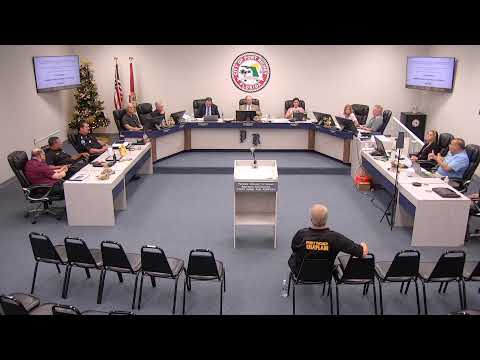
Council allows fire‑training at city station by chief’s certified training firm with conditions and staff to define process
Summary
Council discussed and approved allowing the fire chief’s private training company to use city facilities to teach courses for Port Richey staff free of charge; council asked staff to develop written procedures to record fees, room usage and liability protections to avoid appearance-of-impropriety concerns.
Port Richey City Council voted to allow fire training courses to be held at the city fire station by an instructor-owned training company — including free slots for city firefighters — while directing staff to formalize agreements, fees and safeguards to avoid conflicts or appearance issues.
Fire Chief Gary (first name only in the record) explained he operates as a state‑certified instructor and set up a training company so municipal staff can receive required certifications locally rather than travel at city expense. The model proposed: Port Richey firefighters attend free; outside agencies or private attendees pay training fees that cover instructor compensation, insurance and classroom costs. Chief Gary said the arrangement reduces travel, overtime and lodging costs the city previously shouldered and keeps training local.
City Attorney Nancy Meyer and City Manager Matthew W. Cobbler expressed concern about perception and recommended a written framework. Meyer said there was no clear legal prohibition but stressed the importance of transparency because the chief would financially benefit when the course included paying outside attendees and would be using city property. Council members raised the need to record all transactions, avoid unrecorded in‑kind exchanges and set an arm’s-length fee or room‑rental charge when non‑city participants use the facility.
Council agreed to allow the training but asked staff to draft a standard operating procedure and form of agreement that: documents fees (instructor fees and facility rental), confirms liability insurance, records attendees and payments in the city accounting system, and ensures city employees receive the training slots that were pledged. The council also instructed staff to make the process auditable and publicly transparent to avoid complaints or ethics questions. The motion to allow the program carried.