Get Full Government Meeting Transcripts, Videos, & Alerts Forever!
Get email alerts on the Municipal Budget topic
No spam. Unsubscribe anytime.
Waukegan officials present $292.2 million FY2025–26 budget, plan $76.3 million capital program and $29 million reserve drawdown
Summary
At a May public hearing, city staff presented a $292.2 million citywide budget that keeps a 0% property tax-levy increase, adds 11 positions (net +5), commits $76.3 million to capital projects and draws about $29 million from fund reserves; aldermen asked about sustainability, grocery tax loss and unspecified wrongful-conviction payouts.
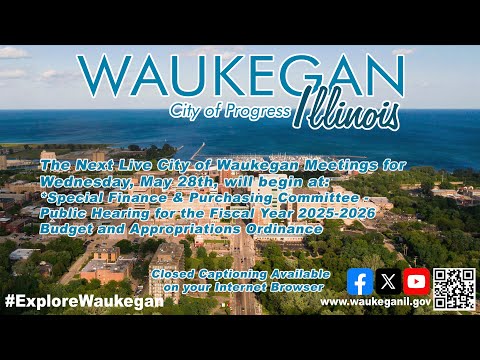
Don Schultz, staff member, presented a proposed citywide budget of $292.2 million for fiscal year 2025–26 at a May public hearing of the Waukegan Special Finance and Purchasing Committee, saying, "It's the largest budget the city has ever presented with the largest capital improvement program we've ever seen."
The proposal holds the tax levy at 0% for the upcoming year, budgets $76.3 million in capital improvements, shows an overall revenue projection of about $263.0 million and anticipates drawing roughly $29 million from reserves outside the general fund to balance total citywide spending and planned projects. The general fund is presented as structurally balanced, with a projected small surplus and an unassigned fund balance substantially higher than several years ago.
Why it matters: the plan increases one-year capital commitments and maintains current property-tax levels while using fund balances to pay for one-time and carryover projects. Aldermen pressed staff about how long such reserve draws and capital spending rates are sustainable and whether contingencies such as legal payouts are accounted for.
Don Schultz told the committee the budget covers 529 employees and that personnel costs account for the bulk of the general fund. Key budget figures presented include a $292,200,000 total budget (a roughly $47.2 million, 19.3% increase over the prior year), a $76,300,000 capital improvements program (57% higher than last year), and fixed-asset replacements of $5.7 million. Major capital items listed in the presentation included lead service-line replacements ($10.6 million), streets/sidewalks/alleys ($11.7 million), bridges and culverts ($14.0 million) and water-plant improvements (listed as $18,000,000 for the water plant). The presenter said the capital program is expected to span multiple years and is not intended to be completed in a single fiscal year.
The presentation said 70% of debt service is paid from non-property-tax sources such as McGaw Park TIF revenue and home-rule sales tax; motor fuel tax revenues drive many street and transportation projects. Don Schultz said the city will transfer about $1,185,100 from the American Rescue Plan (ARPA) fund into the general fund to finish previously planned projects and programs. He also noted a previously approved $5.5 million transfer from rep funds to risk reserves.
Aldermen asked substantive questions during the hearing. Alderman Guzman asked about the pace of budget growth and whether the city can sustain larger budgets in future years, asking, "How fast are we gonna get to half a billion?" Don Schultz replied that without new revenue sources the city is sustainable for the next two to three years but cautioned larger growth would require additional revenue or levy increases. Alderman Florian noted that reserves exist to fund planned projects and said, "If we overtax and we have too much money, we need to give it back to the taxpayers. If we have money we need to spend on infrastructure or other things, that's what it's there for."
Other line-item and policy questions included: - Loss of grocery tax: staff said the budget projection assumes eight months of current grocery-tax receipts and subtracts four months of lost grocery tax beginning in January, and that sales-tax growth is still projected despite that loss. - Casino lease and gaming fund: the $3 million casino land lease is budgeted in the gaming admission tax fund (projected gaming admissions revenue of $8.82 million), not the general fund. - Push tax and building-permit revenue: staff said revenues from anticipated building permits tied to Full House Resorts (casino construction) are not included in this year's conservative revenue assumptions. The push-tax enforcement recoveries were not treated as guaranteed revenue in the presented budget. - Wrongful-conviction payouts: Alderman Florian asked whether anticipated payouts for wrongful incarceration are included. Staff answered there is no line item in the proposed budget for those potential judgments and that the city would address any judgment when and if it is entered (options discussed included issuing judgment bonds or drawing on reserves).
Staff emphasized fund balances and reserves: the general fund stabilization target was described as 8% of appropriations (staff said the stabilization fund would finish the year about $1 million above that target and cited a current stabilization balance near $9.6 million). Don Schultz said the city plans to draw nearly $14 million from special-revenue funds (notably motor fuel tax) and about $24.5 million from enterprise fund reserves for capital projects. He noted fiduciary reserves for pension assets are large in nominal dollars but that pension funding levels remain well below fully funded status.
Several aldermen asked about investment returns on reserves. Staff said reserve balances are invested in secure, interest-bearing instruments and cited current yields "around 4 and a quarter" percent, which materially increased projected interest earnings compared with a few years ago when rates were near zero.
There was no final council vote on the budget at the hearing; the meeting was a public hearing and staff said department heads were present to answer follow-up questions. The committee approved procedural motions at the meeting (including seating Alderman Florian and adjourning the hearing). The public hearing closed after roughly one hour.
Aldermen and staff indicated next steps will include continued review and follow-up on items raised at the hearing (revenues tied to casino and building-permit timing, possible legal payouts, and continued oversight of the multi-year capital program).