Get Full Government Meeting Transcripts, Videos, & Alerts Forever!
Get email alerts on the Plea Deferred Adjudication topic
No spam. Unsubscribe anytime.
Court accepts deferred-adjudication plea, orders treatment and conditions for defendant
Summary
The court accepted a plea of no contest from Luis Espinosa and placed him on deferred adjudication with conditions including a $1,500 fine, parenting classes, drug-court referral and an affirmative finding of family violence.
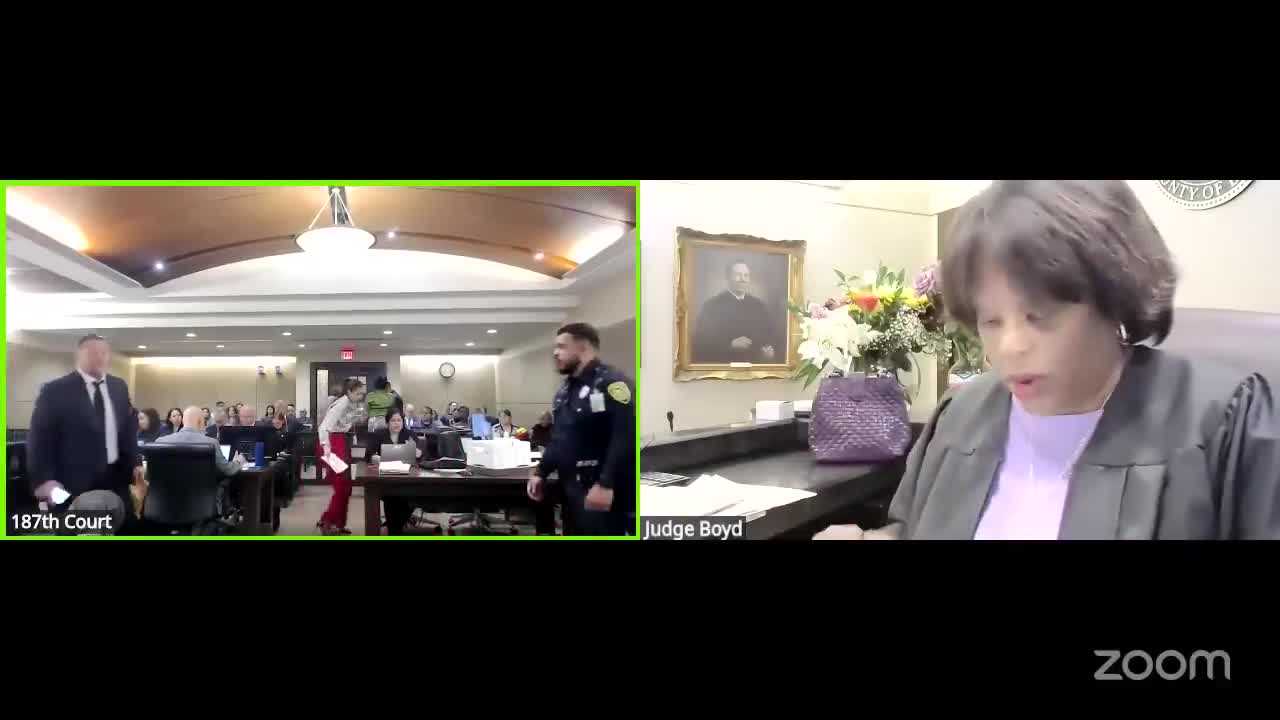
Judge Stephanie Boyd accepted a plea of no contest from Luis Espinosa and deferred a finding of guilt, imposing a mix of supervision and rehabilitative conditions including a $1,500 fine and a felony-drug-court referral.
At the hearing the state tendered evidence and Espinosa waived live testimony and a jury. The court accepted the stipulation and, finding sufficient evidence, deferred adjudication rather than entering a conviction. The plea included an affirmative finding of family violence.
The court’s sentence and conditions include a $1,500 fine (probated), three years of deferred adjudication, 100 hours of community service or restitution, mandated parenting classes, a TAP evaluation and referral to felony drug court, regular reporting by Zoom or in person, and random urinalysis. The judge also ordered no contact with the complainant and an affirmative finding that prohibits possession of weapons.
State prosecutor Rick Payne confirmed the plea agreement and the state’s recommendation for deferred adjudication. The court confirmed Espinosa understood the rights he waived by pleading and that the plea and sentencing terms were voluntarily entered. The judge admonished the defendant about the consequences of revocation and the possible prison exposure if deferred adjudication were later revoked.
Why it matters: Deferred adjudication leaves the defendant under court supervision with rehabilitative conditions rather than a conviction, but an affirmative finding of family violence carries collateral consequences, including weapon restrictions and limits on custodial designations.
Process and next steps: The court accepted the stipulation of testimony in evidence and proceeded immediately to sentencing. The defendant was ordered to complete the recommended evaluations and classes; probation will monitor compliance. The court recorded that victim impact statements were heard and that the defendant should not contact the complainant.