Get Full Government Meeting Transcripts, Videos, & Alerts Forever!
Get email alerts on the City Finance topic
No spam. Unsubscribe anytime.
Mill Creek leaders warn budget shortfall could arrive by 2027, call for public input
Summary
Mayor Brian Holzklaw told attendees the city projects expenses will exceed revenues around 2027, and urged community engagement as council and staff weigh options including fees, annexation study and potential revenue measures.
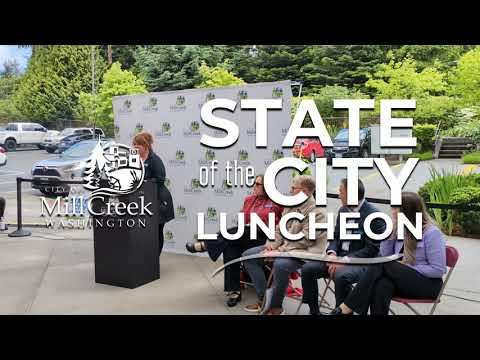
Mayor Brian Holzklaw warned that Mill Creek’s expenses may begin to outpace revenues in about two years and urged residents to engage in upcoming budget discussions.
The warning matters because the city’s short-term finances have been strong — aided by healthy reserves and federal ARPA funds — but multi-year projections now show the general fund dipping into a deficit around 2027 if no changes are made.
Holzklaw told the luncheon audience that “the latest budget we’ve adopted has projected our expenses are gonna exceed our revenues sometime in ’27,” and said that while projections can change, the city should treat the report with urgency. He said Mill Creek has historically maintained a general fund reserve near $6 million, above policy minimums, and has had clean state audit records in recent years.
City officials described several items already underway to address the gap. The city has about $5,800,000 in American Rescue Plan Act (ARPA) funds and has used portions of those dollars for capital and operating needs, including a larger street sweeper, the new city website and work on a citywide fee study intended to better align certain service charges with their costs. Holzklaw said the fee study should be finished before year’s end so the council can consider fee updates that would reduce pressure on the general fund.
Holzklaw also noted structural features of the city’s finances: Mill Creek currently has no general-fund-supported debt (the city does have a surface-water bond paid through surface-water rates) and no utility tax, the latter of which many nearby cities use to support general fund services. He described a property-tax arithmetic example used in recent budget debates: with about $4.2 million in annual property tax collections, a 1% change in the levy equates to roughly $42,000 citywide.
Staffing and service-level changes were another focus. Holzklaw said the city’s budgeted full-time equivalents (FTEs) were about 62 before the pandemic, dropped afterward and are now budgeted at roughly 67 FTEs, while resident expectations for service continue to grow. He said, “you can’t cut your way out of this,” and urged the community to weigh tradeoffs between service levels and revenue options when the council works on next year’s budget.
The mayor said the council is exploring options, including a financial study tied to possible annexation, and asked the public to participate in outreach efforts such as the city’s annual performance survey so elected officials have community guidance when setting priorities.
Holzklaw closed his remarks by asking residents to engage in the budget conversation, noting that final decisions on revenue or service-level changes will be made by the next council during the formal budget process.