Get Full Government Meeting Transcripts, Videos, & Alerts Forever!
Get email alerts on the Public Safety topic
No spam. Unsubscribe anytime.
Moline police seek council authorization for docked Skydio drones for first‑responder program; funding from state violence‑prevention grant
Summary
City police officials described an expanded Drone as First Responder (DFR) program and recommended that the council authorize procurement of docked Skydio drones and two rooftop docks under a multi‑year contract funded by an existing state violence‑prevention grant.
City police officials described an expanded Drone as First Responder (DFR) program and recommended that the council authorize procurement of docked Skydio drones and two rooftop docks under a multi‑year contract funded by an existing state violence‑prevention grant.
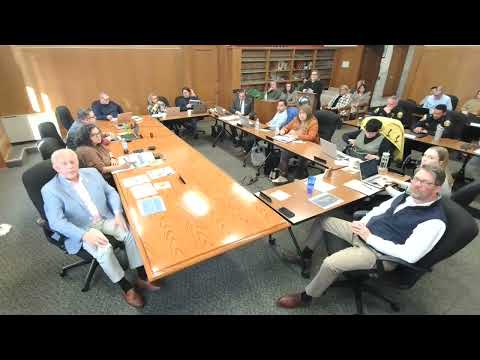
Deputy Chief Andrew Ryan (Deputy Chief, Moline Police Department) and Lieutenant Eli Solis, division commander for the service division and the department’s drone commander, presented the program’s goals, legal context and vendor comparisons. Lieutenant Solis said the department already flies drones but that docked, Beyond Visual Line of Sight (BVLOS) systems would allow rapid rooftop deployment and response times measured in seconds to minutes for many emergency calls.
Why it matters: presenters said docked drones can arrive on scene faster than patrol units, give officers real‑time visual information to support decision making and de‑escalation, and assist fire and other public safety units with situational awareness. The presenters cited Chula Vista Police Department’s DFR program as a proven example and played a video in which the Chula Vista chief described drones as providing "invaluable information to officers." The department said current average response time for its ad‑hoc drone launches is about 13 minutes and that docked systems could cut that to roughly 90 seconds in many locations.
Procurement recommendation and funding - Vendor recommendation: staff recommended Skydio’s docked package (Skydio X10 and Xtendock) after reviewing quotes from Paladin, Skydio, Brink and Flock. Presenters noted Skydio is U.S.‑manufactured, integrates with the city’s Axon body‑camera ecosystem, and offers obstacle avoidance, ADS‑B aircraft detection and a mesh/5G connectivity fallback. - Cost and contract term: the recommended total package price quoted to council was about $319,000 (presenters later discussed authorizing up to $350,000 to cover installation and contingencies) and staff proposed a five‑year contract for equipment, software and support. The department estimated additional electrical and Internet installation at about $10,000 per rooftop site. - Funding source: presenters said the purchase would be paid from Department of Commerce and Economic Opportunity (DCEO) violence‑prevention funds already awarded to the city; staff reported the grant balance in hand and said the grant had no immediate mandatory spend‑down date.
Legal and operational context Presenters described recent Illinois statutory changes that allow expanded use of drones for first‑responder purposes (identified in the presentation as the Drone as First Responder amendment to the Freedom from Drone Surveillance Act, effective June 2023). They also discussed FAA requirements and waivers (Part 107 remote‑pilot framework, ADS‑B aircraft‑awareness technology, and agency COA/waiver processes for BVLOS operations). Lieutenant Solis and staff emphasized that policy, privacy safeguards, and flight logs would be maintained and that evidentiary video would be retained on secure cloud services and moved into the city’s evidence system as required by retention rules.
Use cases and technical details cited Presenters gave examples where docked drones can assist: missing persons, active‑threat or imminent‑harm calls, traffic crash investigation and fire‑scene overview. They showed Chula Vista metrics (presenters cited nearly 22,000 DFR flights there, with thousands of calls where dispatch of a patrol unit was avoided and average first‑on‑scene times under two minutes in many instances) and contrasted that with Moline’s earlier experience (57 callouts to date; average response about 13 minutes for ad‑hoc launches). Skydio X10 technical specifications presented included roughly 40 minutes flight time, up to 45 mph speed, 360‑degree obstacle avoidance, thermal and zoom cameras and a fast recharge profile; presenters noted the docked system can launch in roughly 20 seconds.
Council process and next steps Staff said they would place the recommended Skydio procurement on the council agenda for formal authorization. No vote was taken during the presentation; presenters requested council direction to proceed to contract authorization. The department asked for authorization to spend from the existing DCEO violence‑prevention grant and to install two rooftop docks so the system can be operational and provide quicker response times.
Quotes from the presentation - "Drones provide invaluable information to officers, sharing with them a visual into what is actually occurring. It makes all the difference to officers, dispatchers, and supervisors making split second decisions," — Chief Kennedy (Chula Vista Police Department), video excerpt shown by presenters. - "This will be funded through Department of Commerce and Economic Opportunity Violence Prevention Funding that we were became eligible for in 2023," — presenter (department staff).
No formal council action was recorded during the presentation; staff said the procurement and contract will appear on a subsequent council agenda for authorization.